The way we learn has changed forever. No longer tied to physical classrooms, today’s students, professionals, and even children rely on educational apps to study, explore, and master new skills. Schools are adopting blended learning, universities are shifting courses online, and professionals are reskilling through mobile-first platforms.
This is why educational app development has become a top priority for startups, schools, and enterprises alike. Businesses that invest in education application development not only empower learners but also position themselves as key players in the $350+ billion EdTech market.
But here’s the big question most founders and institutions ask: How much does it cost to create an educational app? To answer that, we’ll break down the features, steps, and costs of developing a world-class educational application.
What is an Educational Application?
An educational application is a software solution built to deliver structured learning experiences via mobile or web. It blends the science of education with the art of technology, offering interactive tools that engage learners of all ages.
Think of an educational app as more than just videos and quizzes. It’s a virtual learning companion where students can:
- Learn at their own pace.
- Engage with multimedia-rich lessons.
- Track their progress and get real-time feedback.
- Interact with teachers and peers virtually.
- Stay motivated with gamification features like badges, rewards, and challenges.
For businesses, these apps represent a scalable way to deliver training, enhance customer engagement, and monetize content. For learners, it’s about accessibility, personalization, and empowerment.
In short, when you create an educational app, you’re building a bridge between learners and knowledge powered by technology.
Market Overview: Growth of Educational Apps Worldwide
Educational apps are no longer a niche, they’re mainstream. By 2025, the number of smartphone users worldwide is expected to exceed 7.5 billion, and education is one of the fastest-growing app categories.
Some market highlights:
- Global EdTech Investment: Investors have poured billions into education mobile app development, with top startups reaching unicorn status in less than five years.
- Adoption in Schools: Over 70% of K-12 schools in the U.S. now use some form of mobile learning technology.
- Corporate Training Shift: Nearly 60% of enterprises have adopted online training platforms for employee upskilling.
This surge signals one thing: whether you’re an educator, entrepreneur, or enterprise, there has never been a better time to build education apps and capture market demand.
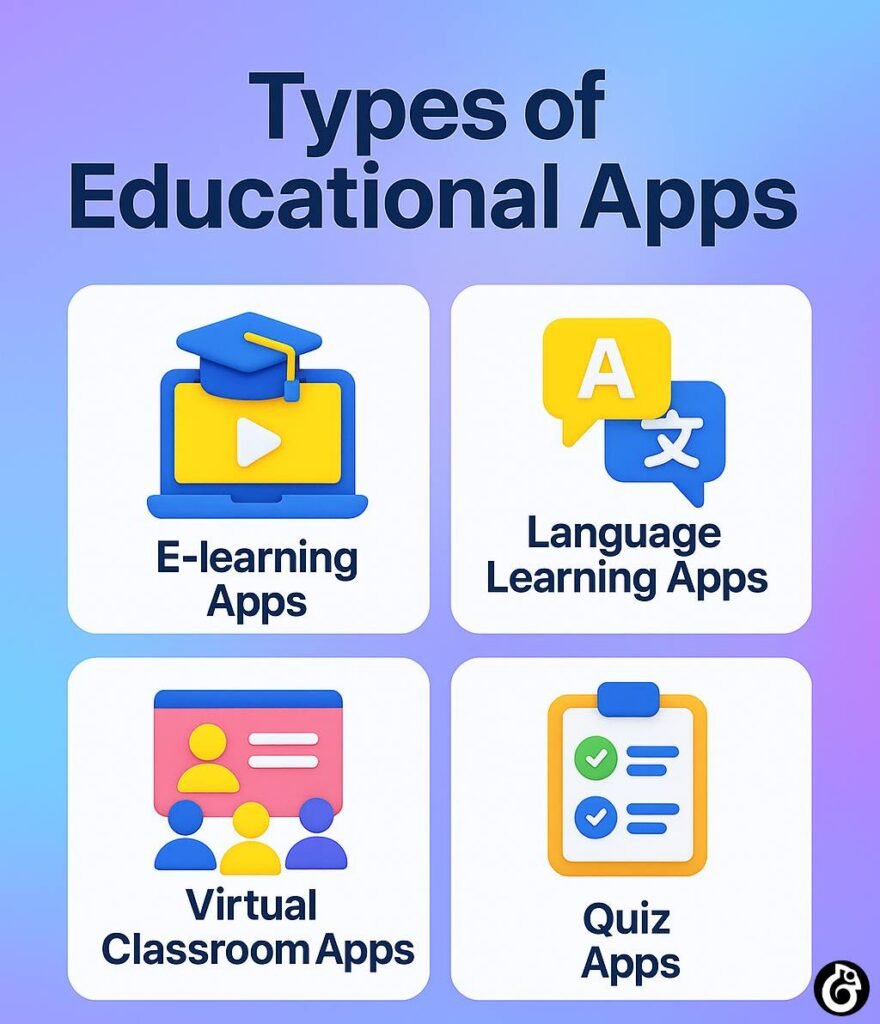
Types of Educational Apps You Can Build
Before hiring an educational app developer, you need to decide what type of app best serves your target audience.
1. E-Learning Platforms
Large-scale platforms like Coursera and Udemy allow learners to enroll in structured courses, access video lectures, and earn certificates.
2. Language Learning Apps
Apps like Duolingo and Babbel show the power of gamification and daily practice in mastering new languages.
3. Online Tutoring & Coaching Apps
Direct one-on-one or group tutoring sessions with scheduling, payment, and video integration.
4. Kids’ Learning Apps
Bright, gamified, and interactive apps that teach children math, reading, and science through play.
5. Test Preparation Apps
Dedicated apps for SAT, GRE, GMAT, or government exams with question banks, mock tests, and analytics.
6. Corporate Training Apps
Custom-built solutions for enterprises to train, evaluate, and upskill employees efficiently.
7. AR/VR & Gamified Learning Apps
The future of education, enabling virtual classrooms, interactive 3D models, and immersive labs.
Each type has different cost implications. For example, corporate training apps may require advanced reporting, while kids’ learning apps may need extensive design and gamification elements.
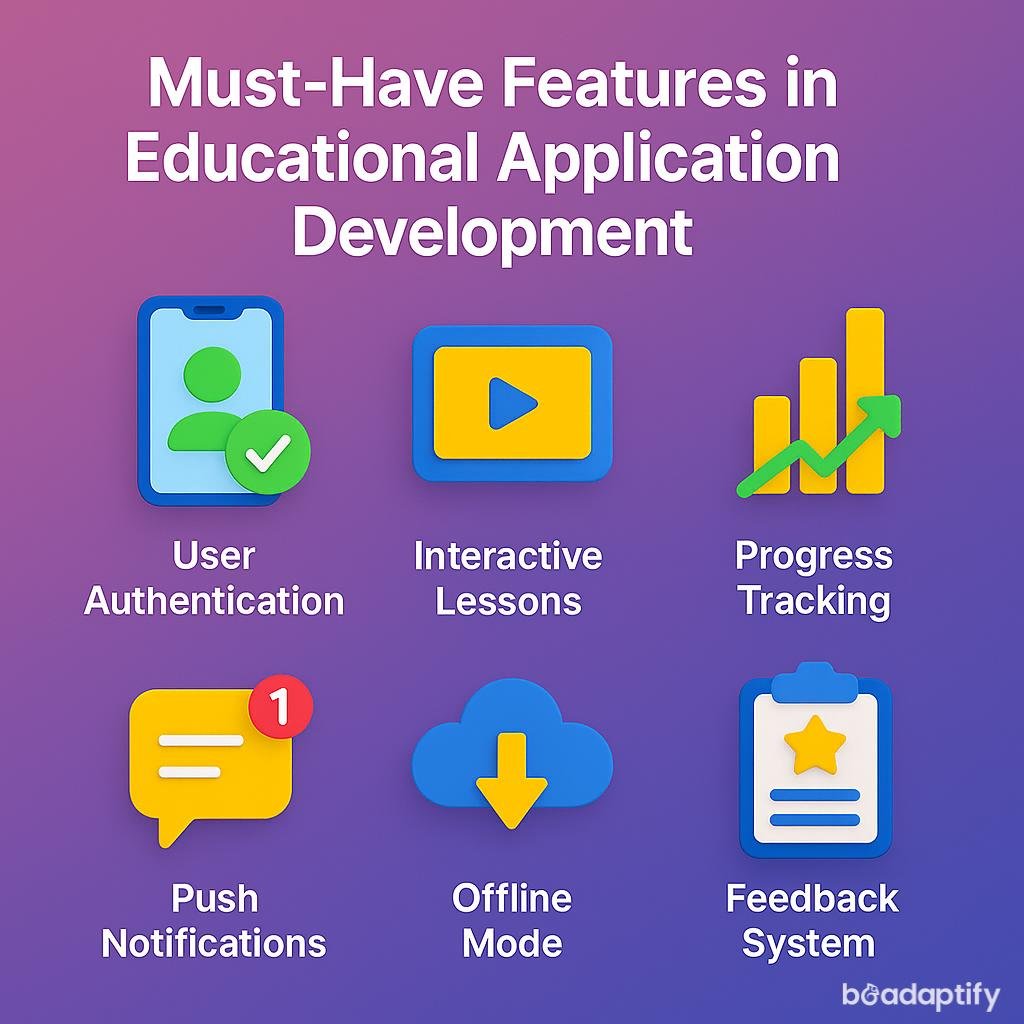
Key Features of an Educational App
A high-performing educational app needs well-thought-out features that serve students, teachers, and administrators alike.
Essential Student/User Features
- Onboarding & Profile Creation: Easy sign-up using social media or email.
- Interactive Course Catalog: Browse lessons by category, skill level, or interest.
- Video Lessons & Notes: Multimedia learning experience with PDFs and transcripts.
- Gamification: Points, badges, and streaks to encourage consistency.
- Progress Dashboard: Visual reports on performance and completion.
- Push Notifications: Reminders about assignments, quizzes, and live classes.
Teacher/Instructor Features
- Course Builder Tools: Upload videos, create quizzes, and design assignments.
- Live Streaming Integration: Host classes in real-time.
- Analytics & Student Reports: Track performance to personalize teaching.
- Student Communication: Chat and discussion forums to engage learners.
Admin Features
- User Management: Add, edit, or remove users easily.
- Monetization Controls: Manage payments, subscriptions, and discounts.
- Advanced Analytics: Insights into course popularity, learner engagement, and retention.
- Content Moderation: Ensure compliance and quality of uploaded material.
Advanced Features (Future-Ready)
- AI-Powered Recommendations: Suggests courses based on past activity.
- Voice Recognition & Chatbots: For language learning and 24/7 support.
- AR/VR Classrooms: Science experiments, 3D anatomy models, and history simulations.
- Blockchain Certificates: Secure and verifiable credentials.
When you create educational apps, striking the right balance between essential and advanced features helps manage costs while delivering value.
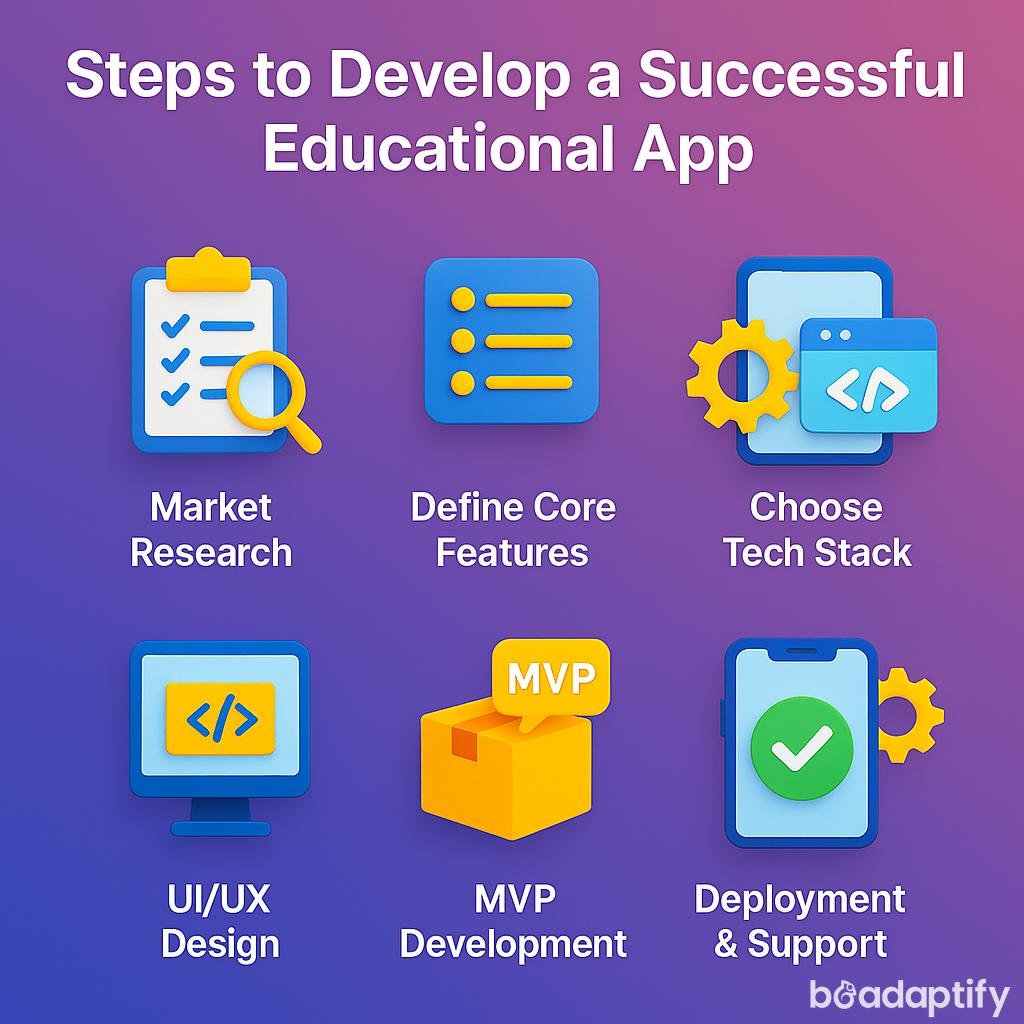
Steps to Create an Educational App
If you’re asking, “How to make an educational app?” here’s the structured roadmap:
1. Market Research & Validation
Understand user pain points, competitor offerings, and monetization models.
2. Define Core Features & User Flow
Start small with necessary features before scaling into advanced ones.
3. Select the Tech Stack
For education app development, popular frameworks include:
- Frontend: React Native, Flutter
- Backend: Node.js, Django, Laravel
- Database: PostgreSQL, MongoDB
- Cloud Hosting: AWS, Google Cloud
4. UI/UX Design
Focus on simple, engaging designs to keep learners motivated.
5. MVP Development
Partner with an MVP Development Company to test ideas before full investment.
6. Full Development & Launch
Scale your MVP into a full solution with advanced features.
7. Continuous Improvement
Post-launch updates, bug fixes, and content upgrades ensure long-term success.
How to Choose the Right Educational App Developer
Your choice of partner defines your success. A reliable Mobile App Development Company should offer:
- Proven educational app development services.
- A team skilled in mobile app development, web solutions, and digital platforms.
- Case studies in software product development services.
- Post-launch support and scalability planning.
Educational App Development Cost Breakdown
The cost to build education apps varies widely depending on:
Key Cost Factors
- App Complexity (basic vs. advanced features).
- Platform Choice (iOS, Android, or cross-platform).
- Development Region (hourly rates differ globally).
- UI/UX Design Quality.
- Third-Party Integrations (payment gateways, video APIs, etc.).
Regional Cost Estimates
- USA/Canada: $100–$200/hr
- Europe: $60–$120/hr
- Asia (India, Vietnam, Philippines): $25–$50/hr
Average Project Costs
- MVP Educational App: $15,000 – $40,000
- Full-Scale App with Advanced Features: $60,000 – $200,000+
Ways to Optimize the Cost of Education Application Development
If you’re worried about high costs, here are strategies to save:
- MVP First: Test your app with core features before scaling.
- Outsource Development: Partner with an experienced Web Development Company or Digital Solutions provider.
- Use Reusable Modules: Instead of building from scratch, integrate APIs.
- Cloud Hosting: Scale resources as needed to reduce upfront costs.
Future Trends in Educational App Development
The future of app development in education is driven by innovation:
- AI Tutors: Personalized learning based on behavior.
- AR/VR Learning Labs: Simulating real-life scenarios for better engagement.
- Gamification 2.0: More immersive experiences tied to performance.
- Blockchain Credentials: Verifiable digital certificates for employers.
- Cross-Platform Ecosystems: Seamless sync between web, mobile, and wearable devices.
How Can Beadaptify Help You With Education App Development?
At Beadaptify, we go beyond coding, we partner with you to create educational apps that inspire learners and deliver measurable results.
Our expertise as a Design & Development Company covers:
- Custom Education App Development for startups and enterprises.
- Mobile App Development Services for iOS, Android, and cross-platform.
- MVP Development Services to validate your app idea quickly.
- Software Product Development Services to scale solutions long-term.
- End-to-end digital solutions for startups & enterprises.
Whether you want to build an education app from scratch or improve your existing platform, Beadaptify ensures high performance, scalability, and cost efficiency.
Conclusion
Educational apps are no longer optional, they are the backbone of modern learning. From schools to enterprises, the demand for education app development continues to rise, fueled by technology and a global appetite for accessible learning.
By understanding the steps, features, and costs involved, you can make smarter choices and partner with the right educational app development company to turn your vision into reality. So, if you’ve been waiting for the right moment to act, this is it. The demand is soaring, the tools are better than ever, and the opportunity to create an educational app that makes a difference has never been greater. The future of learning is digital. Will you be part of it?
We help education businesses launch faster, build smarter, and deliver apps learners can’t put down. Contact us now and let’s create an app that changes how the world learns.

FAQs About Educational App Development Cost
How much does it cost to build an education app?
Costs start at $15,000 for MVPs and can exceed $200,000 for advanced apps.
How long does it take to create an educational app?
Timelines range from 3 to 9 months, depending on complexity.
What is the difference between MVP and full-scale development?
MVP offers core features to test the market, while full-scale apps provide robust features for growth.
Which technologies are best for education app development?
Flutter, React Native, Node.js, Python, and cloud platforms like AWS.