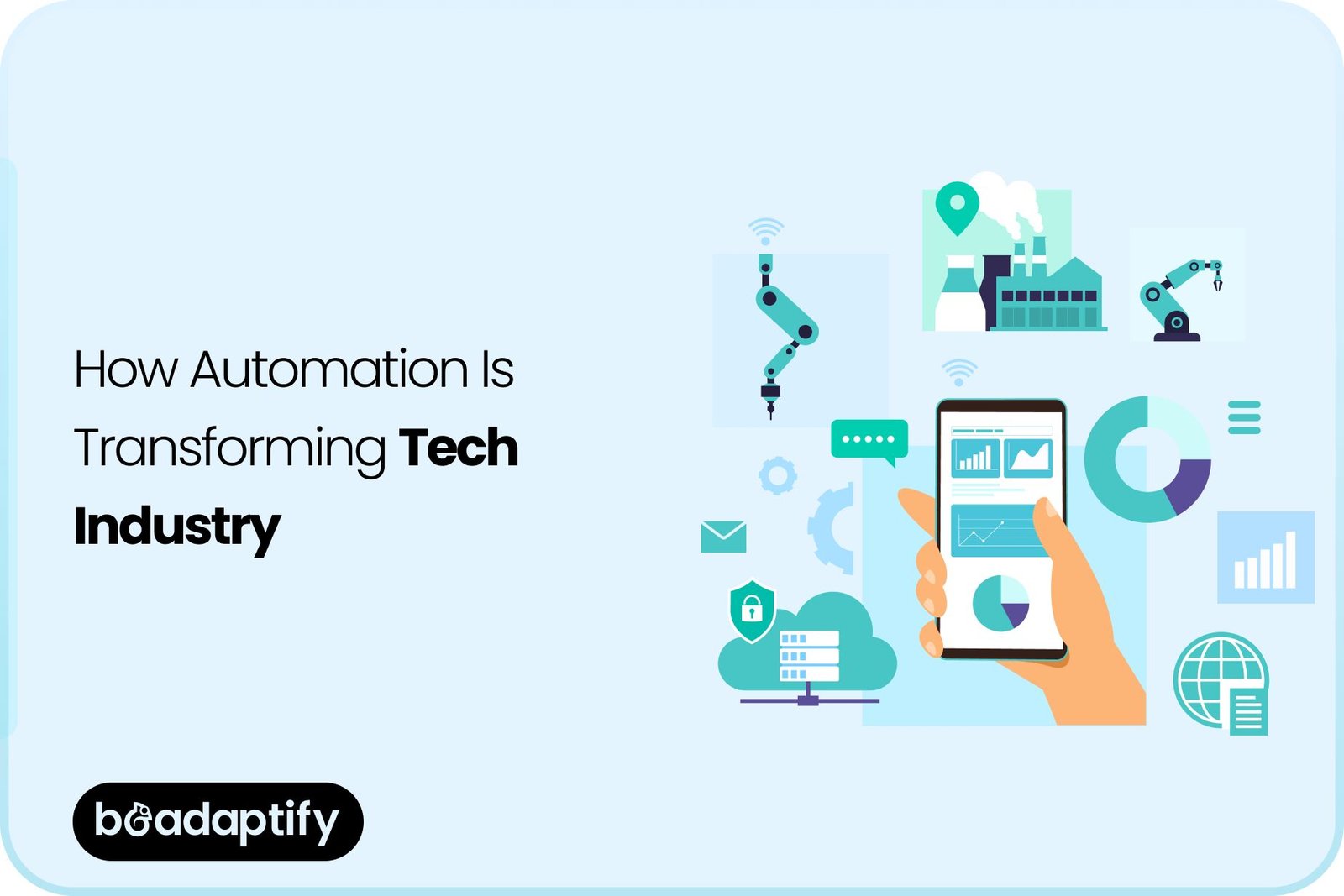
Automation has become one of the most influential forces shaping the global technology landscape. In 2026, automation is no longer viewed as a supporting capability, it has evolved into a core driver of efficiency, scalability, innovation, and competitive advantage across the tech industry. From software engineering and quality assurance to cloud operations and mobile application development, automated systems are now embedded deeply into how digital products are planned, built, tested, deployed, and maintained.
As businesses face rising user expectations, tighter timelines, and growing system complexity, automation has been widely adopted to eliminate repetitive tasks, reduce human error, and accelerate digital transformation. For any modern software development company, automation has become essential for delivering reliable, secure, and scalable solutions at speed.
This blog explores how automation is transforming the tech industry in 2026, the areas most impacted, the benefits being realized, and the strategies organizations are using to stay ahead in an increasingly automated world.
The Evolution of Automation in the Tech Industry
Automation in technology did not emerge overnight. Early forms of automation were limited to basic scripting and rule-based systems designed to reduce manual effort. Over time, advancements in artificial intelligence, machine learning, cloud computing, and data analytics expanded automation into intelligent systems capable of learning, adapting, and optimizing processes autonomously.
By 2026, automation has progressed into a multi-layered ecosystem that spans the entire technology lifecycle. Intelligent automation is now used not only to execute tasks but also to make decisions, predict outcomes, and continuously improve system performance.
This evolution has reshaped how software development services are delivered and how digital products are scaled in competitive markets.
Why Automation Has Become Essential in 2026
Several factors have accelerated automation adoption across the tech industry:
Rising System Complexity
Modern applications are built using microservices, APIs, cloud-native architectures, and distributed systems. Managing this complexity manually has become impractical.
Demand for Faster Time-to-Market
Organizations are expected to release updates, features, and fixes rapidly. Automation has enabled faster development cycles without compromising quality.
Cost Optimization Pressures
Operational efficiency has become critical as businesses aim to reduce overhead while scaling. Automation has been used to control costs and improve productivity.
Talent Shortages
Automation has been leveraged to offset shortages in skilled technical talent by handling repetitive or time-consuming tasks.
Security and Compliance Needs
With increasing regulatory requirements, automated monitoring and compliance checks have become necessary to ensure data protection and governance.
Automation in Software Development
Automation has significantly transformed how applications are built and maintained by every modern software development company.
Automated Code Generation and Assistance
AI-powered tools are now used to suggest code snippets, refactor logic, and identify potential bugs during development. Developers are supported with intelligent recommendations that improve code quality and reduce errors.
Continuous Integration and Continuous Deployment (CI/CD)
Automated CI/CD pipelines have become standard practice. Code changes are automatically tested, validated, and deployed, enabling faster releases and consistent delivery.
Automated Code Reviews
Static code analysis tools are used to automatically enforce coding standards, detect vulnerabilities, and improve maintainability.
Benefits Realized
- Faster development cycles
- Reduced human error
- Improved code consistency
- Higher overall productivity
Automation has allowed development teams to focus more on innovation and problem-solving rather than repetitive tasks.
Automation in Quality Assurance and Testing
Manual testing has become increasingly insufficient in 2026 due to the scale and complexity of modern applications.
Automated Testing Frameworks
Unit tests, integration tests, regression tests, and performance tests are executed automatically across multiple environments and devices.
AI-Powered Test Optimization
Testing tools now analyze user behavior and application changes to prioritize high-risk areas for testing.
Continuous Testing
Testing is integrated throughout the development lifecycle, ensuring issues are identified early and resolved quickly.
Impact on Software Quality
- Faster bug detection
- Higher test coverage
- Improved application stability
- Reduced post-release failures
For providers of software development services, automated testing has become a critical quality benchmark.
Automation in DevOps and Cloud Operations
Automation has fundamentally reshaped DevOps practices and cloud infrastructure management.
Infrastructure as Code (IaC)
Servers, networks, and environments are provisioned automatically using code, ensuring consistency and repeatability.
Automated Monitoring and Incident Response
Systems are continuously monitored using automated tools that detect anomalies and trigger alerts or corrective actions without human intervention.
Auto-Scaling and Resource Optimization
Cloud resources are scaled dynamically based on demand, reducing waste and improving performance.
Results Achieved
- Improved system reliability
- Faster recovery from failures
- Optimized cloud costs
- Enhanced operational visibility
Automation has allowed tech teams to manage complex cloud environments efficiently and securely.
Automation in Mobile App Development
Automation has had a significant impact on the work of every mobile app development company.
Automated Build and Deployment
Mobile applications are automatically built, tested, and published across app stores, reducing manual effort and release delays.
Device and OS Compatibility Testing
Automated testing ensures apps perform consistently across multiple devices, operating systems, and screen sizes.
Performance and Crash Monitoring
Real-time automated monitoring tools track app performance, crashes, and user behavior, enabling faster issue resolution.
Benefits for Mobile Teams
- Faster app releases
- Improved user experience
- Reduced maintenance overhead
- Greater reliability
As a result, mobile app development services have become more predictable and scalable.
Automation in Mobile Application Development Services
Automation has enabled mobile application development services to operate with greater efficiency and accuracy.
Automated API Testing
APIs used by mobile apps are continuously tested to ensure stability and security.
User Behavior Analysis
Automated analytics tools track usage patterns and provide insights that guide feature improvements.
Security Automation
Automated vulnerability scans and compliance checks protect sensitive user data and ensure regulatory adherence.
Automation has strengthened trust and reliability in mobile ecosystems.
Automation in Project Management and Collaboration
Automation has transformed how tech projects are planned and managed.
Automated Task Assignment
Tasks are assigned automatically based on workload, availability, and skill sets.
Predictive Project Analytics
AI-driven tools predict delays, risks, and resource bottlenecks, enabling proactive decision-making.
Automated Documentation
Project documentation, reports, and status updates are generated automatically, improving transparency.
Impact on Delivery
- Improved project visibility
- Better timeline adherence
- Reduced administrative effort
These improvements have enhanced collaboration across distributed teams.
Automation in Cybersecurity
Security automation has become a necessity rather than an option.
Automated Threat Detection
AI systems analyze traffic patterns to detect suspicious activity in real time.
Automated Vulnerability Management
Security flaws are identified and prioritized automatically, reducing exposure risks.
Compliance Automation
Regulatory requirements are monitored continuously through automated audits and reporting.
This has strengthened security posture across the tech industry.
Automation in Data Analytics and Decision-Making
Automation has reshaped how data is processed and analyzed.
Automated Data Pipelines
Data is collected, cleaned, and processed automatically from multiple sources.
Predictive Analytics
AI-driven models forecast trends, user behavior, and system performance.
Real-Time Dashboards
Automated dashboards provide live insights for faster decision-making.
Automation has empowered businesses to act on data with speed and confidence.

Business Benefits of Automation in the Tech Industry
Automation has delivered measurable benefits across organizations:
- Increased productivity
- Faster product launches
- Improved quality and consistency
- Reduced operational costs
- Enhanced customer satisfaction
- Stronger scalability
For any software development company automation has become a competitive differentiator.
Challenges of Automation Adoption
Despite its advantages, automation adoption has introduced challenges:
Initial Implementation Costs
Automation tools and infrastructure require upfront investment.
Skill Gaps
Teams must be trained to manage and optimize automated systems.
Over-Automation Risks
Not all processes benefit from automation; balance is required.
Change Management
Cultural resistance may arise when workflows are transformed.
Successful automation strategies are implemented thoughtfully and incrementally.
Best Practices for Implementing Automation in 2026
To maximize value, organizations follow proven practices:
- Identify high-impact processes first
- Combine automation with human oversight
- Invest in training and upskilling
- Monitor performance continuously
- Align automation with business goals
These practices ensure sustainable automation success.
The Future of Automation Beyond 2026
Automation is expected to continue evolving through:
- Greater AI autonomy
- More predictive and self-healing systems
- Deeper integration across platforms
- Expanded use in creative and strategic tasks
As automation matures, its role in the tech industry will continue expanding.
Conclusion
In 2026, automation has become a foundational pillar of the tech industry. From software engineering and cloud operations to mobile app development and cybersecurity, automated systems are driving efficiency, reliability, and innovation at unprecedented levels.
Organizations that embrace automation strategically are positioned to deliver higher-quality digital products, scale operations efficiently, and adapt rapidly to changing market demands. For providers of software development services and mobile application development services, automation has become essential for long-term success.
As the tech industry continues to evolve, automation will remain at the heart of digital transformation reshaping how technology is built, deployed, and experienced.
FAQ About Transformation in Tech Industry
How is automation transforming the tech industry in 2026?
Automation is being used to streamline software development, testing, deployment, cloud operations, and data analysis. Faster delivery, reduced errors, and improved scalability are being achieved across the industry.
Why has automation become essential for software development companies?
Automation has become essential because modern systems are complex and require faster release cycles. Automated workflows ensure consistency, reliability, and efficiency in delivering software development services.
How does automation impact mobile app development services?
Automation improves mobile app development services by enabling automated testing, deployment, performance monitoring, and compatibility checks, resulting in faster releases and improved user experience.
Is automation replacing software developers?
Automation is not replacing developers but is supporting them by handling repetitive tasks. Developers are able to focus more on innovation, architecture, and problem-solving.
What are the biggest benefits of automation for mobile application development services?
Key benefits include improved app stability, faster updates, reduced operational costs, enhanced security, and better scalability across platforms and devices.
Are there risks involved in adopting automation?
Risks may include over-automation, implementation costs, and skill gaps. These risks are minimized through strategic planning, phased adoption, and continuous monitoring.
How does automation improve security in the tech industry?
Automation improves security by enabling real-time threat detection, continuous vulnerability scanning, and automated compliance monitoring, reducing exposure to cyber risks.
What industries benefit the most from automation in technology?
Industries such as healthcare, finance, eCommerce, logistics, and SaaS benefit significantly due to complex workflows, regulatory requirements, and high scalability demands.