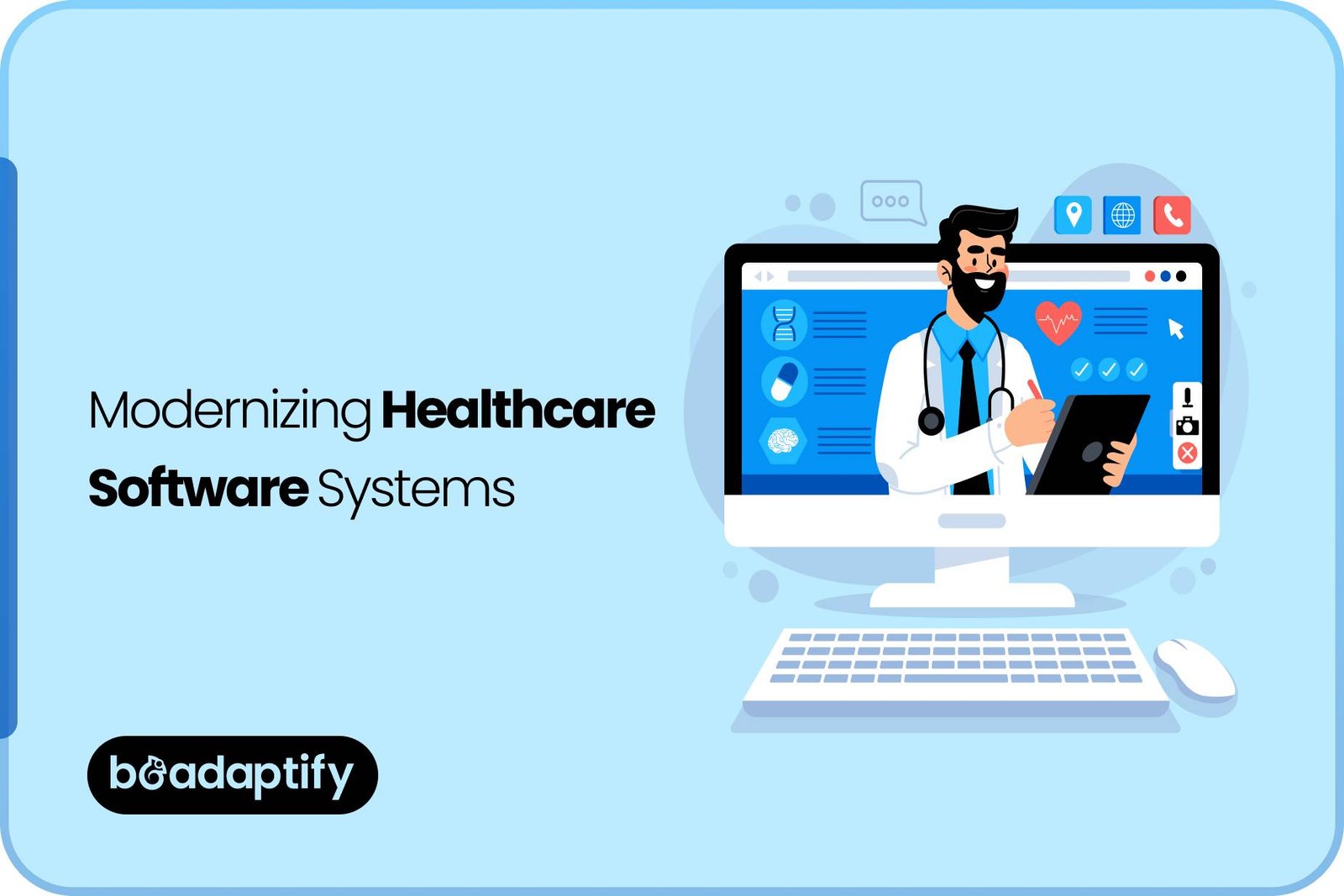
Healthcare organizations across the globe are being reshaped by rapid technological change, regulatory pressure, and rising patient expectations. Legacy medical systems once reliable are increasingly being viewed as barriers to innovation, efficiency, and patient safety. As a result, healthcare software modernization is being prioritized as a strategic necessity rather than an optional upgrade.
This guide provides a detailed, end-to-end overview of how legacy healthcare systems are being modernized, why modernization is critical in 2026 and beyond, and how emerging technologies are redefining patient management, clinical workflows, and enterprise healthcare operations.
What Is Healthcare Software Modernization?
Healthcare software modernization refers to the process by which outdated, rigid, or monolithic healthcare systems are transformed into flexible, scalable, and secure digital platforms. This transformation may involve system re-engineering, cloud migration, interface redesign, data architecture upgrades, and integration with modern technologies.
Rather than replacing systems outright, modernization efforts are often executed in phases to minimize disruption to clinical operations.
Through healthcare software modernization services, organizations are being enabled to extend the life of critical systems while aligning with modern healthcare demands.
Why Legacy Healthcare Systems Are No Longer Sustainable
Legacy healthcare software systems were designed for a different era one with limited interoperability, minimal patient engagement, and slower regulatory change. Today, those systems are being challenged by new realities.
Common Limitations of Legacy Medical Systems
- Inflexible architectures that limit scalability
- High maintenance and support costs
- Poor integration with modern tools and APIs
- Security vulnerabilities and compliance risks
- Inefficient patient management workflows
- Limited support for mobile and cloud technologies
As healthcare enterprise software market trends continue to shift toward connected, data-driven ecosystems, the risks of maintaining legacy systems are becoming increasingly severe.
The Business Case for Healthcare Software Modernization
Modernization is being driven by both clinical and business imperatives. From patient experience to operational efficiency, legacy systems are failing to meet modern healthcare standards.
Key Drivers of Modernization
- Regulatory compliance requirements
- Need for interoperability and data exchange
- Demand for digital patient engagement tools
- Increased cybersecurity threats
- Pressure to reduce operational costs
- Adoption of value-based care models
By investing in healthcare legacy software modernization, organizations are being positioned to respond to these challenges proactively.
Healthcare Software Modernization Assessment Process
A successful transformation begins with a structured evaluation. The healthcare software modernization assessment process is used to identify technical gaps, operational risks, and modernization priorities.
Step 1: System Inventory and Analysis
Existing systems are assessed for:
- Architecture limitations
- Technology stack obsolescence
- Performance bottlenecks
- Security vulnerabilities
Step 2: Clinical and Operational Workflow Review
Workflows related to patient management, billing, scheduling, and clinical documentation are evaluated to identify inefficiencies.
Step 3: Compliance and Security Evaluation
Systems are reviewed for compliance with healthcare regulations such as HIPAA, GDPR, and emerging data protection standards.
Step 4: Data Architecture Assessment
Data quality, accessibility, and interoperability are analyzed, especially in patient management systems.
Step 5: Modernization Roadmap Development
A phased roadmap is created to prioritize high-impact upgrades while minimizing operational disruption.
This assessment is typically conducted by a specialized software development company with healthcare domain expertise.
Modernization Approaches Used in Healthcare
Healthcare software modernization is not a one-size-fits-all initiative. Different approaches are being adopted based on organizational goals, budget, and system complexity.
1. Re-Hosting (Lift and Shift)
Legacy systems are migrated to cloud environments without major architectural changes. This approach improves scalability but offers limited functional improvement.
2. Re-Platforming
Minor code changes are applied to optimize systems for modern infrastructure, often enabling better performance and security.
3. Refactoring
Core application components are re-engineered to support modular, API-driven architectures.
4. Re-Architecting
Systems are redesigned entirely using microservices, cloud-native frameworks, and modern data pipelines.
These approaches are often combined and delivered through comprehensive healthcare software modernization services.
Role of Cloud Computing in Healthcare Modernization
Cloud adoption has become a foundational element of healthcare transformation. By 2026, cloud-based architectures are being viewed as essential for scalability and resilience.
Benefits of Cloud-Enabled Healthcare Systems
- Elastic scalability during peak usage
- Improved disaster recovery capabilities
- Enhanced data accessibility across locations
- Reduced infrastructure maintenance costs
- Faster deployment of updates and features
As part of healthcare software development trends 2026, hybrid and multi-cloud strategies are being increasingly adopted.
Modernizing Patient Management Systems
Patient management systems are at the core of healthcare operations. Legacy patient systems often struggle to support modern engagement and care coordination.
Key Enhancements Being Implemented
- Unified patient records across departments
- Real-time appointment scheduling
- Integrated billing and insurance workflows
- Patient portals and mobile access
- AI-driven care coordination tools
These upgrades align closely with healthcare software development trends in patient management systems, which emphasize personalization and data-driven care.
Mobile Technologies in Healthcare Modernization
Mobile access has become essential for both patients and healthcare professionals. Legacy systems rarely support mobile workflows effectively.
Through collaboration with a mobile app development company, healthcare organizations are enabling:
- Mobile clinician dashboards
- Secure patient communication apps
- Remote monitoring and telehealth platforms
- Mobile access to EHRs and lab results
These innovations are supported by modern mobile application development services and are central to improving care delivery.
Security and Compliance in Modernized Healthcare Systems
Security risks are amplified when legacy systems are exposed to modern digital environments. Modernization efforts are being designed with security as a core principle.
Security Enhancements Being Implemented
- Zero-trust security architectures
- Advanced encryption standards
- Role-based access control
- Continuous security monitoring
- Automated compliance reporting
These measures are aligned with latest trends in healthcare quality and safety software 2026.
Healthcare Software Trends Shaping Modernization
Modernization strategies are being influenced by broader healthcare software trends and emerging technologies.
Key Trends Driving Change
- AI-assisted diagnostics and decision support
- Interoperability standards (FHIR, HL7)
- Predictive analytics for population health
- Automation of administrative workflows
- Data-driven quality and safety monitoring
These trends are reshaping healthcare software development trends across clinical and administrative domains.
Human Resources Systems in Healthcare Modernization
Beyond clinical systems, HR platforms are also being modernized to address workforce challenges.
HR Software Modernization Trends
- Automated staff scheduling
- Credential and compliance tracking
- Workforce analytics and forecasting
- Integration with payroll and training platforms
These upgrades align with healthcare human resources software market trends, which emphasize efficiency and workforce resilience.
Emerging Trends in Healthcare Information Software
Healthcare information systems are evolving to support data-driven decision-making and real-time insights.
Emerging Capabilities
- Unified data lakes for clinical and operational data
- AI-powered reporting tools
- Interoperable data exchange platforms
- Advanced visualization dashboards
These developments reflect emerging trends in healthcare information software and are central to long-term modernization strategies.
Modernization Challenges and Risk Mitigation
Healthcare software modernization is complex and not without risks.
Common Challenges
- System downtime risks
- Data migration complexity
- Resistance to change among staff
- Budget and timeline constraints
These risks are mitigated through phased execution, stakeholder engagement, and partnerships with experienced software development services providers.
How Modernization Impacts Healthcare Costs
While upfront investment is required, healthcare software modernization often results in long-term cost efficiency through:
-
Reduced system maintenance and support costs
-
Lower infrastructure overhead via cloud adoption
-
Faster deployment of new features
-
Improved staff productivity
-
Fewer compliance penalties and security incidents
These outcomes are a key driver behind rising adoption of healthcare software modernization services across enterprise healthcare systems.
Industries & Systems Most Impacted by Modernization
Healthcare software modernization is most impactful across:
-
Hospitals & Health Systems – EHR, patient flow, analytics
-
Clinics & Specialty Practices – Scheduling, billing, engagement
-
Healthcare Enterprises – ERP, HR, compliance systems
-
HealthTech & SaaS Platforms – Interoperable digital solutions
This transformation is strongly influenced by healthcare enterprise software market trends and emerging trends in healthcare information software.
Compliance & Regulatory Alignment Section
Modernized systems are being designed to support:
-
HIPAA and data privacy regulations
-
Audit-ready data logging and reporting
-
Secure patient data access controls
-
Real-time compliance monitoring
Choosing the Right Modernization Partner
Selecting the right partner is critical to modernization success. A qualified software development company should provide:
- Proven healthcare domain experience
- Regulatory and compliance expertise
- End-to-end modernization capabilities
- Scalable mobile app development services
- Long-term support and optimization
Partnerships built on these capabilities ensure sustainable transformation.
Future Outlook: Healthcare Software Modernization Beyond 2026
Looking ahead, modernization efforts will continue to expand as healthcare ecosystems become more interconnected.
Future initiatives will focus on:
- AI-driven clinical decision support
- Advanced patient personalization
- Cross-platform interoperability
- Predictive population health analytics
Organizations that modernize today will be better positioned to adopt future innovations seamlessly.
Conclusion
Healthcare software modernization has become a strategic imperative for organizations seeking to improve patient outcomes, operational efficiency, and regulatory compliance. By upgrading legacy medical systems through structured assessment, modern architectures, and emerging technologies, healthcare providers are being empowered to meet the demands of 2026 and beyond.
Through expert healthcare software modernization services, collaboration with Beadaptify, a trusted software development company, and integration of advanced mobile application development services, legacy systems are being transformed into agile, secure, and future-ready healthcare platforms. Modernization is no longer about keeping systems running, it is about enabling better care, smarter operations, and sustainable healthcare innovation.
FAQ About Healthcare Software Modernization
When should healthcare software be modernized?
Modernization should be considered when systems become difficult to scale, integrate, secure, or comply with current regulations.
Is full system replacement always required?
No. Modernization is often executed in phases, allowing systems to evolve without complete replacement.
How long does healthcare software modernization take?
Timelines vary based on system complexity, but phased modernization typically spans several months to a year.
Does modernization affect ongoing patient care?
When planned properly, modernization minimizes disruption and improves care delivery over time.
What role do mobile apps play in modernization?
Mobile solutions enhance clinician access, patient engagement, and real-time data availability.
Who should manage a healthcare modernization project?
Projects are best managed by specialized teams offering healthcare-focused software development services.