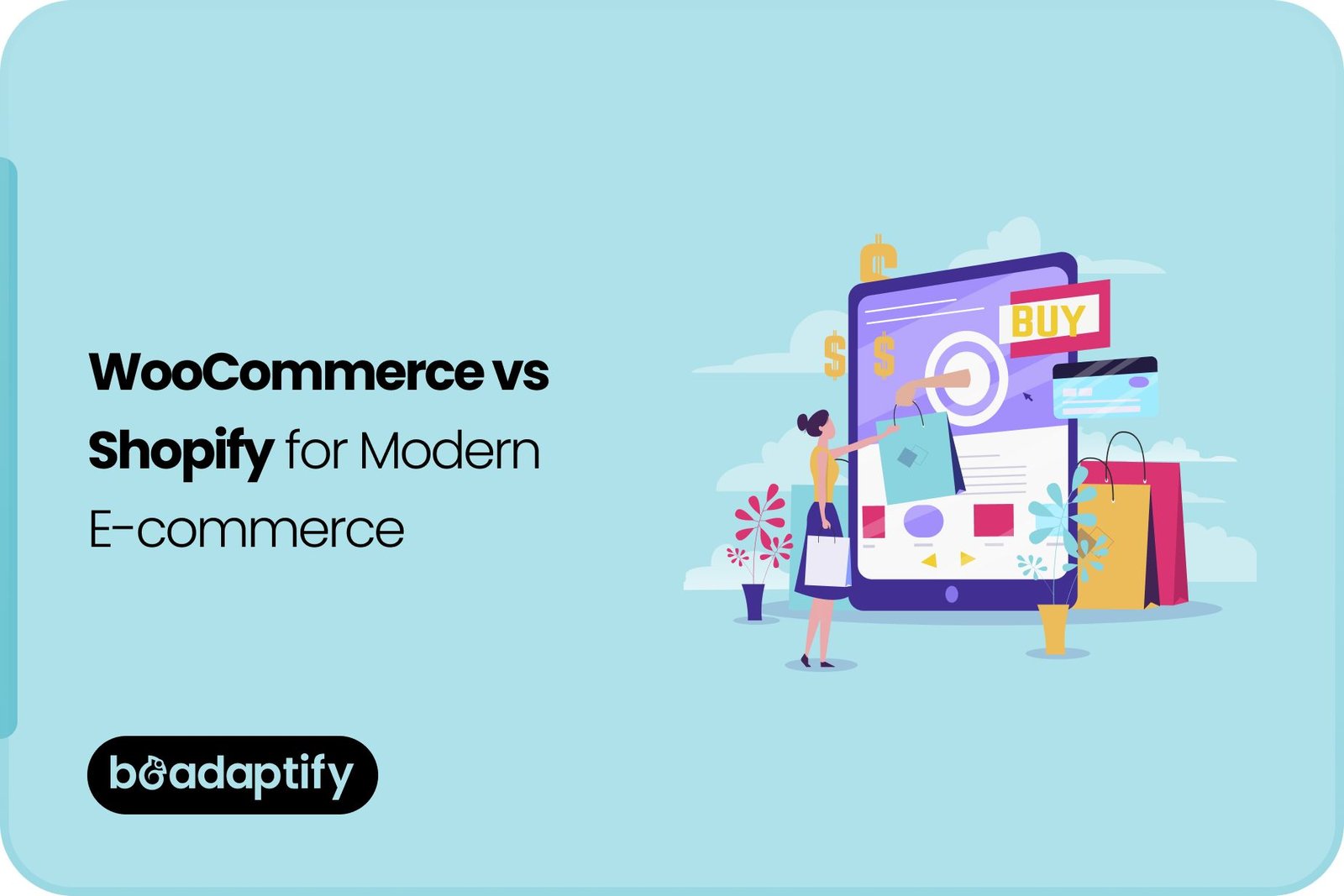
In today’s competitive digital commerce landscape, success is no longer determined solely by choosing a popular e-commerce platform. While platforms like WooCommerce and Shopify provide strong foundations, real competitive advantage is increasingly being achieved through custom development. Businesses that rely only on out-of-the-box features are often outpaced by brands that invest in tailored experiences, optimized workflows, and scalable architectures.
WooCommerce and Shopify dominate the global e-commerce ecosystem. Both platforms are widely adopted, trusted, and feature-rich. However, they differ significantly in flexibility, customization depth, cost structure, and long-term scalability. As customer expectations rise and markets become more crowded, custom development is being used as a strategic tool to unlock differentiation, improve performance, and drive sustained growth.
This guide explores WooCommerce vs Shopify through a strategic lens and explains how custom development, supported by design & development services and UI/UX design services, can help businesses win in e-commerce regardless of the platform chosen.
Understanding the Modern E-commerce Challenge
E-commerce platforms were once selected based on simplicity and speed to launch. Today, businesses are required to support:
- Personalized shopping experiences
- Complex pricing and promotions
- Multi-channel selling
- Advanced analytics and automation
- Seamless integrations with ERP, CRM, and logistics systems
These requirements are rarely fulfilled by default platform capabilities alone. As a result, custom development services are being leveraged to extend platform functionality and align technology with business strategy.
Overview of WooCommerce and Shopify
Before understanding how custom development impacts outcomes, it is important to understand what each platform offers at its core.
What Is WooCommerce?
WooCommerce is an open-source e-commerce plugin built on WordPress. It transforms a WordPress website into a fully functional online store and provides complete control over the store’s codebase, hosting environment, and data.
WooCommerce is widely chosen by businesses that value flexibility, ownership, and customization. With the right WooCommerce development company, virtually any feature or workflow can be built from scratch.
What Is Shopify?
Shopify is a fully hosted e-commerce platform designed to simplify store setup, hosting, security, and maintenance. It offers a polished user experience, built-in performance optimization, and an extensive app marketplace.
Shopify is often selected by businesses that prioritize speed, reliability, and ease of management. However, advanced customization typically requires professional Shopify development services and expertise in Shopify’s proprietary technologies.
WooCommerce vs Shopify: Core Differences Explained
1. Flexibility and Customization
WooCommerce provides unrestricted access to the underlying code, making deep customization possible. Custom checkout flows, unique pricing logic, and proprietary integrations can be implemented without platform limitations.
Shopify supports customization through themes, apps, and APIs, but certain constraints are enforced to maintain platform stability. Advanced changes often require custom apps or Shopify Plus features.
Custom development bridges these gaps, enabling businesses to push both platforms beyond their default boundaries.
2. Ownership and Control
With WooCommerce, full ownership of data, hosting, and infrastructure is retained. This level of control is critical for businesses with strict compliance, security, or performance requirements.
Shopify handles hosting, security, and updates, reducing operational overhead. However, this convenience comes at the cost of limited infrastructure control.
Custom development strategies are often used to mitigate Shopify’s limitations while maximizing its strengths.
3. Cost Structure
WooCommerce itself is free, but costs are incurred for hosting, themes, plugins, and development. Expenses vary based on customization level and infrastructure choices.
Shopify operates on a subscription model with additional costs for apps, transaction fees, and premium features.
When Hire eCommerce Developers are involved, both platforms can be optimized to reduce long-term costs and improve ROI through automation and performance enhancements.
Why Custom Development Is the Real Competitive Advantage
Regardless of whether WooCommerce or Shopify is selected, custom development is what transforms a standard store into a high-performing e-commerce business.
Custom Development Enables:
- Brand-specific user experiences
- Faster page load speeds
- Optimized conversion funnels
- Advanced product filtering and search
- Seamless third-party integrations
How Custom Development Enhances WooCommerce
When custom development is applied to WooCommerce, the platform becomes a powerful, enterprise-grade solution.
Key Benefits of Custom WooCommerce Development
- Fully customized checkout and cart experiences
- Tailored admin dashboards for operations teams
- Custom product types and pricing rules
- Advanced SEO and performance optimization
- Deep integrations with external systems
Businesses that Hire WooCommerce Developers gain the ability to evolve their store alongside their business model.
How Custom Development Elevates Shopify
Shopify’s strengths lie in stability and scalability, but its true potential is unlocked through custom development.
Key Benefits of Custom Shopify Development
- Custom themes aligned with brand identity
- Private and public Shopify apps for unique features
- Headless commerce implementations
- Advanced automation for inventory and fulfillment
- Optimized mobile-first shopping experiences
When businesses Hire Shopify Developers, Shopify becomes far more than a template-based store, it becomes a scalable commerce engine.
UI/UX Design Services: The Hidden Growth Multiplier
Custom development is most effective when paired with professional UI/UX design services. Design decisions directly influence conversion rates, customer trust, and retention.
Through data-driven design and usability testing, the following improvements are achieved:
- Reduced cart abandonment
- Improved navigation and product discovery
- Faster decision-making for users
- Stronger emotional connection to the brand
Both WooCommerce and Shopify benefit significantly when UI/UX is treated as a strategic investment rather than a cosmetic layer.
Headless Commerce: Where Custom Development Truly Shines
Headless commerce is increasingly being adopted by high-growth brands. In this architecture, the frontend is decoupled from the backend platform.
Why Headless Matters
- Frontend performance is dramatically improved
- Custom user interfaces are fully supported
- Multi-channel experiences are simplified
- Platform limitations are minimized
Both WooCommerce and Shopify support headless implementations, but expert design & development services are required to execute them effectively.
Scalability and Long-Term Growth Considerations
As businesses grow, their e-commerce requirements evolve. Custom development ensures that platforms scale without friction.
Growth Scenarios Supported by Custom Development
- Expansion into international markets
- Multi-currency and multi-language support
- Complex subscription models
- B2B and wholesale functionality
- Omnichannel commerce strategies
Without customization, these scenarios often result in performance bottlenecks or costly migrations.
Security, Compliance, and Performance Optimization
Security and performance are critical trust factors in e-commerce. Custom development allows:
- Advanced security hardening
- Custom compliance workflows
- Optimized database queries
- Server-level performance tuning
Whether WooCommerce or Shopify is used, professional development ensures enterprise-level reliability.

Choosing Between WooCommerce and Shopify: A Strategic View
The decision between WooCommerce and Shopify should not be based on popularity alone. Instead, it should be guided by:
- Business complexity
- Customization requirements
- Budget and timeline
- Internal technical resources
- Long-term scalability goals
In many cases, custom development reduces the perceived differences between the platforms by tailoring each to the business’s exact needs.
Feature |
WooCommerce |
Shopify |
|---|---|---|
| Customization Flexibility | Very High (open-source) | Moderate to High (API & apps) |
| Ownership & Control | Full control over code & hosting | Platform-managed |
| Custom Checkout | Fully customizable | Limited without custom apps |
| Headless Commerce | Fully supported | Supported (advanced plans) |
| Scalability | Highly scalable with proper setup | Built-in scalability |
| Cost Structure | Variable (hosting + dev) | Subscription + app fees |
| Best For | Businesses needing deep customization | Fast-growing brands & startups |
| Ideal With | WooCommerce Development Company | Shopify Development Company |
What Makes Beadaptify the Right Partner for Custom E-commerce Development
Beadaptify is chosen by businesses that want more than just an online store, they want a scalable, high-performing e-commerce solution built around their unique goals. Instead of relying on generic templates or one-size-fits-all plugins, solutions are crafted through a deep understanding of business models, customer journeys, and growth challenges. Every WooCommerce and Shopify project is approached with a strategy-first mindset, ensuring that custom development directly supports long-term success.
Expertise across WooCommerce development, Shopify development and UI/UX design services allows complex requirements to be translated into seamless shopping experiences. From custom checkout flows and performance optimization to advanced integrations and headless commerce architectures, each solution is designed to improve conversions, enhance user engagement, and scale without friction as the business grows.
What truly sets Beadaptify apart is the focus on partnership rather than delivery alone. Transparent communication, agile execution, and continuous optimization are built into every engagement. Whether you are planning to Hire WooCommerce Developers, Hire Shopify Developers, or build a fully customized e-commerce platform, Beadaptify ensures your store is future-ready, competitive, and built to win in today’s evolving digital commerce landscape.
Conclusion
WooCommerce and Shopify are both powerful e-commerce platforms, but neither guarantees success on its own. Competitive advantage is achieved when platforms are extended through thoughtful, strategic custom development.
By investing in design & development services, leveraging UI/UX design services, and working with experienced development partners, businesses are empowered to build scalable, high-performing e-commerce experiences that stand out in crowded markets. In the WooCommerce vs Shopify debate, the real winner is not the platform, it is the business that uses custom development to unlock its full potential.
FAQs on WooCommerce vs Shopify
Which is better: WooCommerce or Shopify?
Both platforms are powerful. WooCommerce offers greater flexibility and control, while Shopify provides speed, stability, and managed infrastructure. The best choice depends on business goals and customization needs.
Why is custom development important for e-commerce?
Custom development enables tailored user experiences, performance optimization, advanced integrations, and scalability features that off-the-shelf plugins cannot fully deliver.
Should I hire WooCommerce or Shopify developers?
You should hire developers based on your platform choice and business complexity. Hire WooCommerce Developers for full customization and ownership, or Hire Shopify Developers for rapid scalability and performance.
Can Shopify be customized like WooCommerce?
Yes, but differently. Shopify customization is achieved through APIs, custom apps, and headless setups. With expert Shopify development services, advanced functionality can be implemented.
Is custom development expensive?
While upfront costs may be higher, custom development often reduces long-term expenses by eliminating plugin dependency, improving conversions, and supporting scalability.
Does custom UI/UX design really impact sales?
Absolutely. Professional UI/UX design services reduce friction, improve trust, and directly increase conversion rates and average order value.
Can WooCommerce or Shopify support enterprise-level stores?
Yes. With the right design & development services, both platforms can support enterprise workflows, high traffic, and complex integrations.