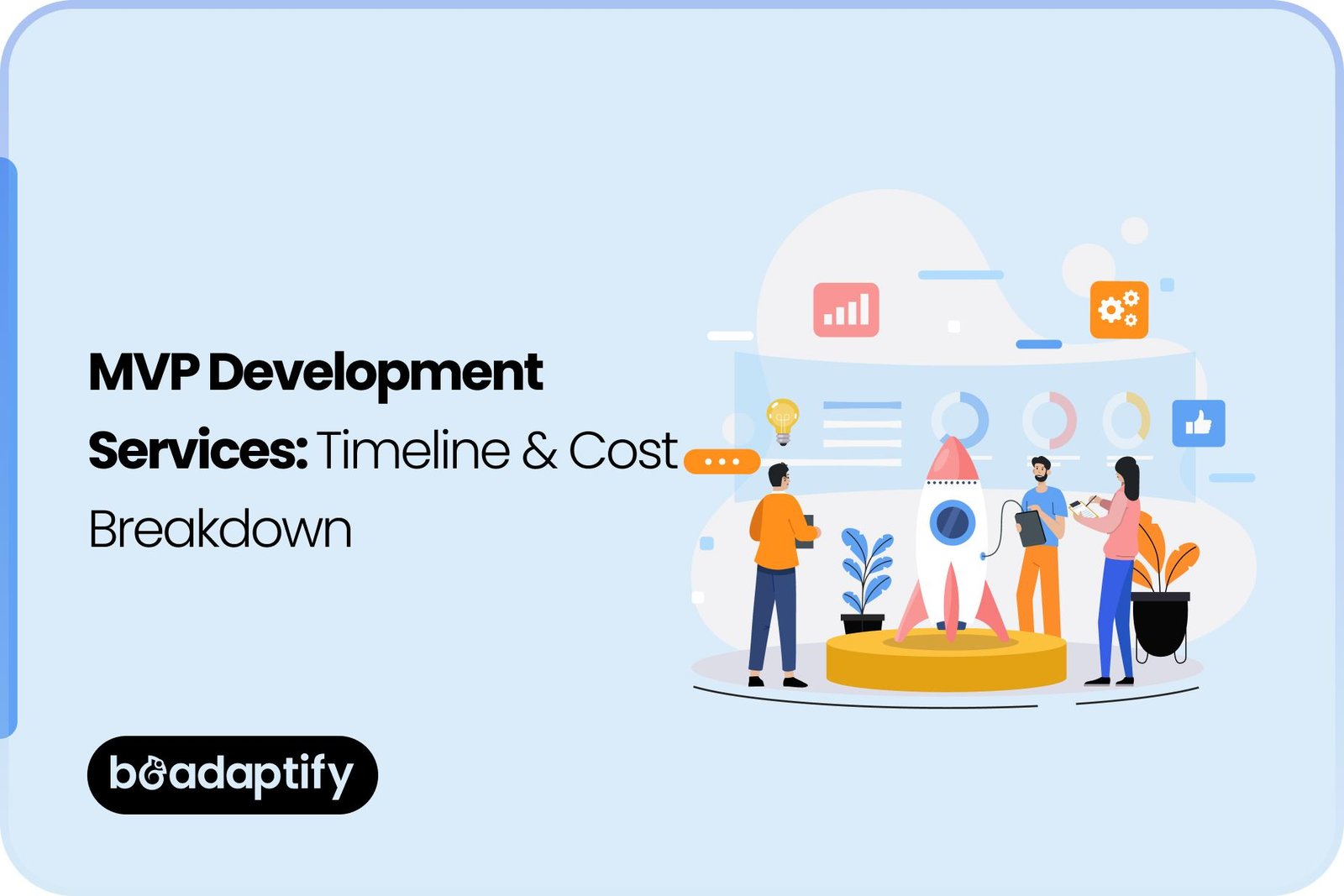
In today’s highly competitive digital market, speed and validation are being prioritized more than ever. Businesses are no longer expected to spend months or years building fully featured digital products before testing market demand. Instead, products are increasingly being launched in leaner, smarter, and more strategic forms. This is where MVP development services have become essential.
An MVP, or Minimum Viable Product, is being developed as the earliest usable version of a product that includes only the core features required to solve a primary user problem. Rather than being treated as an incomplete product, an MVP is being positioned as a strategic business tool. It is being used to validate ideas, attract investors, collect user feedback, and reduce development risk before major investment is committed.
In 2026, startups, enterprises, and innovation teams are increasingly relying on a trusted MVP development company to move from concept to launch quickly and efficiently. Through a well-structured MVP development service, businesses are being enabled to test assumptions, shorten time-to-market, and build products with greater confidence.
This guide explains what is included in MVP development services in 2026, how long the process usually takes, what the cost breakdown looks like, and why businesses continue to choose an experienced software development company for MVP execution.
What Is an MVP in Product Development?
A Minimum Viable Product is being defined as the simplest version of a product that can be launched with enough functionality to satisfy early users and validate a core business concept. It is not being created to impress with complexity. It is being built to answer critical questions:
- Is there a real market need?
- Will users adopt this solution?
- Which features matter most?
- What should be improved before scaling?
An MVP is therefore being used as both a product and a learning mechanism. Instead of guessing what users want, businesses are able to gather actual feedback and make data-informed decisions.
This model is especially valuable in 2026, when product development costs are rising, competition is intense, and user expectations are evolving rapidly.
Why MVP Development Matters More in 2026
Several market realities are making MVP development more important than ever.
Faster Market Validation Is Required
Business ideas are being tested in increasingly crowded markets. Launching slowly can result in missed opportunities. Through an MVP, products are being introduced faster, allowing businesses to validate demand before competitors dominate the space.
Product Risk Must Be Reduced
Full-scale software development without validation is being seen as a high-risk investment. MVP development reduces this risk by allowing only the most essential functionality to be built first.
Funding Environments Favor Proof
Investors are increasingly expecting traction, prototypes, and user validation before capital is committed. A well-built MVP provides proof that an idea has market potential.
User Expectations Are Evolving
Users today expect intuitive digital experiences, but they also provide immediate feedback. MVPs allow that feedback to be captured early, before larger investments are made in features users may not even want.
Agile Business Models Are Being Preferred
Rather than committing to rigid multi-year product roadmaps, businesses are increasingly embracing agile, iterative growth. MVP development supports this model naturally.
What Is Included in MVP Development Services?
A professional MVP development service includes far more than coding a basic product. In 2026, comprehensive MVP offerings are being structured around strategy, design, technology, and growth-readiness.
1. Product Discovery and Idea Validation
The first step in MVP development services is usually product discovery. During this phase, the idea is being refined, validated, and translated into actionable product requirements.
This phase typically includes:
- business goal analysis
- target audience identification
- competitor review
- problem-solution fit assessment
- value proposition definition
- feature prioritization
Without this stage, an MVP may be built around assumptions rather than evidence. A strong MVP development company helps ensure that the foundation is strategically sound before development begins.
2. Feature Prioritization and Scope Definition
One of the most important parts of MVP development is deciding what should and should not be included in the first version.
This process usually involves grouping features into categories such as:
- core must-have features
- secondary but useful features
- future enhancements
- non-essential features to exclude initially
This step prevents scope creep and keeps the product focused on solving one main problem effectively.
3. User Flow Mapping and Wireframing
Before visual design begins, the user journey is being mapped carefully. Key actions, screens, and flows are outlined to ensure the product experience is intuitive.
Wireframes are then created to visualize:
- screen layouts
- navigation paths
- feature placement
- content hierarchy
This step helps identify friction points early and aligns stakeholders before development starts.
4. UI/UX Design
Modern MVPs are no longer expected to look rough or unfinished. In 2026, even early-stage products are expected to deliver polished and user-friendly experiences.
UI/UX work in MVP development services usually includes:
- visual design systems
- clickable prototypes
- responsive interface layouts
- usability-focused interactions
- accessibility considerations
5. Frontend and Backend Development
This is the core build phase where the product is actually engineered.
Depending on the project, development may include:
- frontend interface development
- backend architecture
- database design
- API development
- third-party integrations
- admin panel creation
- authentication and user management
6. Quality Assurance and Testing
Testing is a standard part of reliable MVP development services. Even a lean product must function properly at launch.
Testing may include:
- functional testing
- cross-browser testing
- mobile responsiveness testing
- bug fixing
- performance validation
- security checks
This phase ensures that the MVP is stable enough for real users.
7. Deployment and Launch Support
Once development and testing are completed, the product is deployed to a live environment.
Deployment support often includes:
- cloud hosting setup
- domain and SSL configuration
- server deployment
- app store submission support, if mobile
- monitoring setup
- production troubleshooting
8. Post-Launch Iteration Support
A quality MVP development services does not end at launch. Post-launch support is often included or offered as a next-stage service.
This may involve:
- bug fixes after user feedback
- analytics review
- performance monitoring
- feature refinement
- roadmap planning for version 2
This phase is where the real learning from the MVP begins.
Who Needs MVP Development Services?
MVP development services are not limited to startups. They are being used by many types of organizations.
Startups
For startups, MVPs are often used to test an idea quickly without exhausting capital. They are also used for fundraising and market entry.
Enterprises
Larger organizations are increasingly building MVPs for internal innovation, new digital products, or business unit experiments before broader rollout.
Founders with Non-Technical Backgrounds
Many founders rely on an MVP development company to transform business ideas into working products without needing an in-house technical team.
Agencies and Product Teams
Agencies and innovation teams use MVP services to validate client concepts and reduce delivery risk.
What Types of Products Are Commonly Built as MVPs?
Almost any digital product can be launched initially as an MVP, including:
- SaaS platforms
- mobile apps
- marketplaces
- fintech products
- healthtech tools
- edtech platforms
- internal business tools
- AI-enabled workflows
- booking and scheduling apps
- social or community platforms
The MVP approach is especially useful where demand uncertainty exists or rapid feedback is valuable.
MVP Development Timeline in 2026
The timeline for MVP development depends on product complexity, number of features, platform type, and decision speed from stakeholders. However, a general structure can be estimated.
Typical Timeline Range
In 2026, most MVPs are being completed in approximately:
- 4 to 6 weeks for very simple products
- 6 to 12 weeks for standard MVPs
- 3 to 5 months for more advanced MVPs with integrations or multi-platform support
Timeline by Phase
Discovery and Planning: 1 to 2 weeks
During this phase, strategy, scope, user flows, and feature prioritization are being finalized.
Design: 1 to 3 weeks
Wireframes, prototypes, and UI design are being created and approved.
Development: 3 to 10 weeks
The majority of the build occurs here. Timeline length depends on feature complexity and technical architecture.
Testing and Launch Prep: 1 to 2 weeks
Quality checks, fixes, and deployment preparations are being completed.
What Can Increase Timeline?
The timeline may be extended by:
- unclear requirements
- frequent changes in scope
- complex third-party integrations
- delayed stakeholder approvals
- building for both web and mobile simultaneously
- advanced dashboards, AI layers, or role-based systems
MVP Development Cost Breakdown in 2026
MVP development cost is one of the most searched concerns for founders and product teams. In 2026, pricing varies significantly based on scope, region, technology, and team structure.
Average MVP Cost Ranges
General ranges may look like this:
- $10,000 to $25,000 for very basic MVPs
- $25,000 to $60,000 for standard MVP products
- $60,000 to $150,000+ for advanced MVPs with deeper functionality
These ranges vary depending on whether the MVP is being built by freelancers, in-house teams, or a full-service software development company.
Cost Drivers in MVP Development
1. Product Complexity
A basic dashboard app will cost far less than a two-sided marketplace or fintech platform with verification flows and payment integrations.
2. Number of Features
The more features included, the more design, development, and testing effort is required.
3. Platform Scope
Building a web-only MVP is generally less expensive than building both iOS and Android apps alongside a web admin panel.
4. UI/UX Quality
Higher-end custom design, animation, and polished UX increase costs, though they may improve credibility and usability.
5. Technology Stack
Some technologies and architectures are faster and more affordable for MVPs, while others require more specialized expertise.
6. Integrations
Payment systems, maps, CRMs, analytics, chat tools, and AI APIs can all increase development time and cost.
7. Team Composition
A complete team may include:
- product strategist
- UI/UX designer
- frontend developer
- backend developer
- QA engineer
- project manager
Working with a dedicated MVP development company provides access to this structure but at a higher cost than hiring a single freelancer.
Sample MVP Cost by Product Type
While actual pricing varies, these examples can provide directional guidance.
SaaS MVP
A SaaS MVP with user login, dashboard, subscription setup, and admin controls may cost between $25,000 and $70,000.
Marketplace MVP
A two-sided marketplace with listings, profiles, messaging, and payment support may cost between $40,000 and $100,000+.
Mobile App MVP
A mobile-first MVP with onboarding, push notifications, API integrations, and user account features may cost between $30,000 and $90,000.
AI-Enabled MVP
If AI is being integrated through APIs or workflow automation, pricing may increase depending on complexity, model use, and infrastructure.
How MVP Costs Can Be Optimized
Cost optimization should not be confused with cutting corners. Instead, it should involve smarter scoping and execution.
Focus Only on the Core Problem
The MVP should solve one important user problem clearly. Features that do not support that goal should be postponed.
Use Existing Services Where Possible
Instead of custom-building everything, third-party tools may be used for:
- authentication
- payments
- analytics
- notifications
- AI features
- communication tools
This can reduce development time and cost.
Start with One Platform
In many cases, launching on web first or one mobile platform is more efficient than trying to cover everything at once.
Use Agile Iteration
Phased delivery allows high-priority features to be shipped first, while later features are informed by real feedback.
Work with an Experienced Partner
A knowledgeable MVP development company helps avoid expensive mistakes, poor architecture decisions, and overbuilt early versions.
MVP vs Full Product Development
Businesses often ask whether an MVP is simply a cheaper version of a full product. That is not entirely accurate.
An MVP Is Not Just a Smaller Product
A full product is generally being built for scale, broad user needs, advanced monetization, and feature maturity.
An MVP is being built for validation, learning, and iteration.
The Goals Are Different
A full product aims to expand and dominate.
An MVP aims to test and learn.
The Process Is Leaner
MVP development emphasizes speed, prioritization, and adaptability.
Benefits of Working with an MVP Development Company
Partnering with a specialized MVP development company offers several advantages.
Strategic Product Thinking
A quality partner helps determine what should actually be built first and why.
Faster Launch Cycles
Experienced teams can move from concept to release more efficiently.
Better Technical Decisions
The right development partner ensures the MVP is lean but not fragile.
Lower Product Risk
Validated learning reduces wasted spend on features users may not want.
Investor Readiness
A strong MVP improves traction, demo quality, and fundraising potential.
Scalable Foundation
Even though the MVP is lean, its architecture can still be designed to support future growth.
How to Choose the Right MVP Software Development Company
Not every software development company is equally suited for MVP work. MVP development requires speed, focus, and product judgment.
When evaluating a provider, businesses should consider:
- experience with early-stage product builds
- portfolio of launched MVPs
- ability to challenge feature overload
- clear process and timeline management
- strong UI/UX capability
- post-launch iteration support
- transparent pricing structure
A good MVP partner is not just a coding vendor. It acts as a product-building collaborator.
Common Mistakes in MVP Development
Several avoidable mistakes continue to delay or derail MVP success.
Building Too Many Features
Trying to please every imagined user leads to bloated scope and delayed launches.
Skipping Product Discovery
Without validation and user understanding, even technically strong MVPs can miss the market.
Underestimating Design
Poor UX can cause early users to abandon the product before its core value is understood.
Choosing the Wrong Tech Stack
Building an MVP with overly complex architecture can waste both time and budget.
Ignoring Post-Launch Learning
The MVP should not be treated as the finish line. It is the beginning of product intelligence.
Future of MVP Development Services in 2026 and Beyond
MVP development services are continuing to evolve. Several trends are shaping the way products are being built and launched.
AI-Assisted Development Is Increasing
Development workflows are being accelerated through AI-assisted coding, testing, and prototyping tools.
Faster Prototyping Is Becoming Standard
Clickable prototypes and no-code validation tools are being used before engineering starts.
Data-Driven Iteration Is Being Prioritized
More MVPs are being launched with built-in analytics and behavior tracking from day one.
Cross-Functional Teams Are Becoming the Norm
The best MVP results are being achieved through collaboration across product strategy, design, engineering, and growth.
Founder-Friendly Models Are Expanding
More MVP development companies are offering startup-focused packages, phased retainers, and rapid-launch models.
Why Startups and Businesses Trust Beadaptify for MVP Development?
Building an MVP requires more than just coding a basic product. It requires the right balance of speed, strategy, usability, and scalability. At Beadaptify, MVPs are developed with a strong focus on market validation, lean execution, and future growth readiness. As a trusted MVP development company, we help startups and businesses transform product ideas into working solutions that can be launched quickly and improved through real user feedback. Our team combines product strategy, UI/UX design, and engineering expertise to deliver structured MVP development service solutions that reduce risk and accelerate time-to-market.
As an experienced MVP software development company and full-service software development company, we ensure that every MVP is built with the right core features, scalable architecture, and a roadmap for future expansion. From idea validation to post-launch support, Beadaptify helps businesses move forward with clarity and confidence.
Final Thoughts
In 2026, MVP development is not being treated as a shortcut. It is being used as a smarter path to product success. A well-executed MVP helps businesses validate demand, reduce development risk, accelerate market entry, and build with greater confidence. Whether the goal is to launch a startup, test a new SaaS product, attract investment, or validate an internal innovation concept, MVP development services provide a disciplined and efficient way forward.
By working with Beadaptify, an MVP development company, partnering with a capable MVP software development company, and choosing a structured MVP development service, businesses can move from idea to evidence with less waste and better outcomes. In a market where speed matters and assumptions are expensive, MVP development remains one of the most practical and strategic ways to build digital products.

FAQ on MVP Development
What is included in MVP development services?
MVP development services typically include product discovery, feature prioritization, UI/UX design, frontend and backend development, testing, deployment, and post-launch iteration support.
How long does MVP development take in 2026?
Most MVPs are completed within 4 to 12 weeks, while more advanced products may take 3 to 5 months, depending on complexity, features, and integrations.
How much does MVP development cost in 2026?
MVP development costs generally range from $10,000 to $150,000+, depending on scope, design quality, platform type, and technical complexity.
Why should startups build an MVP first?
An MVP helps startups validate ideas faster, reduce product risk, gather real user feedback, and avoid investing heavily in features that may not be needed.
How do I choose the right MVP development company?
The right MVP development company should have experience with early-stage product builds, a clear development process, strong design capability, and the ability to support post-launch iteration.
What is the difference between an MVP and a full product?
An MVP is built to validate a product idea with essential features only, while a full product is designed for broader functionality, scale, and long-term growth.