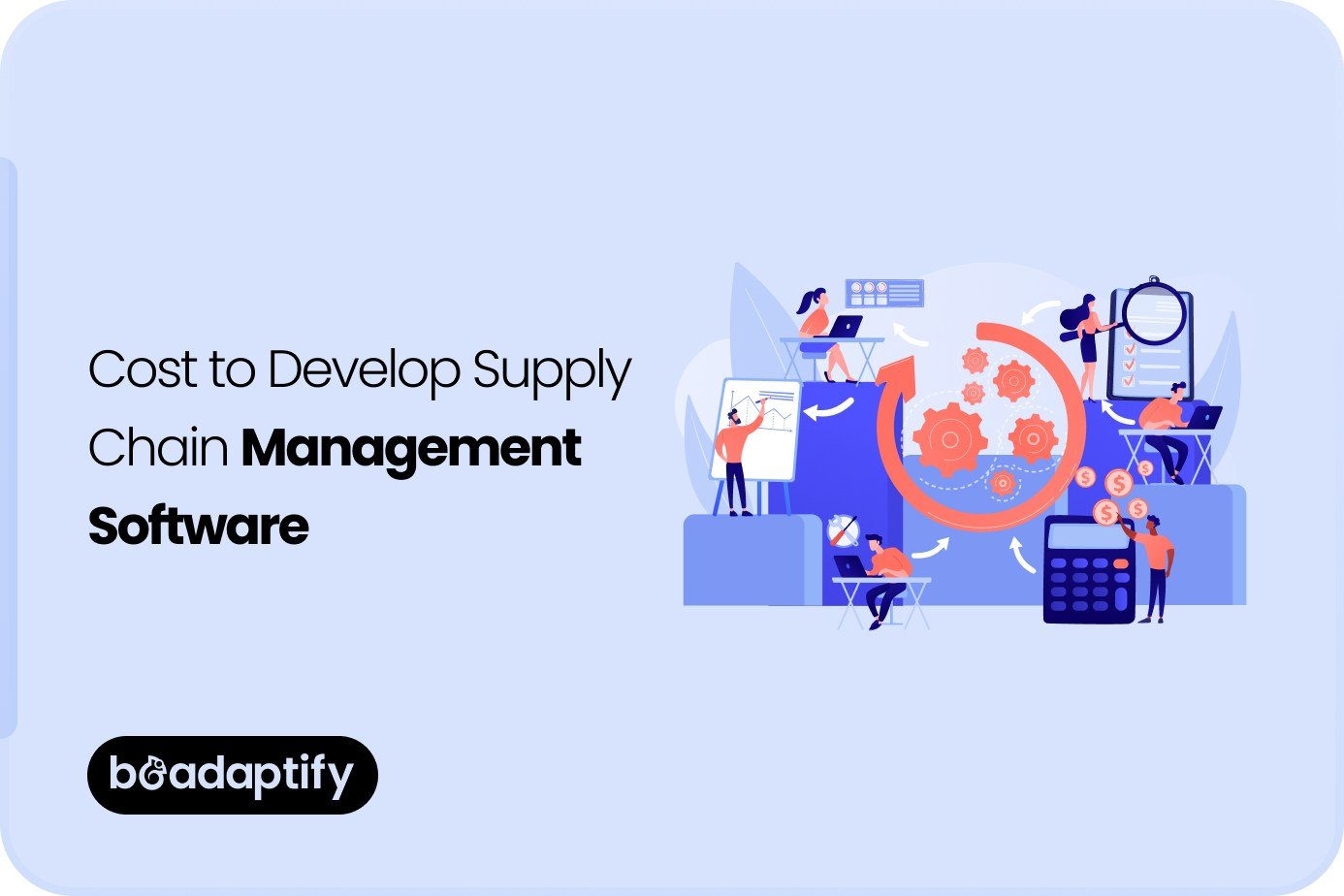
Supply chain operations are being pushed into a new phase of digital maturity in 2026. Planning, procurement, warehousing, transportation, inventory, vendor coordination, and demand forecasting are no longer being managed effectively through disconnected spreadsheets, manual workflows, or rigid legacy systems. As supply networks become more global, customer expectations become faster, and operational risks become more complex, custom supply chain management software is increasingly being viewed as a strategic investment rather than a back-office technology expense.
In many businesses, off-the-shelf software is still being used for basic supply chain processes. However, standardized products are often found to be too limited when workflows become more specialized, multi-location coordination becomes more demanding, or real-time visibility becomes essential. Because of this, custom supply chain systems are being adopted more widely by manufacturers, distributors, retailers, logistics providers, healthcare organizations, and enterprise operations teams that need software shaped around their exact processes.
A custom supply chain management platform is not usually being built just to digitize one process. It is being developed to connect multiple workflows into one operational environment. Inventory movement, order status, purchase approvals, shipment updates, vendor data, stock thresholds, warehouse performance, and planning decisions are increasingly being expected to work inside one integrated system. When those systems are designed correctly, stronger visibility, faster decision-making, lower waste, and better operational control can be achieved.
Because of that, the cost of custom supply chain management software in 2026 is not being shaped by coding effort alone. It is being influenced by workflow complexity, the number of modules included, integration depth, UI/UX design quality, analytics requirements, automation logic, deployment architecture, and long-term scalability expectations.
This guide explains what custom supply chain management software usually includes, which factors affect total cost in 2026, how pricing differs by project scope, and what businesses should consider before budgeting for development.
Why Custom Supply Chain Management Software Is Being Prioritized in 2026
Supply chain software is being prioritized more heavily because operational complexity has increased. A business may now be managing multiple suppliers, multiple fulfillment locations, multiple sales channels, and stricter customer expectations at the same time. Delays, stockouts, forecasting errors, vendor inconsistencies, and poor internal coordination can affect both profitability and customer trust.
In many cases, generic software is being used to cover only part of the workflow. One system may be used for procurement, another for warehousing, another for transportation, and another for reporting. When this happens, teams are often forced to move data manually between systems or rely on partial visibility when decisions are made. These inefficiencies are expensive even when they are not immediately visible on a project budget.
Custom software is therefore being chosen because it allows the supply chain workflow to be designed around the business rather than forcing the business to adapt to rigid software logic. This becomes especially valuable when operational models are unique, compliance requirements are strict, or real-time coordination is critical.
The cost of custom supply chain software should therefore be viewed in context. It is not only the cost of building software. It is also the cost of replacing inefficiency, reducing manual work, improving planning accuracy, and creating a stronger operational foundation.
What Is Custom Supply Chain Management Software?
Custom supply chain management software is a tailored digital platform created to manage and optimize supply chain activities based on the specific needs of a business. Unlike generic supply chain tools, custom software is developed around actual workflows, stakeholder roles, approval structures, reporting needs, and operational priorities.
Depending on the business model, custom software may be built to support:
- procurement management
- supplier onboarding and vendor portals
- purchase orders and approvals
- inventory control
- warehouse operations
- transportation and shipment tracking
- order fulfillment workflows
- demand forecasting
- production planning
- stock transfers across locations
- returns and reverse logistics
- analytics and reporting dashboards
- workflow automation and alerts
The more of these functions that are included, the higher the likely development cost. However, the value of the system also tends to increase when workflows are unified properly.
Main Cost Factors in 2026
The cost of custom supply chain management software is usually driven by several major variables. These factors should be evaluated early because they influence architecture, team composition, timeline, and long-term maintenance effort.
1. Scope of the Platform
The first major cost driver is the scope of the platform. A smaller solution focused on procurement and inventory will cost much less than an enterprise-wide platform covering supplier management, warehouse coordination, transportation visibility, analytics, and workflow automation.
A narrow-scope product may be developed faster and with fewer integrations. A broader platform usually requires more user roles, deeper data logic, larger testing cycles, and stronger admin controls.
This is why businesses are often advised to define whether they need:
- a focused operational tool
- a modular supply chain platform
- or a full enterprise coordination system
The wider the scope, the larger the budget requirement will usually be.
2. Number of Modules Included
Supply chain software is often built in modules rather than as one simple interface. Common modules may include:
- vendor management
- inventory tracking
- order management
- warehouse management
- transport and logistics
- analytics and forecasting
- billing and settlements
- alerts and exceptions
Each additional module increases the cost because separate logic, screens, permissions, workflows, and testing scenarios must be built.
For example, a system that only manages stock movement will usually cost far less than a system that also manages purchase approvals, vendor scorecards, shipment milestones, and predictive planning.
3. UI/UX Design Complexity
Custom supply chain software is often used by operational teams all day long. That means the product interface matters more than many businesses initially expect. Poor usability can slow adoption, increase training requirements, and reduce operational efficiency even if the backend is technically strong.
This is why ui/ux design services are increasingly being prioritized in enterprise software projects. Dashboards, approval screens, warehouse actions, exception alerts, filter logic, and reporting views must feel clear and fast. Complex workflows should be simplified, not made more confusing.
UI/UX complexity may increase cost when:
- there are many user roles
- dashboards are heavily data-driven
- mobile and web experiences are both needed
- workflows are highly conditional
- the product requires visual inventory or logistics mapping
Investing in design often improves long-term ROI, but it should still be included properly in the budget.
4. Integration Requirements
Few supply chain systems work in isolation. A custom platform often needs to integrate with:
- ERP systems
- accounting tools
- warehouse hardware systems
- shipping carriers
- barcode scanners
- procurement systems
- CRM or order systems
- manufacturing software
- IoT or tracking tools
- external supplier databases
Integrations are one of the biggest hidden cost drivers in enterprise software development. The more external systems must be connected, the more time is usually required for architecture planning, API development, security review, testing, and error handling.
A platform with minimal integrations may be launched faster. A platform deeply connected across the business will cost more, but it usually delivers more value.
5. Real-Time Data and Tracking
Real-time functionality significantly affects development cost. If the software must update stock levels, shipment status, warehouse activity, or operational exceptions in near real time, more technical complexity is introduced.
Real-time requirements may involve:
- live inventory synchronization
- shipment tracking feeds
- event-based notifications
- status dashboards
- exception monitoring
- geolocation for transport visibility
These capabilities require stronger backend design, more resilient infrastructure, and more performance testing. As a result, they are usually priced above standard form-based workflow systems.
6. Analytics and Forecasting Capabilities
A supply chain platform in 2026 is often expected to do more than record activity. It is increasingly expected to support decision-making. That means analytics and forecasting functions are becoming more common.
These may include:
- stock trend analysis
- vendor performance scoring
- order cycle reporting
- demand pattern forecasting
- low-stock prediction
- margin or cost impact visibility
- delivery delay analysis
Advanced analytics increase cost because dashboards, data models, visualizations, and in some cases predictive logic must be built. If forecasting or AI-assisted insights are required, the pricing usually increases further.
7. User Roles and Permissions
Enterprise supply chain systems often serve multiple users with very different responsibilities. The number of roles directly affects the cost of the platform.
Common roles may include:
- procurement managers
- warehouse staff
- logistics teams
- finance reviewers
- supplier representatives
- admin users
- operations leadership
- customer service teams
Each role often requires different permissions, workflows, screens, and reporting visibility. A system with simple user access costs less. A system with deep role-based access control costs more, but is often essential in enterprise environments.
8. Deployment Model and Infrastructure
The hosting and deployment approach also affects cost. Some businesses prefer a cloud-native SaaS-style deployment. Others require private cloud, on-premise support, or hybrid enterprise architecture.
Infrastructure decisions can influence:
- security controls
- scalability
- compliance
- integration approach
- maintenance overhead
A cloud-based deployment may reduce hardware burden, but the platform still needs proper infrastructure setup, monitoring, backup planning, and access controls.
9. Security and Compliance Requirements
Supply chain software often handles commercially sensitive information such as vendor pricing, order values, stock movement, supplier contracts, and operational records. In some sectors, regulatory requirements may also apply.
Security-related cost may increase when the platform requires:
- advanced authentication
- role-based access management
- audit logs
- encryption
- approval traceability
- secure document handling
- compliance-specific workflows
Security is rarely the most visible part of the project, but it can significantly affect development effort.
Typical Cost Ranges in 2026
Actual pricing depends on geography, team seniority, and business scope, but broad custom software cost ranges can still be estimated.
Basic Operational Tool: $25,000 to $60,000
A lower-complexity platform may include:
- inventory tracking
- purchase order management
- simple dashboards
- limited reporting
- basic roles and permissions
This type of system is often suitable for smaller operations or early-stage digital transformation.
Mid-Level Supply Chain Platform: $60,000 to $150,000
A mid-range custom platform may include:
- multiple operational modules
- vendor management
- warehouse workflows
- shipment status handling
- stronger analytics
- admin dashboard
- multiple user roles
- selected third-party integrations
This range is common for growing businesses that need more than off-the-shelf tools but are not yet building a highly complex enterprise ecosystem.
Enterprise-Grade Platform: $150,000 to $350,000+
A more advanced supply chain management system may include:
- multi-location operations
- deep ERP integrations
- advanced analytics
- forecasting
- real-time updates
- mobile + web support
- extensive permissions
- supplier portals
- complex automation logic
This level of investment is usually seen when the software is being built as a strategic internal platform or a multi-entity operational system.
Cost by Development Stage
Breaking down cost by stage is often helpful during planning.
Discovery and Planning
This stage includes workflow mapping, user research, requirements gathering, business logic definition, and technical planning. It may represent a smaller share of total spend, but it often has a large impact on final efficiency.
UI/UX Design
This includes wireframes, dashboard structure, design systems, role-based interface planning, and usability refinement. Strong ui/ux design services can reduce adoption problems later.
Development
This is usually the largest cost area and covers frontend, backend, database logic, integrations, admin systems, and workflow implementation.
Testing and QA
Enterprise software needs more than surface-level testing. Role-based workflows, integrations, analytics logic, and exception handling should all be validated carefully.
Deployment and Launch
Deployment includes environment setup, security configuration, training support, and production release readiness.
Post-Launch Support
After launch, the platform often needs bug fixes, optimization, reporting refinements, and future module expansion.
What Often Increases Cost Unexpectedly
Several items often increase software budgets more than expected if they are not discussed early.
Scope Creep
When modules or workflow steps are added continuously during development, both timeline and cost increase quickly.
Legacy System Complexity
Older ERP or warehouse systems often require more work to integrate than initially assumed.
Poor Requirements Clarity
If operational rules are not documented clearly, development cycles become slower and more expensive.
Overbuilt First Version
Trying to build every feature in version one often increases budget without improving launch success proportionally.
Weak User Experience Planning
If the software is built functionally but not designed around actual user behavior, redesign costs may appear later.
How to Reduce Cost Without Reducing Quality
Reducing cost should not mean building weak software. It should mean sequencing the project more intelligently.
Start with a Modular MVP
Instead of building every supply chain function at once, the first release can focus on the highest-value workflows such as procurement, inventory, or order visibility.
Prioritize Business-Critical Integrations
Not every integration needs to be handled in phase one. Start with the systems that create the most operational value.
Invest in Discovery Early
Clear planning usually reduces rework, delays, and avoidable technical debt.
Build Reusable Design Components
Strong design & development services can help create reusable UI patterns that improve speed and consistency.
Use Phased Rollout Strategy
Rolling out modules step by step often makes adoption easier and budgeting more manageable.
Why Work With a Software Product Development Company
Custom supply chain software is rarely a simple website or dashboard project. It involves workflow engineering, enterprise architecture, reporting logic, user-role management, integration planning, and long-term scalability.
A skilled software product development company brings value in several areas:
- product scoping
- architecture planning
- UI/UX workflow design
- integration strategy
- development execution
- QA and deployment discipline
- long-term product roadmap support
Why Businesses Choose Beadaptify for Enterprise Supply Chain Solutions?
Building custom supply chain management software requires much more than technical development. It requires a clear understanding of operational workflows, system integrations, reporting needs, user roles, and long-term business scalability. At Beadaptify, supply chain software solutions are built with a strong focus on clarity, performance, and measurable business value. As a trusted software product development company, we help businesses design and build systems that align with real operational processes instead of forcing teams into rigid software structures.
Our software development services are designed to support everything from product discovery and workflow planning to architecture, development, testing, and post-launch refinement. Through integrated design & development services and practical ui/ux design services, we ensure that supply chain platforms are not only technically strong but also intuitive, efficient, and ready to support enterprise growth.
Final Thoughts
Custom supply chain management software cost in 2026 is being shaped by much more than coding hours. It is being influenced by business complexity, module count, design quality, integrations, real-time requirements, analytics depth, security expectations, and long-term operational goals.
For some businesses, a focused operational tool may be enough. For others, a broader enterprise-grade system may be required to support visibility, automation, and scalability across the full supply chain. In both cases, budget should be planned carefully around actual workflow value rather than software assumptions alone. In 2026, the question is no longer just how much custom supply chain software costs. The more important question is how much operational value the right system can create over time.

FAQs About Supply Chain Management Software
How much does custom supply chain management software cost in 2026?
The cost of custom supply chain management software in 2026 depends on the number of modules, workflow complexity, integrations, user roles, analytics requirements, and deployment model. Basic tools usually cost less, while enterprise-grade platforms require a significantly larger investment.
What factors affect supply chain software development cost the most?
The biggest cost factors usually include module scope, ERP or third-party integrations, real-time data handling, UI/UX design complexity, role-based permissions, analytics, automation, and infrastructure requirements.
Why do businesses choose custom supply chain software instead of off-the-shelf tools?
Businesses choose custom software when their workflows, reporting needs, integrations, or operational models are too specific for generic platforms. Custom systems offer stronger flexibility, scalability, and process alignment.
Which modules are commonly included in supply chain management software?
Common modules include procurement, vendor management, inventory tracking, warehouse operations, shipment monitoring, order management, analytics dashboards, and workflow automation.
How long does it take to build custom supply chain software?
The timeline depends on project scope and complexity. Smaller operational tools may take less time, while broader enterprise platforms with multiple modules, integrations, and dashboards may take several months or longer.
Why are UI/UX design services important for supply chain software?
UI/UX design services are important because supply chain systems are often used daily by multiple teams. A clear and efficient interface improves usability, reduces training time, and helps teams work faster with fewer errors.