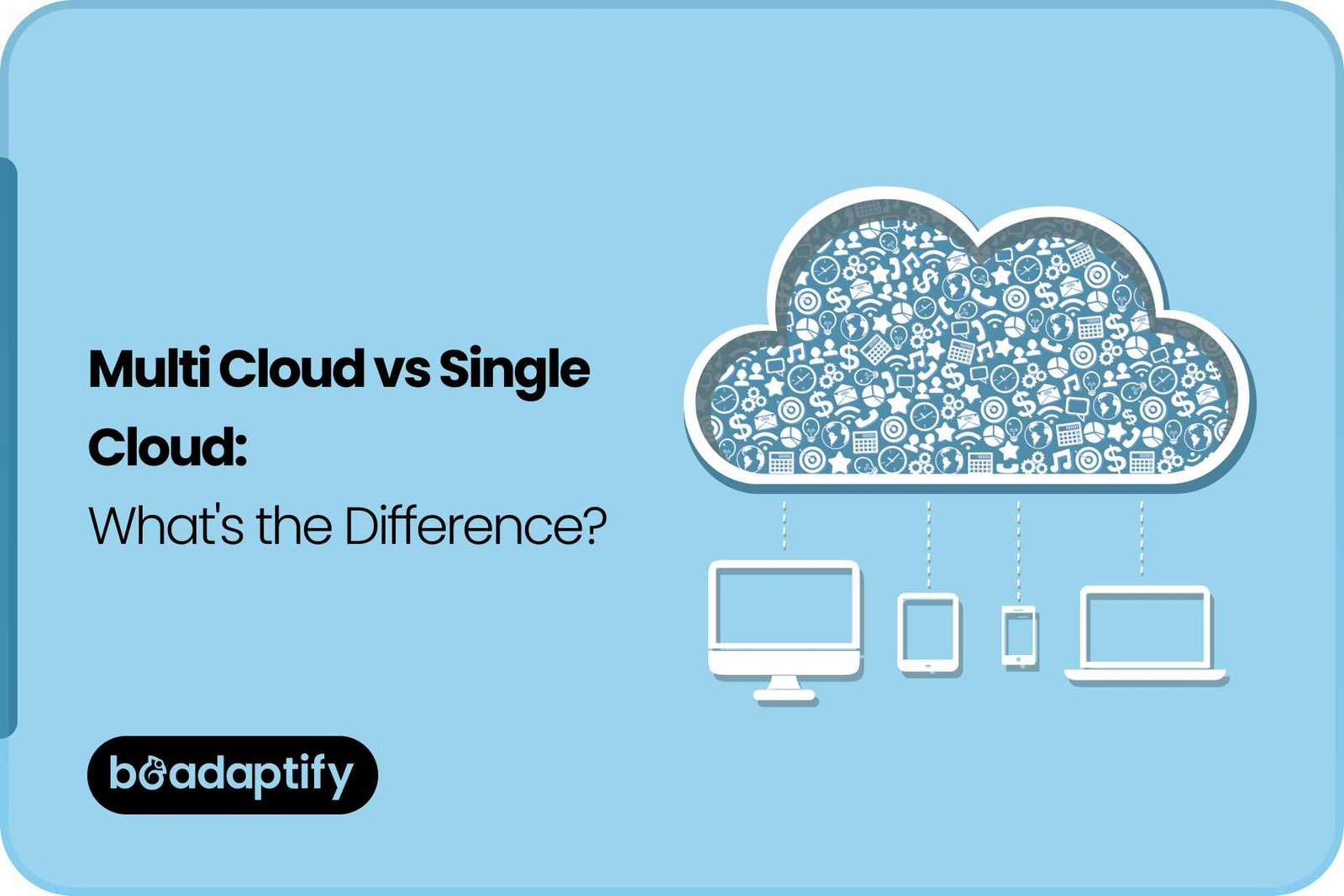
Cloud computing has become the backbone of modern digital infrastructure. Enterprises across industries are relying on cloud platforms to build applications, store data, manage operations, and scale their digital ecosystems. As organizations continue to expand their digital capabilities, the choice between multi-cloud and single-cloud strategies has become a critical decision point.
In 2026, this decision is no longer purely technical, it is strategic. Businesses are evaluating cloud models based on scalability, security, cost efficiency, performance, and long-term flexibility. The approach that is selected can significantly influence operational agility, innovation capabilities, and competitive advantage.
Many organizations are partnering with experienced providers offering software development, mobile app development, and comprehensive design & development services to architect cloud strategies that align with their business goals.
This guide explores the key differences between multi-cloud and single-cloud strategies, the benefits and challenges of each approach, and how enterprises can determine the smartest path forward in 2026.
Understanding Cloud Strategies
Before comparing multi-cloud and single-cloud models, it is important to understand what each approach represents.
What Is Single-Cloud?
A single-cloud strategy involves using one cloud provider for all infrastructure, applications, and services. Organizations rely entirely on a single platform such as AWS, Microsoft Azure, or Google Cloud. All applications, databases, and services are hosted within a unified ecosystem, allowing centralized management and simplified operations.
What Is Multi-Cloud?
A multi-cloud strategy involves using multiple cloud providers simultaneously. Different workloads, applications, or services are distributed across various cloud platforms. For example, an enterprise may use one cloud provider for data storage, another for machine learning workloads, and a third for application hosting. Through advanced design & development services, enterprises can integrate multiple cloud environments into a cohesive system.
Why Cloud Strategy Matters in 2026
Cloud strategy decisions are being driven by several key factors:
• Increasing demand for scalability
• Growing concerns about vendor lock-in
• Rising cybersecurity risks
• Global expansion requirements
• Need for high-performance applications
• Adoption of AI and data-driven technologies
As these factors continue to evolve, enterprises must carefully evaluate which cloud model aligns best with their operational needs. Organizations often rely on professional software development services to design cloud architectures that support both current requirements and future growth.
Advantages of Single-Cloud Strategy
A single-cloud approach offers several benefits that make it attractive for many organizations.
1. Simplicity and Ease of Management
With a single provider, infrastructure management is simplified. All services are accessed through one platform, reducing complexity. Development teams can work within a unified ecosystem, which simplifies deployment and monitoring.
2. Cost Efficiency
Single-cloud environments often provide predictable pricing models. Volume discounts and bundled services can reduce costs. Organizations can optimize resource usage more easily within one platform.
3. Faster Deployment
Applications can be deployed more quickly due to pre-integrated services within the cloud provider’s ecosystem. Through professional software development services, enterprises can accelerate development cycles using platform-native tools.
4. Streamlined Security
Security policies can be centralized within a single cloud environment. This simplifies compliance and monitoring.
Challenges of Single-Cloud Strategy
Despite its advantages, the single-cloud model has certain limitations.
1. Vendor Lock-In
Organizations become dependent on one provider’s infrastructure, tools, and pricing models. Switching providers later can be costly and complex.
2. Limited Flexibility
A single provider may not offer the best solution for every workload. This can limit optimization opportunities.
3. Risk Concentration
If the cloud provider experiences outages or service disruptions, all systems may be affected.
Advantages of Multi-Cloud Strategy
The multi-cloud approach is gaining popularity due to its flexibility and resilience.
1. Increased Flexibility
Enterprises can choose the best cloud provider for each specific workload. For example, AI workloads may be hosted on one platform, while storage and analytics may be handled by another.
2. Reduced Vendor Lock-In
By distributing workloads across multiple providers, organizations avoid dependency on a single vendor.
3. Improved Resilience
Multi-cloud environments can reduce the impact of service outages. If one provider fails, workloads can be shifted to another.
4. Performance Optimization
Applications can be deployed in regions or platforms that offer the best performance for specific use cases.
5. Innovation Opportunities
Different cloud providers offer unique tools and capabilities. Multi-cloud strategies allow organizations to leverage the best features from each platform. Through advanced design & development services, enterprises can build integrated multi-cloud environments that maximize performance and innovation.
Challenges of Multi-Cloud Strategy
While multi-cloud offers flexibility, it also introduces complexity.
1. Increased Operational Complexity
Managing multiple cloud environments requires advanced expertise. Teams must monitor multiple platforms, manage integrations, and maintain consistent performance.
2. Higher Costs
Multi-cloud environments may lead to increased operational costs due to duplicated services and integration requirements.
3. Security Challenges
Ensuring consistent security policies across multiple platforms can be difficult. Organizations must implement unified security frameworks to protect data across environments.
4. Skill Requirements
Multi-cloud strategies require skilled developers and engineers who understand multiple cloud platforms. Enterprises often partner with providers offering software development services and design & development services to manage these complexities effectively.
Key Comparison: Multi-Cloud vs Single-Cloud
| Factor | Single-Cloud | Multi-Cloud |
|---|---|---|
| Complexity | Low | High |
| Flexibility | Limited | High |
| Cost Control | Predictable | Variable |
| Vendor Lock-In | High | Low |
| Scalability | Moderate | High |
| Resilience | Lower | Higher |
| Innovation Potential | Limited | Greater |
When Should Enterprises Choose Single-Cloud?
A single-cloud strategy may be ideal when:
• The organization prefers simplicity and centralized management
• Budget constraints require predictable pricing
• Applications do not require specialized services across platforms
• Internal teams have limited cloud expertise
When Should Enterprises Choose Multi-Cloud?
A multi-cloud strategy may be more suitable when:
• High availability and resilience are critical
• The organization operates globally across multiple regions
• Different workloads require specialized cloud services
• Vendor lock-in is a concern
• Advanced analytics, AI, or data processing capabilities are required
Role of Software Development in Cloud Strategy
Cloud strategy implementation requires more than infrastructure selection. It requires strong application architecture, seamless integration, and optimized performance.
A provider offering expert software development services plays a key role in:
• Designing scalable cloud architectures
• Developing cloud-native applications
• Integrating multiple cloud platforms
• Ensuring security and compliance
• Optimizing performance across environments
Additionally, app development services are essential for building applications that operate efficiently within cloud ecosystems. Mobile applications must be designed to interact seamlessly with cloud-based APIs, databases, and services.
Emerging Trends Influencing Cloud Strategy in 2026
Several trends are shaping cloud adoption strategies in 2026.
AI-Driven Cloud Optimization
Artificial intelligence is being used to monitor cloud usage and optimize resource allocation automatically.
Edge Computing Integration
Edge computing allows data processing to occur closer to the source, reducing latency.
Hybrid Cloud Expansion
Many enterprises are combining on-premise infrastructure with cloud platforms to create hybrid environments.
Cloud Security Enhancements
Advanced security frameworks are being implemented to protect multi-cloud environments. Through innovative design & development services, businesses can integrate these technologies into their cloud strategies.
Cost Considerations in Cloud Strategy
Cost remains a critical factor in cloud decision-making.
Single-Cloud Costs
• Lower operational complexity
• Predictable pricing models
• Easier cost optimization
Multi-Cloud Costs
• Higher integration costs
• Increased operational overhead
• Potential for cost duplication
Enterprises must evaluate both short-term and long-term costs when selecting a cloud strategy.
Best Practices for Choosing the Right Strategy
To select the optimal cloud strategy, enterprises should:
• Define business objectives clearly
• Evaluate application requirements
• Assess internal technical expertise
• Consider long-term scalability needs
• Analyze security and compliance requirements
Why Businesses Trust Beadaptify for Cloud Strategy & Development?
Choosing the right cloud strategy requires more than selecting a platform. It involves building scalable architecture, integrating systems, and ensuring long-term performance and security. At Beadaptify, we help businesses design and implement cloud solutions that support digital transformation and enterprise growth. Our team delivers advanced software development services to design scalable cloud systems tailored to your business needs. Through comprehensive design & development services, we build cloud-native applications that integrate seamlessly across platforms.
With our mobile application development services, we develop applications that work efficiently within cloud ecosystems, ensuring real-time performance and accessibility. We help businesses choose and implement the right strategy, whether single-cloud simplicity or multi-cloud flexibility. Our solutions are designed to grow with your business, ensuring long-term performance and reliability. We work closely with organizations to build cloud strategies that drive innovation, efficiency, and competitive advantage. By partnering with Beadaptify, businesses gain a trusted technology partner for building modern cloud-based systems.
Conclusion
In 2026, the choice between multi-cloud and single-cloud strategies is being driven by business priorities rather than technology trends alone. Single-cloud offers simplicity, cost predictability, and ease of management, making it suitable for organizations seeking streamlined operations. Multi-cloud provides flexibility, resilience, and access to advanced technologies, making it ideal for enterprises with complex and global operations. The smartest strategy depends on the organization’s goals, resources, and technical requirements.
By leveraging professional software development services, mobile app development services, and advanced design & development services, businesses can build cloud architectures that support innovation, scalability, and long-term success. As cloud technologies continue to evolve, enterprises that adopt the right strategy will be better positioned to thrive in an increasingly digital world.
FAQs on Multi-Cloud vs Single-Cloud
Which cloud strategy is better for enterprises in 2026?
The best strategy depends on business needs. Single-cloud is ideal for simplicity and cost control, while multi-cloud is better for flexibility, resilience, and performance optimization.
Is multi-cloud more expensive than single-cloud?
Multi-cloud can be more expensive due to increased operational complexity and integration costs, but it can also provide long-term value through improved performance and reduced risk.
Why do businesses choose multi-cloud strategies?
Businesses choose multi-cloud to avoid vendor lock-in, improve system reliability, and leverage the best services from different cloud providers.
What role do software development services play in cloud strategy?
Professional software development services help design scalable cloud architectures, integrate systems, and optimize performance across cloud environments.
How does mobile app development relate to cloud infrastructure?
Modern applications rely heavily on cloud-based APIs and services. Through expert mobile app development services, apps are built to interact seamlessly with cloud infrastructure.
What are the main challenges of multi-cloud adoption?
Key challenges include complexity in management, security consistency, higher operational costs, and the need for skilled development teams.