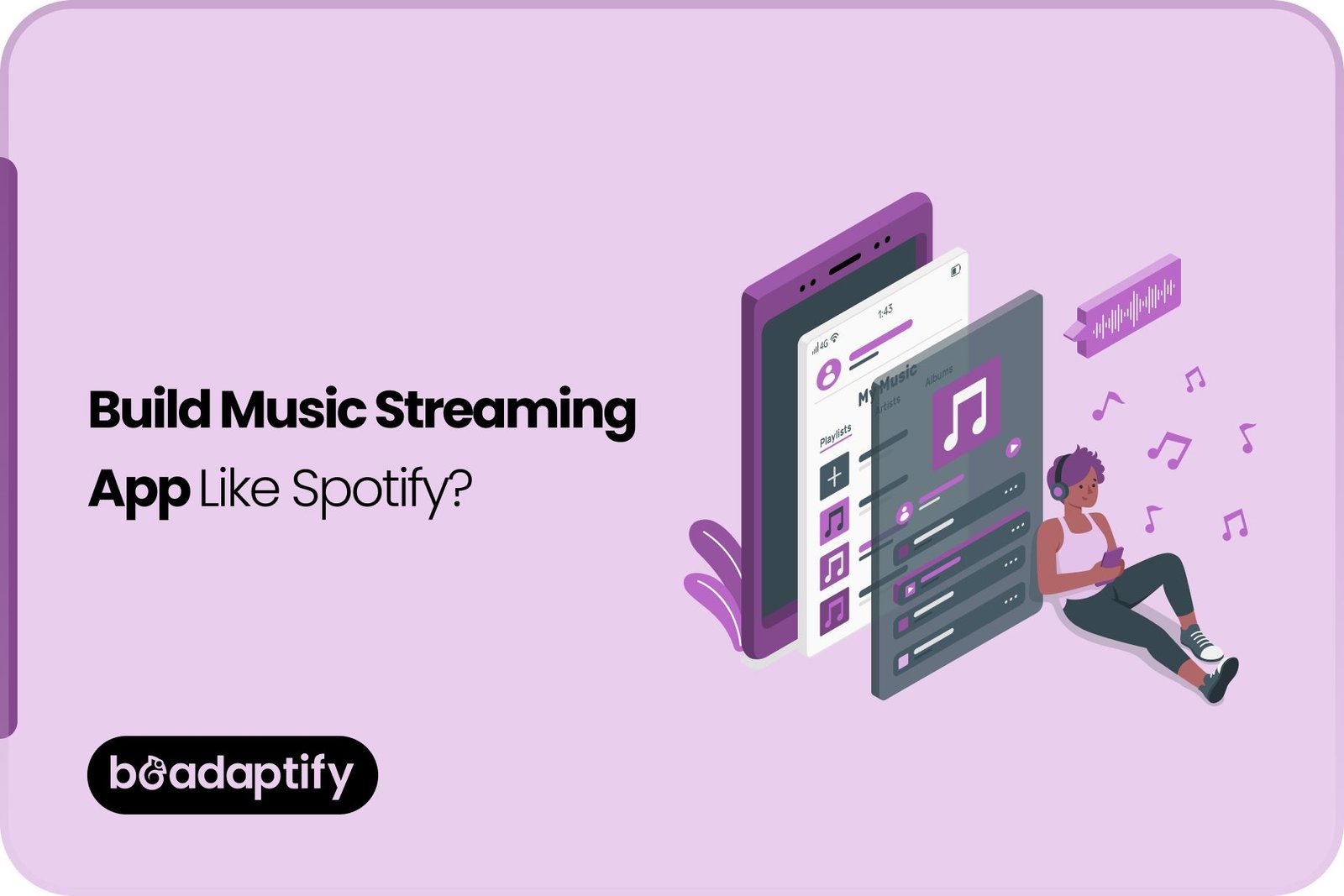
Music streaming apps are no longer being judged only by whether songs can be played smoothly. In 2026, users are expecting personalized discovery, seamless playback across devices, intelligent recommendations, offline listening, social-style engagement, and highly polished mobile experiences. At the same time, music platforms are being shaped by stronger platform requirements, more complex rights and licensing expectations, and rising competition around user experience. Apple now requires iOS apps submitted to App Store Connect to be built with the iOS 26 SDK or later starting April 28, 2026, while Android guidance for media apps continues to emphasize offline support and background-friendly download handling for audio experiences.
Because of these shifts, building a music streaming app in 2026 is no longer about cloning a familiar interface. It is about designing a product that fits a specific audience, content model, and business strategy while meeting today’s technical and platform expectations. Spotify itself continues to highlight how central music rights, payouts, and partner ecosystems are to the streaming business, including reporting that it paid out more than $11 billion to the music industry in 2025 and maintaining a provider ecosystem for distribution and licensing relationships.
For businesses planning to enter this space, success is usually achieved not by attempting to copy every feature of the largest players, but by defining a sharper product angle and building the right technical foundation around it.
This guide explains how a modern music streaming app should be built in 2026, what features should be prioritized, how the development process typically works, what technical decisions matter most, and what businesses should expect if they want to launch a serious streaming product.
Why Music Streaming Apps Are Still a Strong Product Opportunity
The music streaming market remains attractive because audio is one of the most habitual forms of digital engagement. Unlike many apps that are opened occasionally, streaming apps are used repeatedly throughout the day. They become part of commuting, workouts, studying, work sessions, travel, and entertainment routines. This makes them strong candidates for recurring revenue models, long session times, and high lifetime value when retention is executed properly.
However, the opportunity is no longer limited to general-purpose music platforms. In 2026, there is growing space for niche and differentiated products, including:
- genre-focused streaming apps
- independent artist platforms
- creator-owned fan listening platforms
- devotional or spiritual music apps
- regional language streaming products
- wellness, sleep, or focus audio experiences
- streaming platforms tied to communities or memberships
This means a successful product does not need to be the next mass-market Spotify in order to win. It needs to solve a meaningful listening problem for a defined audience with a better or more focused experience.
Step 1: Define the Product Model Before Writing Code
The first and most important step in building a music streaming app is deciding what kind of platform is actually being created. A general music streaming app, an artist discovery platform, and a private community listening app may all appear similar on the surface, but they require very different content structures, licensing models, recommendation logic, and growth strategies.
Before design begins, the product model should be clarified around these questions:
- Who is the target listener?
- What content will be streamed?
- Will the app use licensed music, original audio, user-uploaded content, or distributor-fed catalogs?
- Will the app be subscription-based, ad-supported, freemium, or membership-driven?
- Will the product focus on discovery, curation, exclusivity, community, or utility?
- Will the app launch in one region or multiple territories?
This stage matters because many app failures happen when teams start building screens before resolving the business model and rights model.
Step 2: Understand Music Rights and Licensing Early
One of the biggest mistakes made in music app planning is underestimating how central licensing is to the business. Music streaming is not just a technical product. It is also a rights-managed content business.
If the app will stream commercial music, content rights must be addressed before launch. If it will work with independent creators, labels, or distributors, those relationships still need to be structured clearly. Spotify’s own provider directory makes clear that distribution to streaming platforms is handled through partners that manage delivery and royalty flows, and Spotify’s public materials continue to emphasize royalty transparency and music-economy infrastructure.
In practical terms, the content model may involve:
- direct licensing relationships
- distributor partnerships
- label agreements
- catalog ingestion from content partners
- creator-upload systems with rights declarations
- fully owned or original audio libraries
This is why the legal and content strategy should be defined in parallel with product planning.
Step 3: Decide on the Core Feature Set
A common mistake is trying to build every recognizable feature from large streaming platforms in version one. A better approach is to define the core experience clearly and build only the feature set required to support that experience.
Essential features for most streaming apps
A standard streaming app in 2026 will usually require:
- user registration and login
- listener profile
- home or discovery screen
- music catalog or content library
- search
- song, album, playlist, and artist pages
- audio player
- queue management
- favorites or likes
- playlist creation
- subscription or payment flow if monetized
- offline listening support if part of the product model
- push notifications
- admin/content management tools
Advanced features often added later
As the product matures, more advanced capabilities may include:
- AI-powered recommendations
- collaborative playlists
- social sharing
- live sessions or audio rooms
- artist dashboards
- release alerts
- podcast integration
- cross-device sync
- wearables and car-mode support
- lyrics and contextual metadata
- creator monetization tools
The smartest build plan is usually one where version one focuses on a smaller but highly polished set of high-value features.
Step 4: Design the User Experience Around Listening Behavior
Music apps are behavior-heavy products. The interface is not just a visual layer; it directly affects session time, ease of discovery, and retention.
A streaming app UX should be designed around real listening moments, such as:
- “I want to play something immediately.”
- “I want music that matches a mood.”
- “I want to resume where I left off.”
- “I want to save this for offline use.”
- “I want to discover something new without friction.”
That means the design should usually prioritize:
- low-friction playback access
- smooth transitions into the player
- smart navigation between library, discovery, and search
- fast loading of lists and metadata
- one-hand mobile usability
- clean queue and control design
- strong offline-state visibility
In 2026, users are comparing not just streaming catalogs but experience quality. A weak interface will hurt retention even if the content is strong.
Step 5: Choose the Right Platform Strategy
The next decision is whether the app should be launched as:
- iOS only
- Android only
- both natively
- cross-platform
- mobile-first with web companion
- full web and mobile ecosystem
The answer depends on audience, budget, device mix, and speed-to-market goals.
Native development
Native iOS and Android development may be preferred when:
- playback performance must be optimized deeply
- platform-specific UX matters heavily
- audio handling and system integrations are complex
- offline and background behaviors need fine-tuned control
Cross-platform development
Cross-platform development may be preferred when:
- faster launch is needed
- an MVP approach is being used
- budget discipline matters
- the same core experience is acceptable across both platforms
Step 6: Build the Right Streaming Architecture
The technical architecture of a music app matters as much as the visible interface. Smooth playback, low buffering, reliable metadata, and stable offline experiences all depend on strong backend and delivery decisions.
The architecture usually needs to support:
- catalog and metadata storage
- user authentication and account management
- playlist and favorites data
- recommendation or personalization logic
- streaming delivery
- downloads and offline permissions
- analytics and event tracking
- subscription status
- content moderation or content management
- admin and reporting tools
Apple’s HLS documentation remains central for Apple-device streaming workflows, and Apple developer materials around streaming and offline playback show that high-quality media handling still requires careful technical implementation rather than basic file delivery. The platform should also be designed for scale, because listener growth changes the performance demands of the product quickly.
Step 7: Plan for Offline Listening the Right Way
Offline listening remains one of the most important retention features in audio apps. Android’s current developer guidance for media apps explicitly emphasizes offline support and suggests that for media experiences, downloaded content is often easier to support first before broader streaming expansion is added. It also notes that downloads should be made clear to users and managed thoughtfully in the background.
Offline listening in a music app usually requires:
- local encrypted download handling
- license validation if rights-managed
- offline status indicators
- sync logic
- reauthorization or expiration rules
- storage management UX
This cannot be treated as a minor add-on. If offline is part of the product value proposition, it should be planned as a major system component from the start.
Step 8: Build Personalization and Discovery Features
Large streaming apps have trained users to expect strong recommendations. That does not mean every product needs to replicate a massive recommendation engine immediately, but discovery features should still be considered early.
Discovery can be improved through:
- genre or mood-based recommendations
- editor-curated playlists
- user behavior-based suggestions
- recently played and continue listening
- similar artist flows
- release-based personalization
- contextual recommendations by time or activity
As the product grows, AI and recommendation logic can be expanded, but even simpler rule-based personalization can add major value at launch.
Step 9: Create a Monetization Model That Fits the Audience
The monetization model influences both product design and technical scope. The app should not only stream content successfully; it should convert listeners into a sustainable business model.
Common monetization options include:
- subscription plans
- freemium tiers
- ads between streams or sessions
- artist or fan memberships
- premium playlist or offline access
- in-app purchases for add-ons
- branded or sponsored placements
- white-label enterprise or B2B licensing
The right model depends on audience willingness, licensing structure, and content type. A platform focused on premium exclusivity will not be monetized the same way as a broad ad-supported streaming product.
Step 10: Add the Right Analytics From Day One
Music apps are highly behavioral, so analytics should be embedded from the start. Without good product data, retention problems and monetization issues are hard to diagnose.
Important metrics often include:
- session duration
- stream starts and completions
- skip rate
- repeat listening
- playlist creation
- search usage
- recommendation engagement
- subscriber conversion rate
- churn
- offline usage
- content popularity
- device and OS performance
These insights help shape roadmap decisions after launch.
Step 11: Test Audio Performance Thoroughly
A streaming app cannot afford weak playback quality. Bugs that might be tolerated in other products become highly visible in audio experiences.
Testing should include:
- streaming stability under varying network conditions
- background playback behavior
- lock-screen controls
- interruptions such as calls or notifications
- offline playback
- queue and playlist behavior
- app resume handling
- memory and battery impact
- Bluetooth and external device behavior
- edge cases around downloads and sync
Audio products are often judged very quickly by users. Playback quality is one of the fastest trust signals.
Step 12: Prepare for App Store and Platform Compliance
Music streaming apps must also fit current platform requirements. Apple’s current developer notices confirm that apps uploaded after April 28, 2026, must be built with the iOS 26 SDK or later. That means platform readiness is not static; it must be maintained actively.
Store readiness usually includes:
- policy-compliant subscription handling
- privacy disclosures
- account deletion support if required
- metadata and screenshots
- age-appropriateness and content treatment
- background audio support configuration
- legal terms and permissions flows
This phase should not be left until the end.
How Long Does It Take to Build a Music Streaming App in 2026?
The timeline depends heavily on scope. A smaller MVP with essential playback, basic catalog browsing, and user accounts may be developed in a few months. A full-featured music streaming app with subscriptions, offline support, recommendations, admin tools, and polished UX can take significantly longer.
A realistic 2026 planning range is often:
- MVP streaming app: 3 to 5 months
- standard custom streaming app: 5 to 9 months
- advanced platform with deeper personalization, licensing workflows, and analytics: 9 to 15+ months
These timelines depend on how much of the content infrastructure, licensing logic, backend complexity, and design quality is included in the first release.
What Increases Cost and Timeline the Most?
The biggest cost and timeline drivers are usually:
- content licensing complexity
- offline listening support
- recommendation and personalization features
- admin and rights-management tooling
- subscription and billing systems
- cross-platform or multi-platform rollout
- performance optimization requirements
- analytics and reporting depth
- advanced search and metadata structure
- artist or creator dashboards
This is why trying to “build Spotify” feature-for-feature from day one is usually not a practical or strategic move.
Why a Spotify-Like App Should Not Be Built as a Clone
The goal in 2026 should not be to duplicate Spotify exactly. The goal should be to build a smarter product for a clearer audience.
A clone strategy usually fails because:
- licensing complexity is underestimated
- differentiation is weak
- infrastructure becomes expensive too early
- product-market fit remains unclear
- users have no reason to switch
A better strategy is to identify a segment, listening context, or user need that larger platforms do not serve perfectly, then build from there.
That may mean focusing on:
- independent music communities
- regional audio markets
- genre-focused discovery
- artist-fan ecosystems
- educational or wellness audio
- faith-based or cultural content
- curated editorial experiences
The most successful products are usually sharper, not broader.
Why Beadaptify Is the Right Partner for Streaming App Development?
At Beadaptify, music streaming apps are developed with a strong focus on product strategy, user experience, scalability, and long-term performance. A streaming app is not treated as a simple media player. It is built as a complete digital product that must support smooth playback, content discovery, user engagement, monetization, and future growth. As a trusted mobile app development company, Beadaptify delivers end-to-end app development services designed around the specific goals of the business and the needs of the target audience.
From planning the core feature set and designing intuitive listening experiences to building secure backend systems and launch-ready mobile platforms, every stage is handled with a structured and performance-driven approach. For businesses that want more flexible delivery models, our team also supports brands looking to hire mobile app developers or work with experienced mobile app developers for hire for dedicated app development support. The result is a streaming product that is not only built to launch, but built to retain users and scale with confidence.
Final Thoughts
Building a music streaming app like Spotify in 2026 is entirely possible, but it should be approached as a strategic product build, not as a surface-level clone project. The strongest streaming apps are being built around clear audience needs, well-defined rights models, polished playback experiences, and a product roadmap that prioritizes retention over feature overload. Licensing, offline support, streaming architecture, personalization, analytics, and platform compliance all need to be considered early if the product is going to scale successfully.
At Beadaptify, music and audio products are best approached through structured mobile app development services, and a product-first mindset that balances speed with long-term viability. Whether the goal is to partner with a full mobile app development company, hire mobile app developers, or work with trusted mobile app developers for hire, the winning path is usually the same: build a focused streaming experience that users genuinely want to return to, not a bloated clone that tries to copy everything at once.

FAQ About
How long does it take to build a music streaming app like Spotify?
The timeline depends on the app’s complexity, features, platform scope, and backend requirements. A focused MVP may take a few months, while a more advanced streaming platform with offline listening, subscriptions, and recommendation systems may take much longer.
What features are required in a music streaming app?
A modern music streaming app usually includes user login, search, artist and album pages, playlists, a music player, favorites, recommendations, subscription handling, offline listening, and admin tools for managing content and users.
Do I need music licensing before building a streaming app?
Yes, if the platform will stream copyrighted music, licensing and rights management must be addressed early. Content strategy should be planned before the product is launched.
Can a music streaming app be built for both iOS and Android?
Yes, a music streaming app can be developed for both platforms using native or cross-platform approaches. The right choice depends on budget, performance requirements, and product goals.
How much does it cost to build a music streaming app in 2026?
The cost depends on features, design complexity, content architecture, backend systems, offline functionality, payment integration, and platform scope. Simpler MVPs cost less, while full-scale streaming platforms require much larger investment.
Why should businesses work with a mobile app development company for streaming apps?
A specialized mobile app development company can help with product strategy, UX planning, streaming architecture, mobile engineering, backend development, and long-term scalability.