Mental health chatbots are being discussed much more seriously in 2026 than they were just a few years ago. What was once viewed as a novelty in digital health is now being evaluated as a real product category inside broader mental health support ecosystems. That shift is being driven by rising demand for mental health support, limited provider capacity in many markets, and growing acceptance of digital-first care experiences. At the same time, the category is being approached with more caution because regulators, researchers, clinicians, and technology companies are increasingly emphasizing that mental health chatbots can assist care access and engagement, but they should not be treated as unrestricted substitutes for qualified human support in high-risk situations.
For businesses, healthcare providers, digital therapeutics teams, and wellness startups, this means the opportunity is real, but the product strategy must be handled carefully. A mental health chatbot in 2026 is not just being evaluated on whether it can answer user questions. It is being judged on safety design, escalation logic, content quality, clinical boundaries, privacy handling, and long-term engagement. A well-designed solution can help users navigate self-help resources, monitor moods, reinforce therapeutic exercises, improve adherence between sessions, or reduce friction in early support access. A poorly designed one can create trust issues, liability concerns, and harmful outcomes.
That is why mental health chatbot development is increasingly being approached as a serious software and product challenge rather than a simple conversational AI exercise. This guide explains what a mental health chatbot is, which use cases are most viable, what costs typically shape development, how ROI should be evaluated, and what businesses should expect when building this type of product in 2026.
What Is a Mental Health Chatbot?
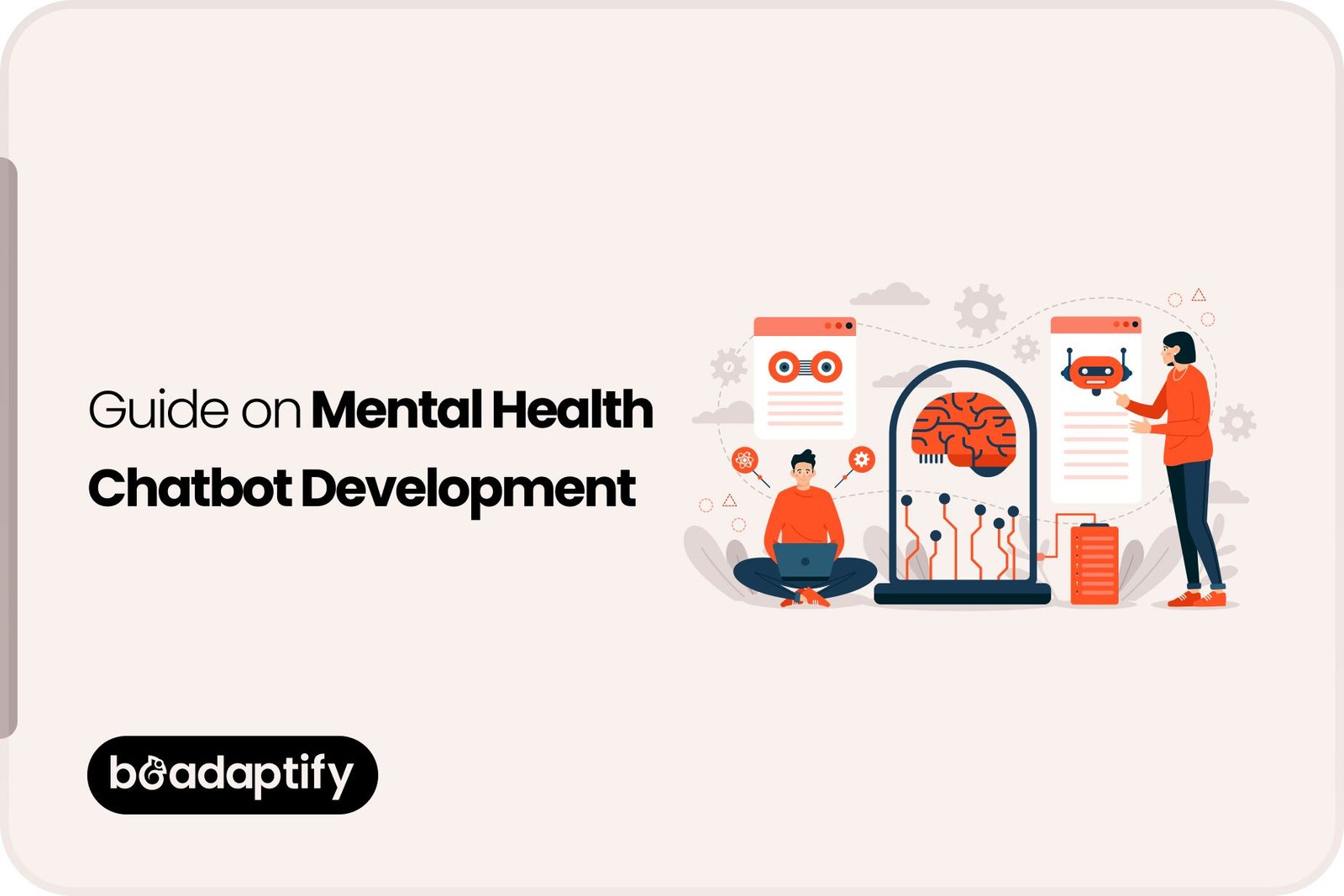
A mental health chatbot is a conversational digital system designed to support mental health–related interactions through text or voice. Depending on its purpose, it may deliver psychoeducation, guide journaling, provide CBT-style prompts, collect mood check-ins, support care navigation, reinforce therapist-assigned activities, or help users discover self-help resources.
However, not all mental health chatbots are the same. Some are being positioned as wellness tools. Some are designed as structured digital interventions. Others are being marketed much more aggressively as therapeutic or therapist-like experiences, which is exactly where regulatory and safety concerns are increasing. FDA discussion materials published in late 2025 specifically note increasing demand for AI-based mental health medical devices and “AI therapists,” while also emphasizing the risks created when highly individualized chatbots operate with or without clinician oversight.
That distinction matters because a chatbot designed for low-risk mood tracking and supportive reflection is not the same as a chatbot making mental health assessments, simulating therapy, or responding to users in crisis. Product positioning, safety requirements, and development complexity all change depending on the chatbot’s intended role.
Why Interest in Mental Health Chatbots Is Growing
Several forces are pushing demand upward.
First, digital mental health is being recognized as one way to expand access, especially in settings where provider capacity is limited or stigma prevents people from seeking early support. WHO-linked and peer-reviewed digital mental health work continues to frame digital interventions as potentially useful for reducing access barriers and supporting common mental health needs when designed carefully.
Second, conversational interfaces can feel lower-friction than traditional intake forms or rigid app workflows. People may be more willing to check in, journal, or ask for resources in a chat-based format, especially on mobile.
Third, recent research suggests that conversational agents may support some mental health outcomes in specific contexts. A 2025 meta-analysis in JMIR reported a moderate-to-large effect for AI-driven conversational agents on depressive symptoms, though findings vary by use case, quality, and context. Other reviews also suggest potential benefits in engagement and adherence, while noting significant implementation and safety limitations.
At the same time, public concern has risen sharply. Stanford HAI published findings in 2025 warning that some AI therapy chatbots may contribute to harmful stigma or dangerous responses, and broader professional concern has grown around emotional overreliance, crisis handling, and the reinforcement of unhealthy thinking patterns. News coverage and public-health warnings in 2025 also reflected increasing concern about vulnerable users turning to chatbots instead of professional care.
In practical terms, growth is happening alongside scrutiny. That makes this a promising category, but not a casual one.
Core Use Cases for Mental Health Chatbots
The most viable mental health chatbot products are usually built around defined, bounded use cases rather than vague “AI therapist” positioning.
1. Psychoeducation and Mental Health Literacy
One of the safest and most practical uses is structured psychoeducation. A chatbot can explain common stress patterns, emotional regulation techniques, grounding exercises, sleep hygiene guidance, or how to seek help. This use case works well because it is information-led rather than diagnostic.
It can be especially effective in youth wellness products, workplace wellbeing tools, university support apps, and public health programs.
2. Mood Tracking and Check-Ins
A chatbot can guide users through daily or weekly check-ins, ask simple reflection questions, identify patterns over time, and surface mood trends visually. This helps users build self-awareness and can generate useful signals for later clinician conversations if the app includes human care pathways.
3. CBT-Style Prompting and Between-Session Support
Some evidence suggests conversational tools may improve adherence and engagement by supporting structured exercises between therapy sessions, particularly CBT-style prompts and self-reflection tasks. This type of chatbot is often most appropriate when it is used as a companion to human care or a low-risk self-help product rather than a substitute for therapy.
4. Journaling and Reflection
Many users engage more consistently with journaling when it feels guided rather than blank-page based. A chatbot can help with thought labeling, gratitude prompts, emotional naming, coping reflection, or habit tracking.
5. Care Navigation and Triage Support
A chatbot can help users identify which level of support may be most relevant, such as self-help content, a therapist directory, crisis resources, or scheduling options. This use case is operationally valuable for provider groups, digital clinics, universities, and insurers.
However, if triage is being positioned as clinical advice rather than directional guidance, the safety and compliance burden rises significantly.
6. Habit Reinforcement and Wellness Coaching
Sleep routines, breathing exercises, stress breaks, grounding habits, and behavioral nudges can all be reinforced through conversational reminders and motivational support. This is one of the more commercially practical use cases because it often fits wellness and prevention products well.
7. Session Support in Hybrid Care Models
Therapists, coaches, and clinics may use chatbot tools to reinforce homework, collect pre-session updates, and maintain light-touch continuity between human sessions. In these cases, the chatbot adds value by improving continuity and engagement rather than replacing the professional.
Use Cases That Require Extreme Caution
Certain product directions carry much higher risk.
Crisis Support Without Robust Safeguards
A chatbot that may encounter users discussing self-harm, suicide, psychosis, or acute emotional destabilization must be designed with careful crisis protocols, escalation logic, and limitations. FDA materials and public expert commentary increasingly highlight the risk of individualized chatbots interacting with distressed users without proper safeguards.
Diagnostic Positioning
If a chatbot begins suggesting diagnoses or acting as a diagnostic mental health tool, regulatory, legal, and ethical exposure rises significantly.
“Therapist Replacement” Framing
This is one of the most problematic product directions. Mental health professionals and researchers are increasingly warning that unrestricted chatbot use as a substitute for therapy can be unsafe, especially for higher-risk users.
The safer strategic direction is usually to build a support layer, navigation tool, coaching assistant, or structured intervention product with clear limits and escalation pathways.
Key Product Components in Mental Health Chatbot Development
A serious mental health chatbot in 2026 usually requires more than a chat window and a language model.
Conversational Engine
The system needs an interaction layer capable of handling prompts, memory policy, response logic, and content constraints. In higher-safety environments, this often involves hybrid architectures rather than completely unconstrained free-text generation.
Safety Layer
This is one of the most critical pieces. A safety layer may include:
- risk phrase detection
- crisis keyword detection
- escalation rules
- safe response templates
- refusal boundaries
- emergency resource surfacing
- clinician or support routing logic where applicable
Content Governance
Mental health chatbots should not rely on uncontrolled output alone. Structured content libraries, approved psychoeducation flows, clinically reviewed exercises, and bounded workflows are often essential.
User Profile and Personalization
Basic personalization may include language preference, wellness goals, reminder settings, journaling history, and symptom themes. However, personalization must be carefully separated from unsafe pseudo-clinical inference.
Mood Logging and Progress Tracking
Many products benefit from dashboards or simple visualizations that show users their own check-in trends over time.
Mobile Experience
Because mental health support products are often used in private, spontaneous, and emotionally sensitive moments, mobile UX is critical. That is where mobile app development solutions become highly relevant, especially for notification logic, offline journaling, secure login, and private check-in experiences.
Admin and Analytics Layer
Organizations need visibility into engagement, retention, escalation volume, drop-off points, content usage, and safety incidents. This requires a proper reporting layer, not just basic usage logs.
Development Process: How Mental Health Chatbots Are Usually Built
1. Product Framing and Risk Definition
The first step should define what the chatbot is and is not allowed to do. This includes target audience, problem space, escalation boundaries, and whether the product is wellness-oriented, care-supportive, or clinically positioned.
2. Conversation Design
Mental health chatbot UX depends heavily on tone, pacing, question flow, and response structure. Conversation design should be treated as a core product discipline, not an afterthought.
3. Safety and Escalation Planning
Before launch, the chatbot needs explicit rules for when to redirect, when to stop, when to provide crisis resources, and when human support should be involved if available.
4. Backend and Data Architecture
The system architecture should support secure data handling, chat logs, user preferences, analytics, and moderation or review workflows where needed.
5. Frontend and App Development
The user-facing experience may be delivered through web, mobile, or both. In many cases, mobile is central because mental health interaction is highly personal and often habitual.
6. Testing and Clinical Review
A mental health chatbot should go through not only functional testing but also content review, edge-case testing, red-team safety testing, and scenario-based evaluation.
7. Launch, Monitoring, and Iteration
Launch is only the beginning. Safety incidents, abandonment patterns, escalation rates, and user misunderstanding must all be monitored and used to refine the product.
Cost of Mental Health Chatbot Development in 2026
Development cost depends on what kind of product is being built.
Low-Complexity Wellness Chatbot
A basic wellness-oriented chatbot with structured flows, simple journaling, reminders, and a relatively bounded scope may cost roughly $20,000 to $50,000, depending on platform scope and design depth.
Mid-Range Mental Health Support Product
A stronger product with mobile support, mood tracking, admin tools, analytics, personalization, safety logic, and custom frontend/backend work may cost roughly $50,000 to $150,000.
Advanced or Clinically Sensitive Product
A more advanced platform with deeper integrations, higher safety architecture, therapist workflows, review layers, multilingual support, and stronger compliance infrastructure may cost $150,000 to $400,000+.
The biggest cost drivers usually include:
- custom safety architecture
- mobile app scope
- clinician review workflows
- analytics and reporting complexity
- escalation systems
- multilingual support
- compliance and privacy requirements
- integration with care systems or CRMs
This is why products in this category are usually not priced like generic chatbots.
ROI: How Mental Health Chatbot Value Should Be Measured
ROI should not be evaluated only through immediate revenue. In many cases, value is created through efficiency, engagement, retention, and care access improvements.
1. Lower Support and Intake Costs
If a chatbot reduces repetitive support demand, helps with navigation, or improves intake efficiency, operational costs can be reduced.
2. Higher Engagement
Chat-based experiences often create more frequent interaction than static resource libraries. If users engage more often, retention and long-term value can improve.
3. Better Adherence
If the chatbot reinforces habits, exercises, or between-session follow-through, outcomes and retention may improve.
4. Stronger Lead Qualification or Conversion
For clinics, wellness brands, or care platforms, a chatbot may improve conversion into paid support or more appropriate care pathways.
5. Improved Product Differentiation
In crowded digital mental health markets, a thoughtful chatbot experience can improve product stickiness and user satisfaction.
6. Better Data for Product Improvement
Check-ins, sentiment patterns, and content engagement can help teams understand user needs and improve the wider platform.
The key is to define ROI based on the business model. A care provider, employer wellness platform, and direct-to-consumer app will each measure value differently.
Risks and Limitations That Must Be Taken Seriously
A mental health chatbot is not a neutral product category. Risks include:
- unsafe responses in vulnerable contexts
- overreliance by users
- misleading framing about what the tool can do
- poor crisis escalation design
- privacy mishandling
- stigma or biased output
- false reassurance or harmful validation
Because of this, many of the strongest products in 2026 are likely to be those that are narrow, well-bounded, clinically informed where needed, and explicit about limitations.
Best Practices for Building a Stronger Mental Health Chatbot
The most responsible products in this category usually follow a few principles.
- First, the chatbot’s purpose should be narrow and clear.
- Second, safety boundaries should be explicit and enforced.
- Third, clinically sensitive content should be reviewed, not improvised.
- Fourth, crisis handling should rely on escalation and redirection rather than attempted autonomous support.
- Fifth, user trust should be built through transparency, not exaggerated marketing claims.
- Sixth, mobile and web experiences should be designed for privacy, emotional ease, and low-friction engagement.
- Seventh, iteration should be driven by both product metrics and safety review.
Why Beadaptify for Mental Health Chatbot Development?
At Beadaptify, mental health chatbot products are developed with a strong focus on usability, safety-aware product thinking, scalability, and long-term digital value. A mental health chatbot is not treated as a generic AI interface. It is built as a carefully structured digital product designed to support user engagement, thoughtful conversation design, and responsible functionality. Through tailored software development services and integrated mobile app development services, Beadaptify helps businesses create mental health support experiences that align with their goals, audience needs, and platform requirements.
From product planning and UX design to backend development, mobile implementation, analytics, and post-launch evolution, every stage is handled with a structured and performance-driven approach. Whether the goal is to launch a wellness chatbot, a support companion, or a broader digital mental health platform, Beadaptify helps turn sensitive product ideas into scalable and future-ready solutions.
Final Thoughts
Mental health chatbot development is one of the most promising and most sensitive product opportunities in digital health today. In 2026, the strongest products are not being built as generic AI chat interfaces with therapy branding layered on top. They are being built as carefully bounded support systems with defined use cases, strong safety design, thoughtful content, and clear product value.
For some organizations, the best use case may be care navigation. For others, it may be between-session support, journaling, wellness coaching, psychoeducation, or habit reinforcement. The right product strategy depends on audience, business model, risk tolerance, and care context. What remains consistent is this: mental health chatbots should be built with seriousness. Through strong software development services and carefully planned mobile application development services, businesses can create digital products that improve access, strengthen engagement, and generate meaningful ROI without overpromising what conversational AI should do in vulnerable mental health contexts.
FAQ on Mental Health Chatbot
What are the main use cases of a mental health chatbot?
Common use cases include mood tracking, guided journaling, psychoeducation, self-help prompts, habit reinforcement, support between therapy sessions, and helping users discover appropriate mental health resources.
How much does mental health chatbot development cost?
The cost depends on complexity, safety requirements, mobile support, integrations, analytics, and the type of chatbot being built. A basic wellness-oriented chatbot costs less than a more advanced product with custom safety logic and platform integrations.
Can a mental health chatbot replace a therapist?
A mental health chatbot should not be positioned as a full replacement for qualified mental health professionals, especially in high-risk or crisis situations. It is usually more appropriate as a support tool, wellness companion, or care-navigation layer.
What features are important in mental health chatbot development?
Important features often include conversation flows, mood tracking, journaling, reminders, escalation logic, safety boundaries, analytics, secure data handling, and mobile accessibility.
Why are mobile app development services important for mental health chatbots?
Mental health support is often accessed privately and frequently through phones, which is why mobile app development services are important for secure check-ins, notifications, journaling, and a more accessible user experience.
How is ROI measured for a mental health chatbot?
ROI may be measured through user engagement, better retention, reduced support costs, stronger care navigation, increased conversion into paid services, and improved operational efficiency depending on the business model.