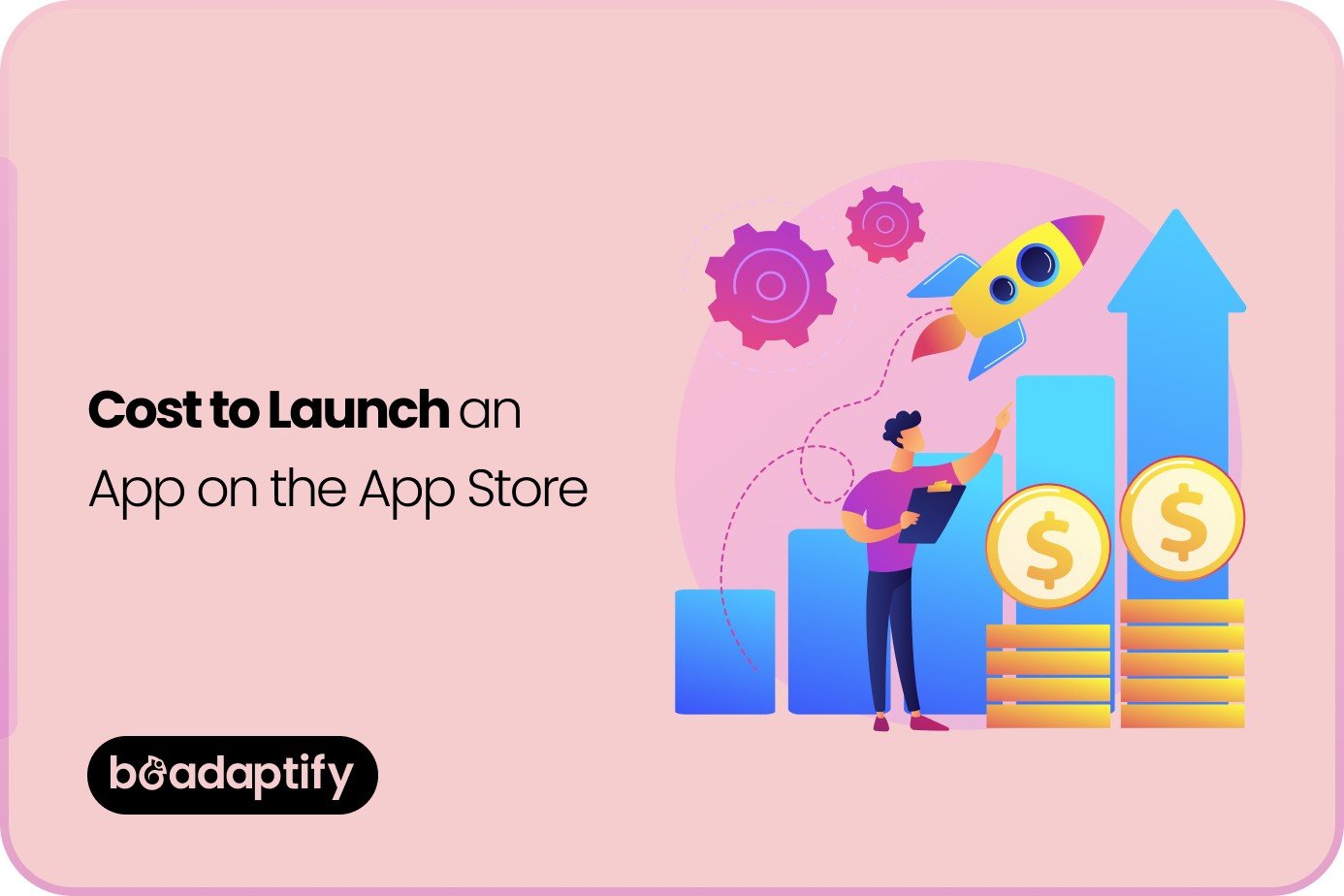
Launching an app on the App Store in 2026 is often assumed to be a simple matter of paying Apple’s annual developer fee and uploading the final build. In reality, the true cost of launching an app is shaped by a much broader set of factors. While Apple’s direct submission fee remains relatively low, the full launch cost is usually influenced by design, development, testing, compliance, App Store assets, post-launch support, and ongoing platform management.
For businesses, founders, and product teams, this distinction is important. The question is not only “What does Apple charge?” but also “What does it actually take to get an app approved, released, maintained, and positioned for success?” In 2026, that answer is being shaped by higher user expectations, stronger privacy requirements, more polished product standards, and a more competitive mobile ecosystem.
This is why App Store launch cost should be viewed as a complete product investment rather than a single submission fee. A basic calculator may show that the entry fee is low, but the total cost of launching an iOS app is usually made up of multiple layers. Some of those costs are mandatory. Others are optional but highly recommended. Some are one-time costs tied to launch. Others are recurring costs tied to maintenance, hosting, analytics, support, and App Store optimization.
This guide explains how much it costs to launch an app on the App Store in 2026, which costs are mandatory, which costs are often underestimated, and how businesses can budget more realistically for a successful release.
Understanding the Difference Between Submission Cost and Launch Cost
The cost of submitting an app to Apple and the cost of launching an app successfully are not the same thing.
The submission cost is generally limited to Apple’s developer membership fee and any App Store-related platform charges tied to monetization. The launch cost, however, is usually much broader. It often includes product design, mobile development, backend infrastructure, QA testing, App Store asset creation, legal preparation, app review support, analytics, and post-launch improvements.
This difference matters because many businesses budget only for the visible Apple fee and then underestimate the work required to reach launch readiness. In 2026, users expect polished onboarding, strong app performance, secure login, smooth payments, reliable notifications, privacy transparency, and high-quality UI. Those expectations are not met by a fee alone. They are met by product work.
As a result, App Store launch budgeting should usually be divided into five cost layers:
- Apple platform and account fees
- product design and development costs
- launch preparation and testing costs
- marketing and App Store presentation costs
- post-launch maintenance and growth costs
When these layers are understood clearly, budgeting becomes more realistic and launch planning becomes more strategic.
Apple’s Direct Cost to Publish on the App Store in 2026
The first and most visible cost is Apple’s developer membership.
Apple Developer Program Fee
To distribute an app on the App Store, enrollment in the Apple Developer Program is required. In 2026, the Apple Developer Program fee remains $99 USD per membership year, or local currency equivalent where available. This is the direct entry cost required for standard App Store distribution. That fee is charged annually, not once. Therefore, it should be treated as a recurring cost rather than a one-time launch expense.
For many individual developers or startups, this is the lowest-cost part of the launch process, but it is still essential because distribution on the App Store cannot usually proceed without it.
Apple Developer Enterprise Program Fee
The Apple Developer Enterprise Program is different from the standard App Store route. It is intended for internal app distribution within organizations and is priced at $299 USD per year. This is not the standard path for public consumer apps on the App Store, but it may still be relevant for enterprise teams comparing internal deployment options.
For most public-facing app launches, the standard Apple Developer Program remains the correct path.
No Separate Per-App Upload Fee
A separate per-app submission fee is not generally charged by Apple beyond the developer membership. This is one of the most misunderstood parts of App Store publishing. Once membership is active, multiple apps can typically be submitted through the account, provided all program and guideline requirements are met.
This means the true cost of launching is not being driven mainly by Apple’s upload fee structure. It is being driven by everything required to prepare the app for acceptance and success.
App Store Commission and Revenue Share Costs
If the app is free and does not sell digital goods or subscriptions, Apple’s direct monetization commission may not be relevant at launch. But if the app earns money through paid downloads, in-app purchases, or subscriptions, commission must be considered part of the financial model.
Standard App Store Commission
For most paid apps and digital purchases, Apple’s standard commission is currently 30%. This means that for eligible digital transactions handled through Apple’s system, Apple’s share must be factored into revenue forecasting and pricing logic.
Small Business Program Commission
For qualifying developers enrolled in Apple’s App Store Small Business Program, the commission is reduced to 15% on paid apps and in-app purchases up to $1 million USD in proceeds. This can materially affect early-stage app economics and is especially important for startups and new product teams.
Subscription Considerations
For qualifying subscriptions, reduced commission structures may apply in certain cases, and Apple’s program details should always be reviewed carefully when forecasting recurring revenue.
Regional Variations
Regional changes may apply in specific storefronts. For example, Apple announced commission changes for the China mainland storefront in 2026. This reinforces an important budgeting principle: pricing and commission assumptions should not always be treated as globally identical. For international apps, regional store policies, tax handling, and base-country pricing setup should be reviewed carefully.
Design and Development Cost: The Biggest Part of App Store Launch Expense
For most businesses, the largest portion of App Store launch cost is not Apple’s fee. It is the cost of building the app itself.
UI/UX Design Costs
Before an app can be launched, it usually needs:
- user flow planning
- wireframes
- interface design
- interaction design
- design system components
- onboarding logic
- App Store screenshots and promotional visuals
A polished iOS app is expected to feel intuitive, visually clear, and aligned with Apple’s interface standards. In 2026, poorly designed apps are often rejected by users even if they technically pass review.
The cost of design varies widely depending on complexity, but design is no longer an optional cosmetic layer. It is usually a core launch requirement. This is one reason design & development services are often used together rather than separately.
Frontend and Backend Development Costs
The actual app build may include:
- iOS frontend development
- backend API integration
- user authentication
- push notifications
- payment integrations
- database and admin systems
- cloud hosting setup
- analytics integration
- App Store compliance adjustments
A simple content-based app may cost far less than a SaaS-style mobile app, marketplace, healthcare app, fintech product, or logistics tool.
In general, a basic app may require a lower five-figure investment, while a mid-level app may require a larger budget, and a feature-rich enterprise-grade app may cost far more. This is where a reliable mobile application development services become especially valuable, because poor technical execution can delay launch, increase rejection risk, and create costly fixes later.
Typical Development Budget Ranges
While actual budgets vary by team, region, and scope, a broad 2026 estimate may look like this:
- Simple app: $10,000 to $30,000
- Mid-complexity app: $30,000 to $80,000
- Advanced or enterprise app: $80,000 to $250,000+
These are not App Store fees. They are product build costs. For most serious businesses, this is where the majority of launch spending is concentrated.
Testing and Quality Assurance Costs
An app should not be sent to the App Store immediately after the first build is completed. Testing is required to ensure that the app performs correctly, complies with Apple’s expectations, and avoids obvious review issues.
Internal and External Beta Testing
Apple’s TestFlight remains a core tool for beta testing. In 2026, up to 100 internal testers and up to 10,000 external testers can be supported, subject to Apple’s beta workflows. This makes TestFlight a practical part of launch preparation, but testing itself still has cost.
Testing effort usually includes:
- functional QA
- device compatibility checks
- performance testing
- network and edge-case testing
- bug fixing
- user acceptance testing
- regression testing before final submission
QA Cost Considerations
Testing cost is often underestimated because it is assumed to be part of development automatically. In practice, dedicated QA effort may be required, especially for commercial apps with authentication, payments, location, real-time data, or multi-role user flows.
Skipping this step can result in launch delays, App Review rejection, poor ratings, and costly emergency fixes after release.
App Review Preparation Costs
Getting an app built is not the same as getting it approved.
Apple’s App Review process checks apps, updates, app bundles, in-app purchases, and related content. Apple states that, on average, 90% of submissions are reviewed in less than 24 hours, but real-world launch planning should still leave room for possible delays, metadata issues, compliance questions, or revision requests.
Common Review-Related Cost Areas
Launch readiness may require work in the following areas:
- privacy policy preparation
- app permissions review
- demo account creation for reviewers
- legal and compliance copy
- age rating and content declarations
- in-app purchase setup
- App Store metadata
- reviewer notes and support documentation
If any of these items are incomplete, approval may be delayed or resubmission may be required. The cost here is not usually a separate Apple fee. It is the internal or outsourced time needed to prepare everything correctly.
App Store Listing and Creative Asset Costs
An app is not only being reviewed by Apple. It is also being judged by users. This means that App Store presentation is part of launch cost as well.
Store Listing Assets May Include
- app icon refinement
- screenshots for multiple devices
- preview video
- title and subtitle
- keyword planning
- short and long description writing
- localization for target markets
- promotional graphics
If these materials are weak, download conversion may suffer even if the app itself is excellent.
In 2026, App Store optimization is more competitive because more apps are being launched and users decide quickly. Strong creative presentation should therefore be treated as part of the launch budget.
Legal, Policy, and Compliance Costs
Depending on the app category, legal and compliance costs may be meaningful.
Common Launch-Related Legal Needs
These may include:
- privacy policy drafting
- terms of use
- subscription disclosures
- data handling notices
- cookie or analytics disclosures
- healthcare or financial compliance language
- age and content declarations
A simple utility app may require only standard legal documentation. A fintech, health, educational, or enterprise communication app may require much more detailed legal preparation.
These costs are often external to development, but they are still part of launch readiness and should be budgeted accordingly.
Infrastructure and Third-Party Service Costs
Many apps depend on external services that continue costing money after launch.
Common Recurring Services
These may include:
- cloud hosting
- database storage
- push notification tools
- analytics platforms
- customer support tools
- subscription management tools
- crash reporting systems
- authentication providers
- mapping APIs
- AI or automation APIs
Even if the App Store submission itself is inexpensive, these supporting services can significantly affect the true cost of operating the app after launch.
For budgeting purposes, it is important to separate:
- one-time launch cost
- monthly recurring product cost
- variable usage-based cost
This is especially relevant for apps expected to scale quickly after release.
Marketing and User Acquisition Costs
An app can technically be launched on the App Store without a marketing budget, but discoverability is rarely guaranteed.
Common Launch Marketing Costs
These may include:
- Apple Search Ads
- influencer outreach
- email launch campaigns
- landing pages
- social media creatives
- PR outreach
- review and community seeding
- paid acquisition tests
If a business expects immediate visibility, marketing cost should be included in the launch budget. For some products, marketing may exceed App Store setup cost by a large margin.
This is particularly true in highly competitive categories like finance, fitness, productivity, travel, education, and food delivery.
Ongoing Post-Launch Costs
An app launch is not the end of spending. In many cases, it is the beginning of a new cost phase.
Recurring Post-Launch Costs Typically Include
- annual Apple Developer Program renewal
- bug fixes
- OS compatibility updates
- feature improvements
- analytics review
- customer support
- App Store listing optimization
- crash monitoring
- infrastructure and API billing
- security patching
Many businesses underestimate this stage and assume launch cost is the main expense. In reality, ongoing maintenance is often essential for keeping the app functional, competitive, and compliant with future platform changes.
Realistic Budget Scenarios in 2026
To understand total App Store launch cost better, it helps to look at realistic launch scenarios.
Scenario 1: Simple Utility or Content App
A basic utility, content, or informational app may require:
- Apple Developer fee
- basic design
- lean development
- limited backend
- light QA
- standard App Store assets
Estimated total launch budget: $12,000 to $25,000
Scenario 2: Mid-Level Consumer App
A consumer-facing app with authentication, APIs, payment support, push notifications, and polished design may require:
- Apple Developer fee
- full UI/UX process
- frontend and backend development
- structured QA
- App Store optimization assets
- legal documentation
Estimated total launch budget: $30,000 to $80,000
Scenario 3: Advanced Startup or Enterprise App
A more advanced app may include:
- role-based users
- dashboards
- subscriptions
- AI features
- advanced backend
- analytics systems
- compliance preparation
- extended testing and launch support
Estimated total launch budget: $80,000 to $250,000+
These ranges vary, but they show why the direct Apple fee should never be treated as the full launch cost.
How to Reduce App Store Launch Cost Without Lowering Quality
Cost can be managed more effectively when scope is controlled intelligently.
Start with an MVP
Launching a minimum viable product can reduce unnecessary first-version expense. Instead of building every feature upfront, the core user value can be prioritized first.
Use Existing Tools Where Appropriate
Authentication, analytics, support, and payment systems often do not need to be built from scratch.
Budget for Launch in Phases
A phased budget can separate:
- product build
- submission readiness
- go-live support
- growth and optimization
Work with the Right Team Early
A capable mobile app development company can reduce wasted effort by improving planning, selecting appropriate architecture, and avoiding late-stage rework.
Treat Compliance and QA as Essential
Skipping them may reduce initial spending, but it often increases total cost later through delays and emergency fixes.
Why Businesses Work with a Mobile App Development Company
Many App Store launches are delayed or made more expensive not because Apple’s fees are too high, but because the preparation is incomplete or poorly managed.
A professional partner can help with:
- product scoping
- UX and interface design
- iOS development
- backend integration
- App Store submission preparation
- QA testing
- compliance readiness
- launch support
- post-launch maintenance
Why Businesses Trust Beadaptify for App Launch and Mobile Development?
Launching an app on the App Store requires more than writing code and submitting a build. It requires the right combination of planning, product design, technical execution, compliance awareness, testing, and launch readiness. At Beadaptify, mobile products are built with a focus on usability, performance, and long-term scalability. As a trusted mobile app development company, we help businesses move from idea to App Store launch with more clarity and less risk.
Our broader mobile application development services are designed to support the full process, including product strategy, UI/UX design, development, QA, App Store preparation, and post-launch improvements. Through integrated design & development services, we ensure that apps are not only launch-ready but also positioned for stronger user experience, smoother approval, and long-term growth.
Final Thoughts
The direct cost of publishing an app on the App Store in 2026 is still relatively low. Apple’s standard developer membership remains affordable compared with the overall cost of digital product development. But the true cost of launching an app is much broader than that single fee.
A successful launch is usually shaped by product design, engineering, testing, App Store preparation, compliance, infrastructure, and post-launch support. For some apps, the total budget may remain modest. For others, especially those with commercial ambitions or technical complexity, launch cost may be substantial.
That is why the smartest question in 2026 is not only “What does it cost to upload an app?” It is “What does it cost to launch an app properly?” When that question is answered honestly, budgeting becomes more accurate, risk becomes easier to manage, and the launch itself becomes more likely to succeed. With the support of Beadaptify, a reliable mobile app development company and experienced design & development services, App Store launch cost can be planned strategically rather than discovered through expensive surprises.
FAQ on Cost to Publish an App
Is the Apple Developer Program fee the total launch cost?
No. The Apple Developer Program fee is only one part of the total cost. The full launch cost may also include design, development, testing, App Store assets, legal preparation, hosting, and post-launch support.
What is the total cost to launch an app on the App Store?
The total cost depends on the complexity of the app. A basic app may launch with a lower budget, while a feature-rich app may require a significantly larger investment for design, development, testing, and long-term maintenance.
Does Apple charge per app submission?
Generally, Apple does not charge a separate fee per app submission beyond the developer membership, but ongoing monetization may be affected by App Store commission rules for paid apps, subscriptions, and in-app purchases.
What hidden costs should businesses consider when launching an app?
Hidden or underestimated costs often include App Store screenshots, preview videos, testing, bug fixes, backend hosting, third-party APIs, legal documents, analytics tools, and post-launch updates.
How long does it take to launch an app on the App Store?
The timeline depends on the app’s complexity and how prepared the submission is. Development may take weeks or months, while Apple’s review process typically takes less time if the app meets all requirements.