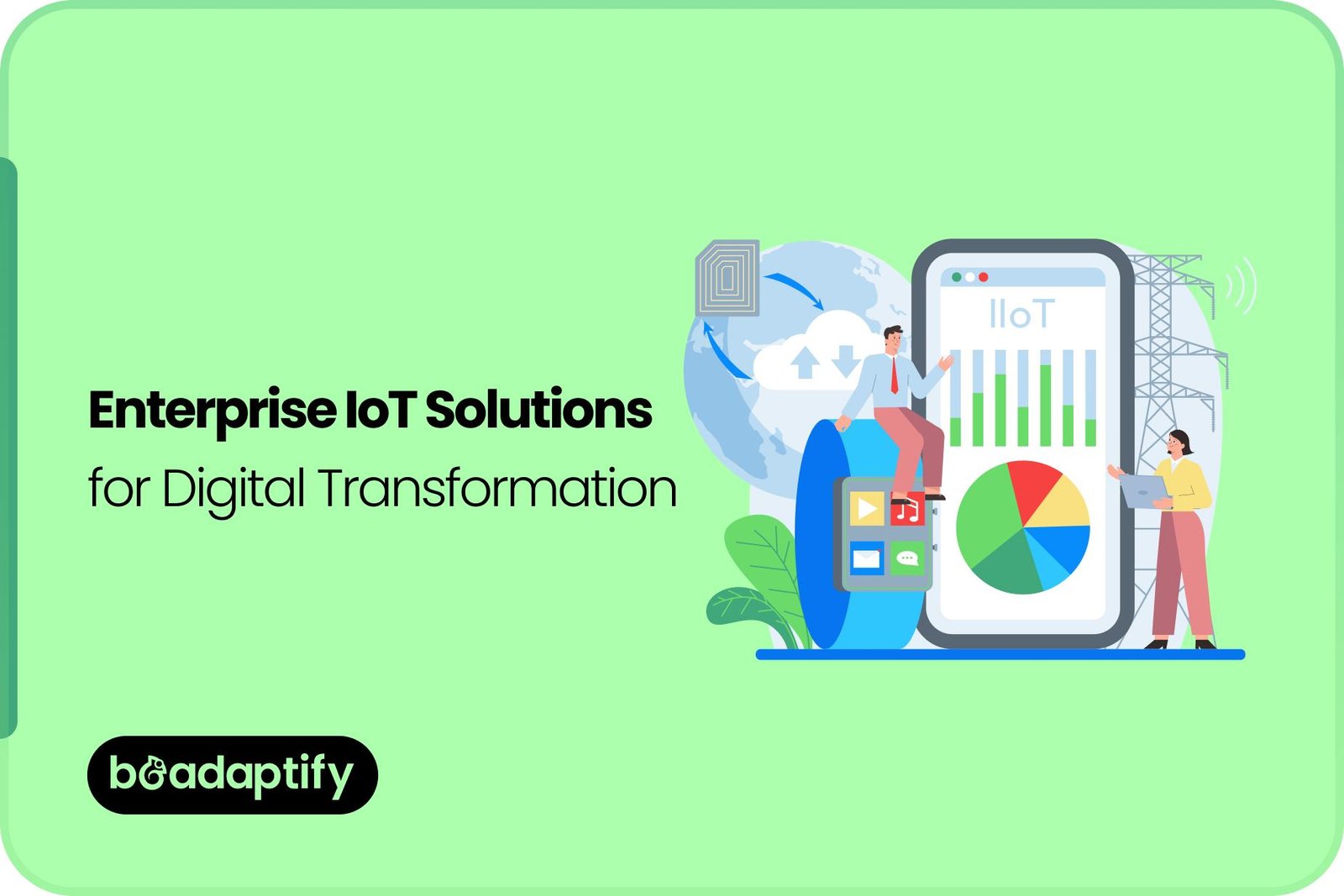
Enterprise operations are being reshaped by connected devices, real-time data, and intelligent automation. In 2026, the Internet of Things is no longer being treated as an experimental technology layer. It is being embedded into production environments, logistics networks, healthcare systems, retail operations, energy management, and field service workflows as a practical way to improve visibility, efficiency, and responsiveness. IoT is broadly defined as a network of physical objects embedded with sensors, software, and connectivity that allows them to collect and exchange data.
The business case for IoT is being strengthened by a few converging realities. Connected-device volumes remain extremely high, with IBM citing projections of 18 billion IoT devices worldwide by the end of 2025, while AWS references IDC’s estimate that more than 40 billion devices would generate 175 zettabytes of data by 2025. At the same time, McKinsey has continued to highlight advanced connectivity and cloud-plus-edge computing as important technology shifts for businesses. Together, these trends are making IoT more valuable because data from the physical world can now be captured, analyzed, and acted on faster than before.
For enterprises, this means operations are being moved away from reactive management and toward real-time decision-making. Machines are being monitored continuously. Inventory is being tracked dynamically. Field assets are being observed remotely. Service quality is being measured as it happens. In sectors like manufacturing, IBM describes Industry 4.0 as the digital transformation of the field through real-time decision-making, enhanced productivity, flexibility, and agility. That same operational model is increasingly being applied beyond factories into healthcare, transport, energy, and enterprise services.
This guide explains how IoT development is transforming enterprise operations in 2026, which operational areas are being most heavily affected, what technologies are making that transformation possible, and what businesses should consider when building IoT-powered systems.
Why IoT Matters More to Enterprises in 2026
The value of IoT has shifted from basic monitoring to operational orchestration. Earlier IoT deployments were often limited to isolated device tracking or data collection pilots. In 2026, enterprise IoT programs are increasingly being designed to feed live operational intelligence into workflows, dashboards, automation systems, and AI models. McKinsey has noted that IoT value is being accelerated by technologies such as 5G, edge computing, and advanced analytics, while IBM and AWS both emphasize the connection between IoT data and higher-value AI use cases.
This matters because enterprise operations are often constrained by visibility gaps. Traditional systems may only show what happened after the fact. IoT systems, by contrast, can show what is happening now. Sensors can report machine vibration, temperature, location, usage frequency, occupancy, or energy consumption in real time. When that data is connected to analytics and software workflows, decisions can be made sooner and with greater confidence.
IoT is also being prioritized because enterprise operations are under pressure to do more with less. Labor constraints, rising energy costs, supply chain volatility, and stricter service expectations are forcing businesses to improve efficiency without sacrificing resilience. IoT helps by making physical operations measurable and therefore optimizable.
Core Ways IoT Development Is Transforming Enterprise Operations
Real-Time Asset Visibility Is Being Expanded
One of the clearest operational changes enabled by IoT is better visibility into physical assets. Equipment, vehicles, inventory, and devices can now be tracked continuously rather than checked manually or reviewed in batches. This improves situational awareness across operations.
For manufacturers and other asset-intensive businesses, IoT platforms are being used to aggregate and contextualize industrial data from operational technology assets and industrial data sources. Gartner’s market definition for industrial IoT platforms describes them as systems that collect and contextualize industrial data for intelligent applications and dashboards through an edge-to-cloud architecture.
In practice, this means enterprise teams can see where assets are, whether they are being used properly, whether they are underperforming, and whether maintenance may soon be needed. Operations are therefore being managed with less guesswork.
Predictive Maintenance Is Replacing Calendar-Based Maintenance
Maintenance is one of the most widely cited IoT use cases because its impact is both measurable and operationally significant. IBM’s 2026 discussion of predictive maintenance explains that IoT sensors and advanced analytics are being used to move maintenance away from calendar-based schedules and toward data-driven forecasting of actual intervention needs. McKinsey’s earlier IoT value work also estimated that predictive maintenance can reduce equipment downtime by up to 50 percent and reduce equipment capital investment by 3 to 5 percent by extending machinery life.
This is operationally transformative because unnecessary servicing is being reduced while unexpected breakdowns are also being avoided more often. Instead of servicing every machine on a fixed schedule, enterprises can prioritize the machines that actually show signs of wear or risk. That leads to better uptime, more efficient labor allocation, and lower disruption to production or service delivery.
Supply Chains Are Being Made More Responsive
IoT development is also changing how enterprise supply chains are monitored and controlled. When goods, storage environments, fleets, and warehouse conditions are sensor-enabled, enterprises gain live insight into movement, delay risk, and environmental conditions.
Temperature-sensitive goods, for example, can be monitored throughout transit. Fleet routes can be optimized using location and performance telemetry. Warehouses can track inventory movement with higher precision. Delivery exceptions can be identified earlier. While older supply systems often depended on delayed reporting, IoT-based systems are being designed to support immediate detection and intervention. This creates more resilient operations because disruptions can be identified before they become expensive failures.
Energy and Facility Management Are Being Optimized
Buildings, campuses, plants, and retail locations are increasingly being equipped with IoT systems that monitor occupancy, power usage, equipment runtime, and environmental conditions. This allows energy use and building operations to be adjusted in near real time.
IoT-enabled energy management helps enterprises reduce waste, identify unusual consumption, and automate controls based on actual conditions. HVAC systems, lighting, refrigeration, and equipment loads can all be managed more intelligently when live sensor data is connected to automation logic.
For enterprises operating multiple facilities, this is especially valuable because operational standards can be monitored across locations instead of being assessed only through manual audits.
Workplace Safety and Compliance Are Being Improved
Operational safety is another area where IoT development is creating direct business value. Sensors and connected devices can be used to monitor hazardous environments, worker conditions, machine states, and restricted areas. Alerts can be generated when thresholds are exceeded or unsafe behavior patterns emerge.
In industrial and field-service contexts, this helps organizations reduce response time and document compliance more effectively. Safer operations are being supported not just through rules, but through live operational awareness.
Field Service Operations Are Being Modernized
Field service teams have historically depended on delayed information, customer descriptions, and manual inspection. IoT development is changing that model by enabling remote diagnostics, connected service workflows, and better dispatch decisions.
Connected equipment can report faults automatically. Service teams can be dispatched with better information. In some cases, remote remediation is being performed before a technician is even sent on site. This reduces downtime for customers and lowers service costs for providers.
As more enterprises digitize after-sales support and equipment servicing, IoT app development services are being used to build mobile and web applications that connect field teams with sensor-driven insight in real time.
Industry-Specific Impact of IoT on Enterprise Operations
Manufacturing
Manufacturing remains one of the strongest IoT environments. IBM describes smart manufacturing as real-time, flexible, digitally transformed production. In these environments, IoT is being used to monitor line performance, machine health, throughput quality, energy usage, and maintenance needs. The result is better uptime, more adaptive production, and improved yield.
Healthcare
IBM’s discussion of edge computing for IoT notes broad healthcare uses, including remote patient monitoring and connected care environments. In enterprise healthcare operations, IoT is being used for remote monitoring, asset tracking, environmental control, and equipment utilization. Hospitals and care providers benefit because critical devices and patient conditions can be observed continuously, while staff workflows can be supported with more accurate data.
Retail
Retail enterprises are using IoT to track inventory, optimize refrigeration, manage store energy usage, monitor foot traffic, and improve customer fulfillment workflows. Connected environments allow store operations to be treated more like live systems than static locations.
Transport and Logistics
Vehicles, containers, depots, and delivery networks are all being connected more deeply. Route performance, asset location, environmental conditions, and utilization metrics are being brought into operational dashboards in real time. This helps logistics operators reduce delays and improve reliability.
Energy and Utilities
Utilities and energy-intensive enterprises are using IoT for grid monitoring, remote inspections, predictive maintenance, and load optimization. Because infrastructure is distributed, the value of connected monitoring is especially high.
Technologies Driving IoT Transformation in 2026
Edge Computing
Edge computing is becoming critical because not all IoT data should be sent to the cloud before decisions are made. IBM explains that many modern IoT applications depend on edge computing for functionality, especially in scenarios where latency matters. Processing closer to the source supports faster response and reduced bandwidth load.
Advanced Connectivity
McKinsey’s 2025 technology outlook highlights advanced connectivity as a major trend. As enterprise networks improve, more devices can operate reliably across sites, fleets, and remote environments. This supports broader IoT deployment and more consistent data flow.
AI and Analytics
IoT becomes more valuable when raw sensor data is turned into operational intelligence. IBM’s 2026 perspective on predictive maintenance shows how IoT and advanced analytics are being combined to forecast maintenance needs. AWS also highlights the growing impact of combining IoT with generative AI to create meaningful business value from enterprise-specific device data.
Cloud Platforms
Cloud infrastructure remains essential for storing, orchestrating, and analyzing device data at scale. Microsoft’s 2025 annual report shows continued strong growth in Azure demand, reflecting broader enterprise cloud adoption. In IoT environments, cloud systems are being used to aggregate device data, run analytics, and power dashboards and integrations.
The Role of IoT App Development in Enterprise Transformation
IoT devices alone do not transform operations. Transformation happens when connected data is made usable through software.
That is why IoT app development is such an important part of enterprise IoT strategy. Applications are needed to:
- display live operational data
- trigger alerts and workflows
- visualize asset conditions
- support remote control and automation
- connect IoT data with ERP, CRM, and service systems
- enable field teams and managers to act on insights
In most enterprises, this requires tailored IoT app development solutions rather than off-the-shelf dashboards. A capable enterprise software development company helps design the operational software layer that turns sensor data into actual business action.
Challenges Enterprises Still Face
Even though IoT is delivering value, deployment is not effortless.
Security and Digital Trust
As more endpoints are connected, security complexity increases. Gartner’s 2026 trends statement emphasizes digital trust as part of the realities of an AI-powered, hyperconnected world. IoT environments expand the attack surface, so secure architecture is essential.
Integration Complexity
Many enterprises still operate with fragmented systems. IoT data is most useful when it connects with existing operational tools. That often requires significant integration work.
Skills and Change Management
IoT success requires technical skills, operational alignment, and internal adoption. Older Microsoft IoT reporting had already pointed to complexity and skills shortages as barriers, and those challenges have not disappeared.
Scaling from Pilot to Enterprise Rollout
Many organizations succeed with pilots but struggle to scale. Enterprise IoT requires governance, architecture discipline, and operational ownership.
Best Practices for Enterprises Investing in IoT Development
The strongest IoT outcomes are usually achieved when:
- clear operational use cases are selected first
- ROI is tied to measurable business outcomes
- edge and cloud roles are defined intentionally
- security is designed in from the start
- software workflows are planned alongside device deployment
- pilots are built with scale in mind
- analytics and AI are connected to real operational decisions
These are the areas where strong enterprise software development services make a difference. A specialized development company can help ensure that IoT programs are not treated as isolated device projects, but as end-to-end operational transformation initiatives.
Why Enterprises Trust Beadaptify for IoT Solutions?
Building successful IoT solutions requires more than connecting devices. It requires strong software architecture, real-time data handling, seamless integrations, and a clear understanding of operational goals. At Beadaptify, IoT solutions are developed with a strong focus on scalability, performance, and business impact. As a trusted provider of enterprise software development services, we help enterprises transform connected data into actionable intelligence through robust digital systems. Our expertise in IoT app development, IoT app development services, and tailored IoT app development solutions allows businesses to build applications that support monitoring, automation, predictive maintenance, and operational optimization.
By combining strategic planning with end-to-end engineering, Beadaptify ensures that enterprise IoT platforms are secure, efficient, and future-ready. Whether the goal is to modernize industrial systems, improve field operations, or build smarter enterprise workflows, our team helps organizations turn IoT investments into measurable business outcomes.
Final Thoughts
In 2026, IoT development is transforming enterprise operations by making physical systems visible, measurable, and increasingly intelligent. Maintenance is being predicted instead of scheduled blindly. Facilities are being optimized dynamically. Supply chains are being monitored in real time. Field service is being informed before dispatch. Industrial operations are being run with faster, more accurate decisions. These changes are being enabled by the combination of connected devices, edge computing, cloud platforms, and AI-driven analysis.
For enterprises, the opportunity is no longer just to connect devices. It is to connect operations. That requires more than hardware. It requires thoughtful IoT app development, strong IoT app development services, scalable IoT app development solutions, and integrated enterprise software development services. Organizations that treat IoT as an operational intelligence system rather than a sensor project are the ones most likely to create durable competitive advantage.
FAQ About IoT Is Transforming Enterprise Operations
How does IoT improve enterprise operations?
IoT improves enterprise operations by enabling real-time monitoring, predictive maintenance, asset tracking, energy optimization, workflow automation, and faster operational decisions.
What industries benefit most from IoT app development?
Industries such as manufacturing, healthcare, logistics, retail, energy, and field services benefit significantly from IoT app development and tailored IoT app development solutions.
Why is IoT important for enterprises in 2026?
IoT is important in 2026 because enterprises are under pressure to improve productivity, reduce downtime, gain real-time visibility, and automate operational processes more effectively.
What is included in IoT app development services?
IoT app development services typically include device integration, dashboard development, data analytics, workflow automation, cloud connectivity, and real-time monitoring applications.
What are the challenges of IoT implementation?
Common IoT challenges include integration complexity, security risks, scalability issues, data management, and the need for reliable software architecture.