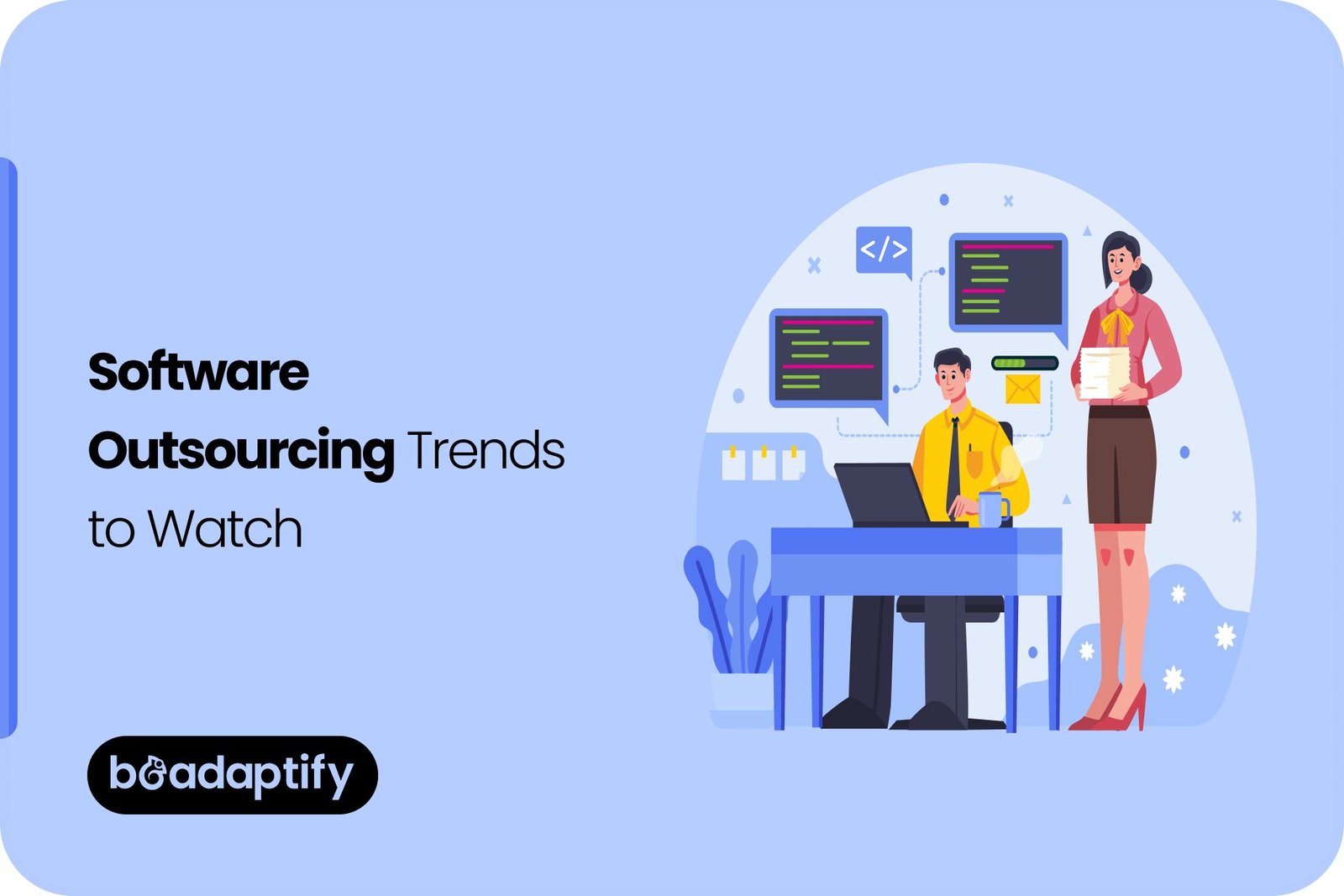
Software outsourcing has continued to evolve as businesses seek agility, scalability, and cost efficiency in an increasingly digital economy. In 2026, outsourcing is no longer being treated as a short-term cost-saving tactic—it is being positioned as a long-term strategic growth model.
As technology stacks grow more complex and competition intensifies, organizations are increasingly relying on a trusted software development company to deliver innovation, speed, and specialized expertise. This blog explores the top software outsourcing trends shaping 2026 and explains how businesses can stay ahead.
Why Software Outsourcing Is Being Redefined in 2026
The outsourcing landscape has shifted dramatically over the past few years. Traditional staff augmentation models are being replaced by value-driven partnerships where innovation, accountability, and long-term collaboration are prioritized.
Several factors are driving this change:
- Rapid adoption of AI, automation, and cloud technologies
- Global talent shortages in specialized tech roles
- Increasing pressure to reduce time-to-market
- Rising development and infrastructure costs
- Demand for scalable and flexible delivery models
As a result, software development services are being outsourced not just for execution, but for strategy, architecture, and ongoing optimization.
Trend 1: Outcome-Based Outsourcing Models
In 2026, outsourcing contracts are increasingly being structured around outcomes rather than hours or resources.
Instead of paying for effort, businesses are paying for:
- Product milestones
- Performance benchmarks
- Business KPIs
- Delivery timelines
This shift ensures stronger accountability and alignment between business goals and development execution. Outcome-based engagement models are often supported by mature design & development services providers capable of managing end-to-end delivery.
Trend 2: AI-Enabled Software Outsourcing
Artificial intelligence is being embedded directly into outsourced development workflows. AI-powered tools are being used to:
- Accelerate coding and testing
- Improve requirement analysis
- Automate documentation
- Enhance quality assurance
Outsourcing partners that integrate AI into their delivery pipelines are being favored, as productivity and consistency are significantly improved. AI-enabled outsourcing is being viewed as a competitive necessity rather than a luxury.
Trend 3: Rise of Specialized Outsourcing Partners
Generalist vendors are gradually being replaced by niche specialists. In 2026, businesses are outsourcing to partners with deep expertise in:
- Healthcare systems
- Fintech platforms
- E-commerce ecosystems
- SaaS product development
- Mobile-first solutions
Trend 4: Product-Centric Outsourcing Relationships
Outsourcing is increasingly being structured around long-term product ownership rather than short-term project delivery.
Under this model:
- Teams stay involved across product lifecycles
- Continuous improvement is emphasized
- Product roadmaps are co-created
- Technical debt is actively managed
Product-centric outsourcing enables better alignment with business vision and is becoming a preferred engagement model in 2026.
Trend 5: Security-First Outsourcing Practices
As cyber threats increase, security is being prioritized at every stage of outsourced development.
Security-focused outsourcing includes:
- Secure SDLC practices
- Regular vulnerability testing
- Compliance-ready architectures
- Data privacy-by-design
Outsourcing partners offering secure-by-default software development services are being trusted with sensitive enterprise and customer data.
Trend 6: Cloud-Native and API-First Development
Outsourced software is increasingly being built using cloud-native architectures. This approach ensures:
- Faster scalability
- Reduced infrastructure costs
- Easier integrations
- Improved system resilience
API-first development is also being emphasized, allowing seamless communication between platforms, third-party tools, and mobile applications.
Trend 7: Mobile App Development Outsourcing Growth
Demand for mobile-first experiences continues to rise. As a result, outsourcing to a reliable mobile app development company is becoming essential.
In 2026, mobile app outsourcing focuses on:
- Cross-platform development
- Performance optimization
- Security and compliance
- Long-term maintenance
Advanced mobile app development services are being used to deliver consistent user experiences across devices and regions.
Trend 8: Remote-First and Distributed Development Teams
Remote-first outsourcing models have become standard. Distributed teams are being assembled across time zones to ensure:
- 24/7 development cycles
- Faster delivery timelines
- Access to global talent pools
Collaboration tools, agile frameworks, and real-time reporting are being used to maintain transparency and alignment across distributed teams.
Trend 9: UX-Led Outsourcing Strategies
User experience is no longer an afterthought. In 2026, outsourcing engagements are being led by UX and design strategy.
This includes:
- User research and validation
- Accessibility-first design
- Conversion-focused interfaces
- Continuous UX optimization
Integrated design & development services are being preferred to ensure design and engineering teams work cohesively.
Trend 10: Long-Term Strategic Partnerships Over Vendors
Outsourcing partners are increasingly being viewed as strategic collaborators rather than vendors.
These partnerships are characterized by:
- Shared risk and responsibility
- Continuous innovation
- Transparent communication
- Long-term roadmapping
A trusted software development company becomes an extension of the internal team, supporting growth beyond individual projects.
Benefits of Adapting to Modern Outsourcing Trends
Businesses that align with modern outsourcing trends benefit from:
- Faster innovation cycles
- Reduced operational overhead
- Access to top-tier global talent
- Improved product quality
- Greater scalability and flexibility
When outsourcing is approached strategically, it becomes a growth accelerator rather than a cost center.
The Role of Design & Development Services in Outsourcing Success
Successful outsourcing relies heavily on strong design foundations. When design & development services are integrated, products are:
- More user-centric
- Easier to scale
- Faster to adapt to market changes
UX-driven development ensures technology investments translate into real business value.
Why Beadaptify Is a Trusted Software Outsourcing Partner?
In 2026, successful software outsourcing requires more than external development—it demands strategic alignment, technical depth, and long-term accountability. At Beadaptify, outsourcing is approached as a partnership focused on outcomes, scalability, and sustainable growth.
As an experienced software development company, Beadaptify delivers end-to-end software development services, design & development services, and mobile application development services that align with modern outsourcing trends. From architecture planning to post-launch optimization, every engagement is built around transparency, security, and measurable results.
What Sets Beadaptify Apart
- Outcome-Driven Delivery Models
- AI-Enabled Development Workflows
- Secure & Compliant Engineering
- UX-Led Product Development
- Scalable Global Teams
- Long-Term Partnership Focus
Final Thoughts
Software outsourcing in 2026 is being defined by strategy, specialization, and long-term collaboration. When aligned with modern trends and supported by the right partners, outsourcing becomes a powerful enabler of innovation and scalability. By working with an experienced software development company that delivers robust design & development services, and mobile app development services, organizations can future-proof their digital initiatives and drive sustainable growth.
FAQs About Outsourcing Software Development
Why are companies outsourcing software development more than before?
Outsourcing is being used to access global talent, reduce time-to-market, manage costs, and accelerate digital transformation.
How do modern outsourcing models differ from traditional ones?
Modern models emphasize accountability, product ownership, security, and continuous optimization instead of hourly billing.
Is software outsourcing secure?
Yes, when handled by an experienced software development company that follows secure development lifecycle practices and compliance standards.
What types of projects are commonly outsourced?
Web platforms, enterprise systems, SaaS products, and mobile applications are frequently outsourced.
How does mobile app development outsourcing work?
Businesses partner with a specialized mobile app development company to design, build, and maintain mobile apps efficiently and at scale.
What should businesses look for in an outsourcing partner?
Technical expertise, security practices, communication transparency, scalability, and long-term support capabilities should be evaluated.
Can outsourcing support long-term growth?
Yes. Strategic outsourcing enables innovation, scalability, and continuous improvement when aligned with business objectives.