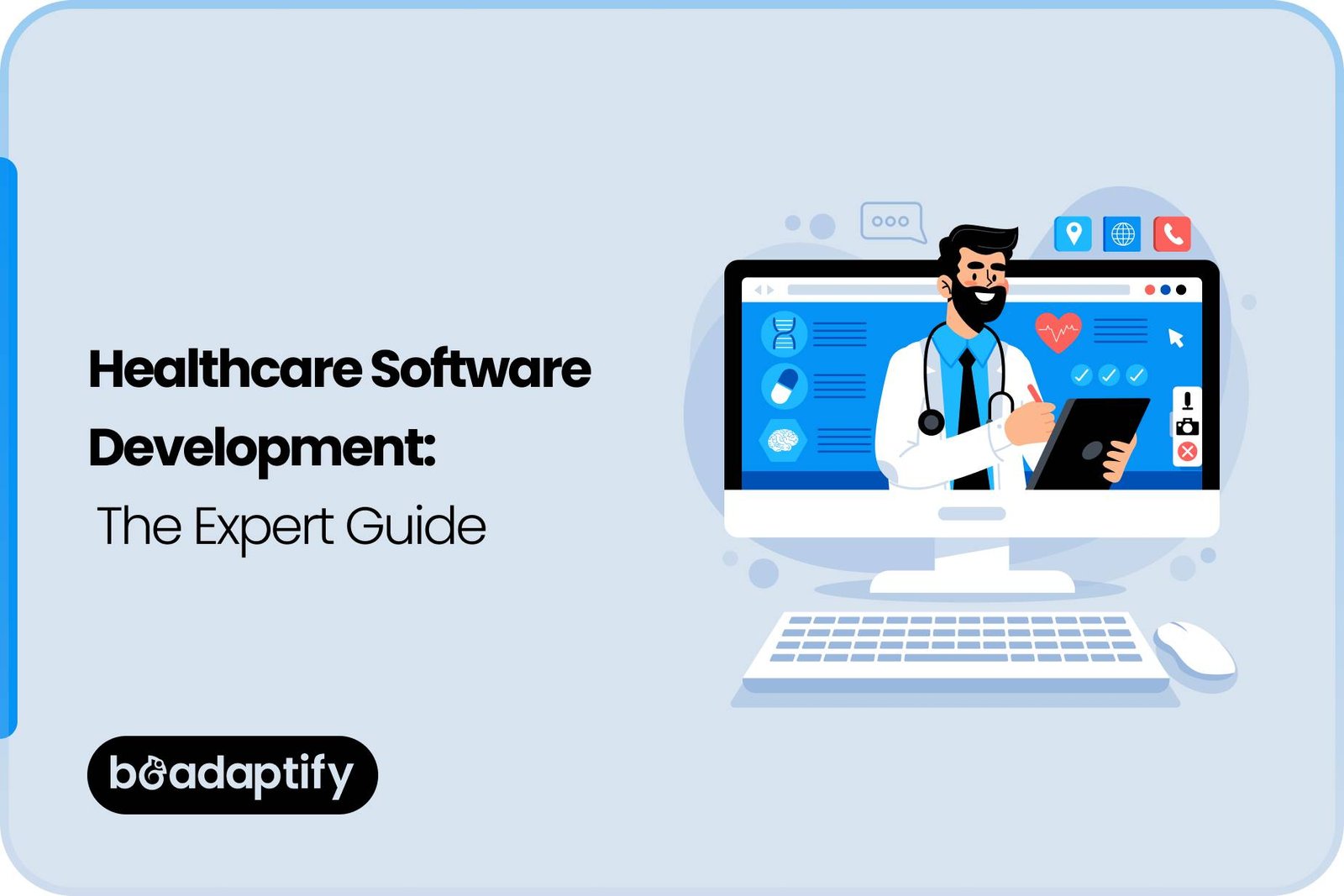
Healthcare is undergoing a profound digital transformation. From patient care delivery to hospital management systems, technology is being integrated across every layer of the healthcare ecosystem. In 2026, healthcare software development is no longer limited to digitizing records, it is being used to enhance patient outcomes, streamline operations, enable remote care, and support data-driven decision-making.
As the demand for digital healthcare solutions continues to grow, organizations are increasingly investing in custom software platforms that address complex clinical, administrative, and regulatory requirements. These solutions are being developed through specialized software development, advanced app development, and integrated design & development that ensure scalability, security, and compliance.
This comprehensive guide explores healthcare software development in 2026, including key technologies, development processes, compliance requirements, cost factors, and best practices.
The Evolution of Healthcare Software
Healthcare software has evolved significantly over the years. Initially, digital systems were introduced to replace paper-based medical records. Over time, these systems expanded to include electronic health records (EHRs), hospital management systems, telemedicine platforms, and patient engagement tools.
In 2026, healthcare software is being designed to support:
- Real-time data access
- Remote patient monitoring
- AI-driven diagnostics
- Personalized treatment plans
- Integrated care coordination
Healthcare providers are leveraging digital platforms to improve both clinical outcomes and operational efficiency.
To build these systems, organizations are relying on expert software development services that deliver secure, compliant, and high-performance healthcare applications.
What Is Healthcare Software Development?
Healthcare software development refers to the process of designing, building, and maintaining digital applications used within healthcare environments.
These applications serve various purposes, including:
- Managing patient data
- Scheduling appointments
- Facilitating communication between patients and providers
- Supporting diagnostics and treatment planning
- Handling billing and insurance processes
Modern healthcare software must meet strict regulatory standards while providing seamless user experiences.
Through professional design & development services, healthcare organizations can create intuitive platforms that improve usability for both patients and medical professionals.
Types of Healthcare Software in 2026
Healthcare software solutions can be categorized into several types based on their functionality.
1. Electronic Health Record (EHR) Systems
EHR systems store patient medical histories, diagnoses, treatment plans, and lab results. These systems enable healthcare providers to access patient data quickly and make informed decisions.
2. Telemedicine Platforms
Telemedicine applications allow patients to consult healthcare professionals remotely. Video consultations, secure messaging, and remote diagnostics are key features.
These platforms are often developed through advanced mobile app development services, enabling access through smartphones and tablets.
3. Hospital Management Systems
Hospital management systems automate administrative processes such as patient registration, appointment scheduling, billing, and inventory management.
4. Patient Engagement Applications
Patient engagement platforms help individuals track their health, manage medications, and communicate with healthcare providers.
5. Medical Billing Software
Billing systems manage insurance claims, payment processing, and financial reporting.
6. Remote Patient Monitoring Systems
These systems collect real-time health data from wearable devices and sensors, allowing healthcare providers to monitor patients remotely.
Key Technologies Driving Healthcare Software Development
Several emerging technologies are shaping healthcare software development in 2026.
Artificial Intelligence (AI)
AI is being used to analyze medical data, assist in diagnostics, and predict patient outcomes. Machine learning algorithms can identify patterns in large datasets, enabling more accurate diagnoses.
Internet of Things (IoT)
IoT devices such as wearable health trackers and connected medical equipment provide real-time data that can be integrated into healthcare systems.
Cloud Computing
Cloud infrastructure allows healthcare organizations to store and access data securely while supporting scalability.
Blockchain
Blockchain technology is being explored for secure data sharing and maintaining patient privacy.
Big Data Analytics
Data analytics platforms are being used to analyze patient data and improve treatment strategies.
Through specialized software development services, these technologies are integrated into healthcare applications to enhance functionality and performance.
Healthcare Software Development Process
Developing healthcare software involves several structured phases.
1. Requirement Analysis
The development process begins with identifying business objectives, user needs, and regulatory requirements.
2. System Architecture Design
A scalable architecture is designed to support data processing, user interactions, and system integrations.
3. UI/UX Design
User interfaces are designed to be intuitive and accessible, especially for healthcare professionals who rely on quick data access.
4. Development
Developers build the application using appropriate programming languages, frameworks, and tools.
5. Integration
Healthcare software often integrates with external systems such as laboratories, pharmacies, and insurance providers.
6. Testing and Quality Assurance
Applications are tested to ensure functionality, security, and compliance with regulations.
7. Deployment
The software is deployed in a production environment, often using cloud infrastructure.
8. Maintenance and Updates
Continuous monitoring and updates ensure long-term performance and security.
Importance of Mobile Healthcare Applications
Mobile healthcare applications are becoming essential for delivering modern healthcare services.
Through mobile app development services, healthcare providers can create applications that allow patients to:
- Book appointments
- Access medical records
- Consult doctors remotely
- Receive medication reminders
Mobile apps also enable healthcare professionals to access patient data in real time, improving decision-making and response times.
Compliance and Security in Healthcare Software
Healthcare software must comply with strict regulatory standards to protect patient data.
Key Compliance Requirements
- HIPAA (United States)
- GDPR (Europe)
- HL7 and FHIR standards for data exchange
Security Measures
- Data encryption
- Multi-factor authentication
- Secure API communication
- Role-based access control
Through professional software development services, compliance and security are integrated into the development process.
Cost of Healthcare Software Development
The cost of healthcare software development varies based on several factors.
Factors Influencing Cost
- Application complexity
- Number of features
- Technology stack
- Integration requirements
- Compliance requirements
- Development team expertise
Estimated Cost Range
- Basic applications: $20,000 – $50,000
- Mid-level platforms: $50,000 – $150,000
- Enterprise systems: $150,000 – $500,000+
Organizations often work with providers offering design & development services to estimate and manage development budgets effectively.
Benefits of Healthcare Software Development
Healthcare software offers numerous benefits for both providers and patients.
Improved Patient Care
Real-time data access enables better diagnosis and treatment.
Operational Efficiency
Automation reduces administrative workload and improves productivity.
Enhanced Communication
Digital platforms improve communication between patients and healthcare providers.
Data-Driven Decision Making
Analytics tools provide insights that support clinical and operational decisions.
Remote Care Capabilities
Telemedicine and remote monitoring enable care delivery beyond physical locations.
Challenges in Healthcare Software Development
Despite its advantages, healthcare software development presents several challenges.
Regulatory Compliance
Meeting regulatory requirements can be complex and time-consuming.
Data Security Risks
Healthcare data is highly sensitive and requires strong security measures.
Integration Complexity
Integrating multiple systems can be technically challenging.
High Development Costs
Building enterprise-grade healthcare platforms requires significant investment.
Future Trends in Healthcare Software Development
Healthcare technology continues to evolve, and several trends are expected to shape the future.
AI-Powered Diagnostics
AI systems will play a larger role in diagnosing diseases and recommending treatments.
Personalized Healthcare
Data-driven insights will enable personalized treatment plans.
Expansion of Telemedicine
Remote care platforms will continue to grow in popularity.
Wearable Technology Integration
Wearable devices will provide continuous health monitoring.
Automation of Administrative Tasks
Automation will streamline hospital operations and reduce costs.
Choosing the Right Development Partner
Selecting the right development partner is critical for successful healthcare software projects. An experienced provider offering software development services can help design scalable and secure systems. Through professional development & design services, applications can be built to meet both user needs and regulatory requirements. Additionally, a reliable provider offering app development can ensure seamless mobile integration.
Why Choose Beadaptify for Healthcare Software Solutions?
Developing healthcare software requires a deep understanding of technology, compliance, security, and user experience. At Beadaptify, healthcare solutions are designed with a strong focus on performance, scalability, and regulatory adherence. As a trusted provider of software development services, we help healthcare organizations build secure digital platforms that improve patient care and operational efficiency. Our expertise in mobile app development services enables the creation of seamless mobile health applications that support remote care, real-time data access, and patient engagement. Through comprehensive design & development services, intuitive interfaces and high-performing systems are delivered to meet both clinical and business needs. By combining innovation with industry expertise, Beadaptify ensures that healthcare organizations are equipped with reliable, future-ready digital solutions.

Conclusion
Healthcare software development in 2026 is being driven by innovation, technology integration, and the need for improved patient care. From telemedicine platforms and EHR systems to AI-powered diagnostics and mobile health applications, digital solutions are transforming the healthcare industry.
By leveraging advanced custom software development services, mobile application development services, and comprehensive design & development services, organizations can build scalable healthcare platforms that support efficiency, security, and innovation. As healthcare continues to evolve, technology will play an increasingly important role in shaping the future of medical care and improving outcomes for patients worldwide.
FAQs on Healthcare Software Development
Why is healthcare software important in 2026?
Healthcare software enables better patient outcomes, improves operational efficiency, supports remote care, and helps organizations comply with regulatory standards.
What technologies are used in healthcare software development?
Key technologies include artificial intelligence, cloud computing, IoT devices, data analytics, and mobile applications developed through professional app development services.
How much does healthcare software development cost?
Costs vary depending on complexity, features, and compliance requirements. Basic apps may start from $20,000, while enterprise systems can exceed $500,000.
What compliance standards must healthcare software follow?
Healthcare applications must comply with regulations such as HIPAA, GDPR, and HL7/FHIR standards to ensure data security and interoperability.
Why should businesses hire a software development company for healthcare projects?
A professional provider offering software development services ensures secure, compliant, and scalable solutions tailored to healthcare industry requirements.
Can healthcare software be integrated with mobile apps?
Yes. Through advanced mobile app development services, healthcare platforms can be extended to mobile devices for remote access and patient engagement.