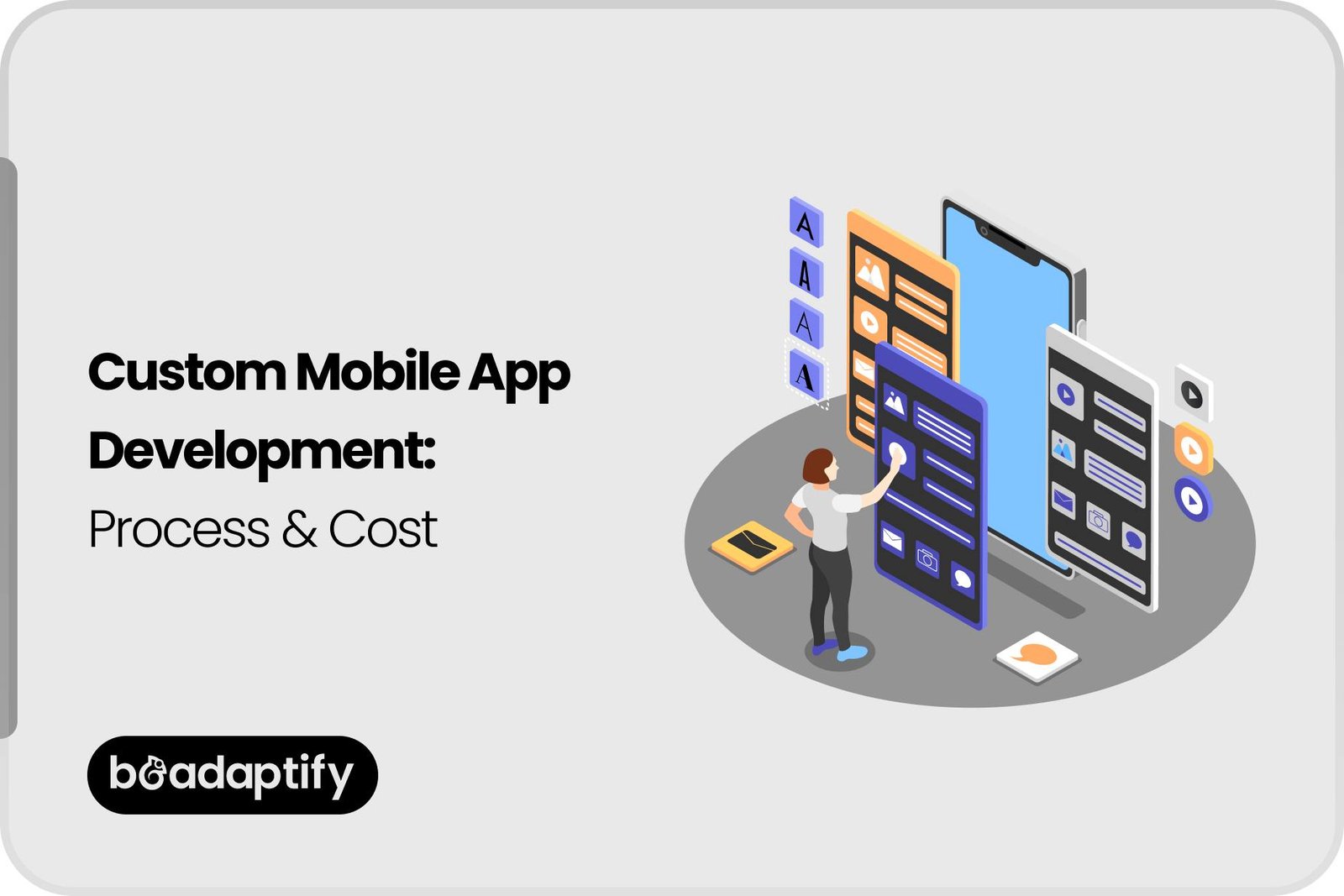
Mobile applications have become an essential part of modern business operations. From customer engagement and service delivery to internal process automation, mobile apps are being used across industries to drive growth and innovation. In 2026, businesses are increasingly investing in custom mobile app development to build tailored solutions that align with their specific goals and user needs.
Unlike generic or off-the-shelf applications, custom mobile apps are designed to meet unique business requirements. They offer greater flexibility, scalability, and performance, making them a preferred choice for organizations seeking long-term digital success.
To build high-quality applications, businesses often partner with a professional app development company that provides end-to-end development services, including design, development, testing, and deployment. Many organizations also choose to hire mobile developer teams or work with a dedicated mobile developer for hire to accelerate development.
This comprehensive guide explores the process, scope, and cost of custom mobile app development in 2026, helping businesses make informed decisions.
What Is Custom Mobile App Development?
Custom mobile app development refers to the process of designing and building applications specifically tailored to a business’s needs. These applications are developed from scratch and are fully customizable in terms of features, design, and functionality.
Custom apps are commonly used for:
- Customer engagement platforms
- eCommerce applications
- On-demand service apps
- Enterprise solutions
- Healthcare and fintech applications
Through advanced mobile application development services, businesses can create applications that provide unique value and competitive advantage.
Why Businesses Choose Custom Mobile Apps in 2026
Custom mobile applications are increasingly being adopted as businesses shift toward personalized, scalable, and technology-driven solutions. Unlike generic apps, custom-built applications are designed to align directly with business goals, user expectations, and long-term growth strategies.
• Tailored to Specific Business Needs
Custom mobile apps are built from the ground up to match unique workflows, business models, and operational requirements. This ensures that no unnecessary features are included, and every functionality serves a clear purpose.
• Enhanced User Experience and Personalization
User behavior, preferences, and engagement patterns are analyzed to deliver highly personalized experiences. Custom apps allow businesses to design intuitive interfaces and user journeys that improve satisfaction and retention.
• Scalability for Future Growth
As businesses grow, their digital needs evolve. Custom mobile apps are designed with scalability in mind, allowing new features, integrations, and user capacity to be added without major system changes.
• Seamless Integration with Existing Systems
Custom applications can be easily integrated with existing business systems such as CRM, ERP, payment gateways, and third-party APIs. This ensures smooth data flow and operational efficiency across platforms.
• Stronger Security and Data Control
Custom apps provide enhanced security by allowing businesses to implement advanced encryption, authentication mechanisms, and compliance protocols tailored to their industry requirements.
• Competitive Market Advantage
Unique features, custom functionalities, and optimized performance help businesses stand out in a crowded market. Custom apps enable innovation that cannot be achieved through off-the-shelf solutions.
• Better Performance and Optimization
Since custom apps are built specifically for a business, they are optimized for speed, responsiveness, and reliability. This results in improved app performance and reduced downtime.
• Flexibility in Technology and Design Choices
Businesses have full control over technology stack, design elements, and feature implementation. This flexibility ensures that the app aligns perfectly with brand identity and technical requirements.
• Long-Term Cost Efficiency
Although the initial investment may be higher, custom apps reduce long-term costs by minimizing dependency on third-party tools, licensing fees, and frequent modifications required in generic solutions.
• Improved Customer Engagement and Retention
Custom mobile apps enable direct communication with users through push notifications, personalized content, and real-time updates, leading to higher engagement and loyalty.
• Data-Driven Insights and Analytics
Advanced analytics can be integrated into custom apps to track user behavior, performance metrics, and business insights, enabling data-driven decision-making.
• Support for Advanced Technologies
Custom apps can easily incorporate emerging technologies such as AI, IoT, AR/VR, and real-time analytics, ensuring that businesses stay aligned with future trends.
Scope of Custom Mobile App Development
The scope of custom mobile app development in 2026 extends beyond basic functionality.
Platform Options
iOS App Development
Applications are built for Apple devices using advanced iOS development services, leveraging technologies such as Swift and SwiftUI.
Android App Development
Android applications are developed using android development services, ensuring compatibility across a wide range of devices.
Cross-Platform Development
Frameworks such as React Native are used to build applications for multiple platforms using a single codebase. Through react native app development services, businesses can reduce development time and cost.
Application Types
Custom mobile apps can be developed for various purposes:
- eCommerce platforms
- Social networking apps
- On-demand service applications
- Enterprise productivity tools
- Healthcare and fitness applications
Features and Functionalities
Modern mobile applications include:
- User authentication and profiles
- Real-time notifications
- Payment gateway integration
- API integrations
- Analytics and reporting
- AI-powered features
Custom Mobile App Development Process
The custom mobile app development process is structured into multiple stages to ensure that the final product is scalable, secure, and aligned with business goals. Each phase is carefully executed to minimize risks, optimize performance, and deliver a seamless user experience.
1. Requirement Analysis & Business Discovery
The process begins with a detailed understanding of business objectives, target audience, and core functionalities. Market research, competitor analysis, and user behavior insights are gathered to define the app’s purpose and scope. A clear roadmap is created to guide the entire development lifecycle.
• 2. Strategy & Project Planning
Once requirements are defined, a strategic plan is developed. This includes feature prioritization, timeline estimation, technology selection, and resource allocation. Development methodologies such as Agile are often adopted to ensure flexibility and iterative progress.
3. UI/UX Design & Prototyping
User experience is designed to be intuitive, engaging, and user-friendly. Wireframes and prototypes are created to visualize app structure and user flow. High-fidelity designs are then developed, focusing on usability, accessibility, and brand consistency.
4. Technology Stack Selection
The appropriate technologies are selected based on project requirements. Decisions are made between native development (iOS and Android) and cross-platform frameworks such as React Native. This step ensures optimal performance and cost efficiency.
5. Frontend & Backend Development
The core development phase involves building both frontend and backend components. The frontend focuses on user interface and interactions, while the backend handles server logic, database management, and API integrations. Features are implemented based on the defined requirements.
6. API Integration & Third-Party Services
External services such as payment gateways, authentication systems, analytics tools, and cloud platforms are integrated into the application. This enhances functionality and enables seamless communication between systems.
7. Testing & Quality Assurance
Comprehensive testing is conducted to ensure the application performs reliably across different devices and scenarios. Functional testing, performance testing, security testing, and usability testing are carried out to identify and resolve issues.
8. Deployment & App Store Launch
Once testing is completed, the application is prepared for deployment. It is submitted to platforms such as the Apple App Store and Google Play Store, ensuring compliance with their guidelines and approval processes.
9. Post-Launch Support & Maintenance
After launch, continuous monitoring is performed to track performance and user feedback. Regular updates, bug fixes, and feature enhancements are implemented to keep the application relevant and efficient.
10. Scaling & Continuous Improvement
As the application grows, new features and integrations are added based on user feedback and market trends. Scalability strategies are implemented to handle increased traffic and evolving business needs.
Cost of Custom Mobile App Development in 2026
The cost of custom mobile app development in 2026 is influenced by multiple factors, including application complexity, platform selection, technology stack, and development approach. Rather than being a fixed number, the cost is determined based on the scope, features, and long-term scalability requirements of the application.
A well-planned cost strategy ensures that businesses can balance budget constraints with performance, quality, and future growth.
Key Factors Influencing Development Cost
App Complexity and Features
The complexity of the application is one of the most significant cost drivers.
- Basic apps with limited features require lower investment
- Medium-complexity apps include user accounts, APIs, and integrations
- Advanced apps involve real-time processing, AI features, and complex workflows
As the number of features increases, development time and cost also rise.
Platform Choice (iOS, Android, or Cross-Platform)
The choice of platform directly impacts the budget.
- Native iOS or Android apps require separate development efforts
- Cross-platform solutions using frameworks like React Native reduce costs by using a single codebase
Businesses often choose a balanced approach based on target audience and budget.
UI/UX Design Complexity
High-quality design requires additional time and expertise. Custom animations, interactive elements, and personalized user flows increase development costs but significantly improve user experience and engagement.
Technology Stack
The technologies used for development influence both cost and performance.
- Native technologies offer high performance but may increase cost
- Cross-platform frameworks reduce development time and cost
- Advanced technologies like AI, AR/VR, and IoT increase overall investment
Backend Infrastructure and Integrations
Backend development includes server setup, database management, and API integrations. Complex integrations such as payment gateways, third-party services, and cloud platforms can increase development costs.
Development Team and Location
The cost varies depending on whether businesses:
- Hire an in-house team
- Work with a mobile app development company
- Choose to hire mobile developer professionals
Outsourcing to experienced teams often provides cost efficiency while maintaining quality.
Security and Compliance Requirements
Applications handling sensitive data require advanced security measures such as encryption, authentication, and compliance with industry standards. This adds to development complexity and cost.
Maintenance and Post-Launch Support
Development costs extend beyond launch. Regular updates, bug fixes, performance optimization, and feature enhancements contribute to long-term investment.
Estimated Cost Breakdown (2026)
The cost of custom mobile app development can be broadly categorized as follows:
- Basic Applications: $10,000 – $40,000
(Simple features, minimal design, limited integrations) - Mid-Level Applications: $40,000 – $150,000
(User accounts, APIs, payment integration, moderate UI/UX) - Advanced / Enterprise Applications: $150,000 – $500,000+
(AI features, real-time data, complex architecture, scalability)
These estimates may vary depending on project requirements and development approach.
Cost Optimization Strategies
To manage development costs effectively, several strategies can be implemented:
• Start with an MVP (Minimum Viable Product)
A basic version of the app is developed first to validate the concept before investing in full-scale development.
• Choose the Right Development Approach
Selecting between native and cross-platform development helps optimize cost and performance.
• Prioritize Core Features
Focusing on essential features reduces initial development cost and speeds up time-to-market.
• Use Pre-Built Solutions and APIs
Integrating third-party services instead of building everything from scratch reduces development time and cost.
• Adopt Agile Development Methodology
Iterative development allows better budget control and flexibility in feature implementation.
Benefits of Hiring Mobile Developers
Hiring skilled mobile developers plays a crucial role in the success of custom mobile app development projects. Whether businesses choose to work with a dedicated mobile developer for hire, several advantages can be achieved.
• Access to Specialized Expertise
Professional developers are trained in modern technologies, frameworks, and development practices. Expertise in iOS application development services, android app development services, and cross-platform frameworks ensures that high-quality applications are delivered.
• Faster Development and Time-to-Market
Experienced developers follow structured workflows and efficient coding practices. This reduces development time and allows businesses to launch their applications quickly in competitive markets.
• Scalable Development Approach
Development teams can be scaled based on project requirements. Additional resources can be added during peak development phases, ensuring timely delivery without compromising quality.
• Cost Efficiency
Hiring developers externally often reduces the need for in-house infrastructure, training, and long-term employee costs. Businesses can optimize budgets while maintaining development quality.
• Focus on Core Business Activities
By outsourcing development tasks, businesses can focus on strategic activities such as marketing, operations, and growth planning.
• Access to Latest Technologies
Developers stay updated with emerging trends such as AI, AR/VR, and cloud integration. This ensures that applications are built using modern and future-ready technologies.
• Improved Code Quality and Performance
Experienced developers write clean, maintainable, and optimized code. This improves application performance and reduces long-term maintenance issues.
Challenges in Custom Mobile App Development
While custom mobile app development offers numerous benefits, several challenges must be addressed to ensure successful implementation.
• High Initial Development Costs
Custom applications require significant investment in design, development, and testing. Advanced features and integrations can further increase costs.
• Device and Platform Fragmentation
Applications must be optimized for different devices, screen sizes, and operating systems. Ensuring compatibility across multiple platforms can be complex.
• Security and Data Privacy Risks
Mobile applications often handle sensitive user data. Strong security measures such as encryption and secure authentication must be implemented to prevent breaches.
• Integration Complexity
Custom apps frequently require integration with third-party services such as payment gateways, APIs, and enterprise systems. Managing these integrations can be technically challenging.
• Performance Optimization
Applications must deliver fast loading times and smooth user interactions. Poor performance can negatively impact user experience and retention.
• Continuous Updates and Maintenance
Regular updates are required to maintain compatibility with new OS versions and to improve performance. This adds to long-term development efforts.
• Changing User Expectations
User expectations continue to evolve, requiring applications to adopt new features, design trends, and technologies to remain competitive.
Best Practices for Custom Mobile App Development
To ensure the success of custom mobile app projects, several best practices should be followed throughout the development lifecycle.
Start with a Clear Strategy
A well-defined roadmap should be created, outlining business goals, target audience, and core functionalities. This ensures alignment between development and business objectives.
Build an MVP First
A minimum viable product should be developed to validate the concept. This approach reduces initial costs and allows businesses to gather user feedback before scaling.
Focus on User-Centric Design
User experience should be prioritized at every stage. Intuitive navigation, clean interfaces, and responsive design improve engagement and satisfaction.
Choose the Right Technology Stack
Selecting appropriate technologies ensures optimal performance and scalability. Decisions between native and cross-platform development should be based on project requirements.
Ensure Strong Security Measures
Security protocols such as encryption, authentication, and secure APIs should be implemented from the beginning of the development process.
Adopt Agile Development Methodology
Agile practices allow iterative development, enabling teams to adapt to changes and deliver features incrementally.
Conduct Comprehensive Testing
Testing should cover functionality, performance, security, and usability to ensure a reliable application.
Plan for Scalability
Applications should be designed to handle future growth in users, features, and data volume.
Future Trends in Custom Mobile App Development
Custom mobile app development is continuously evolving, and several trends are expected to shape its future in 2026 and beyond.
• AI-Powered Mobile Applications
Artificial Intelligence is being integrated into mobile apps to enable personalization, predictive analytics, and automation. AI-driven features are becoming standard in modern applications.
• 5G-Enabled Applications
The adoption of 5G technology is enabling faster data transfer and low latency. This supports real-time features such as live streaming, gaming, and instant data processing.
• Cross-Platform Development Growth
Frameworks such as React Native and Flutter are gaining popularity, allowing developers to build apps for multiple platforms with a single codebase.
• IoT Integration
Mobile apps are increasingly being connected to IoT devices, enabling real-time monitoring and control of smart devices.
• Augmented Reality (AR) and Virtual Reality (VR)
AR and VR technologies are being used to create immersive experiences in industries such as retail, education, and gaming.
• Cloud-Based Mobile Applications
Cloud integration allows applications to store and process data efficiently while providing scalability and remote access.
• Super Apps and Multi-Function Platforms
Applications offering multiple services within a single platform are becoming more common, improving user convenience and engagement.
• Enhanced Security and Privacy Features
Advanced security technologies, including biometric authentication and encryption, are being implemented to protect user data.
Why Businesses Partner with Beadaptify for Custom Mobile App Development?
Building a successful custom mobile application requires a combination of technical expertise, strategic planning, and user-focused design. At Beadaptify, mobile solutions are developed with a strong emphasis on performance, scalability, and innovation. As a trusted mobile app development company, we provide comprehensive application development services that enable businesses to create high-quality applications tailored to their needs.
Our expertise in iOS app development, android app development, and flutter app development services ensures that applications are optimized for both performance and cross-platform compatibility. By combining advanced technologies with intuitive design & development services, seamless user experiences and scalable architectures are delivered. Whether businesses choose to hire mobile app developer teams or outsource complete projects, Beadaptify ensures reliable, future-ready mobile solutions that support long-term growth.
Conclusion
Custom mobile app development in 2026 is a strategic investment for businesses aiming to enhance user engagement, improve operations, and drive growth. From defining requirements and designing interfaces to developing features and optimizing performance, each stage of the process plays a crucial role in building successful applications.
By leveraging professional mobile app development services, partnering with Beadaptify, an experienced mobile app development company, and choosing to hire app developer experts, businesses can create powerful mobile applications that meet modern demands. As technology continues to evolve, custom mobile apps will remain a key driver of digital transformation and innovation.

FAQ About Custom Mobile App Development
How much does custom mobile app development cost in 2026?
Costs typically range from $10,000 to $500,000+, depending on complexity, features, platform, and development approach.
What platforms are used for mobile app development?
Applications can be developed using iOS app development services, android application development services, or cross-platform frameworks like React Native.
How long does it take to build a custom mobile app?
Development timelines vary from a few weeks for basic apps to several months for complex applications.
Why should businesses hire mobile developers?
Businesses choose to hire mobile developer teams to access expertise, accelerate development, and ensure high-quality applications.
What technologies are used in mobile app development?
Technologies include Swift for iOS, Kotlin/Java for Android, and frameworks like React Native for cross-platform development.