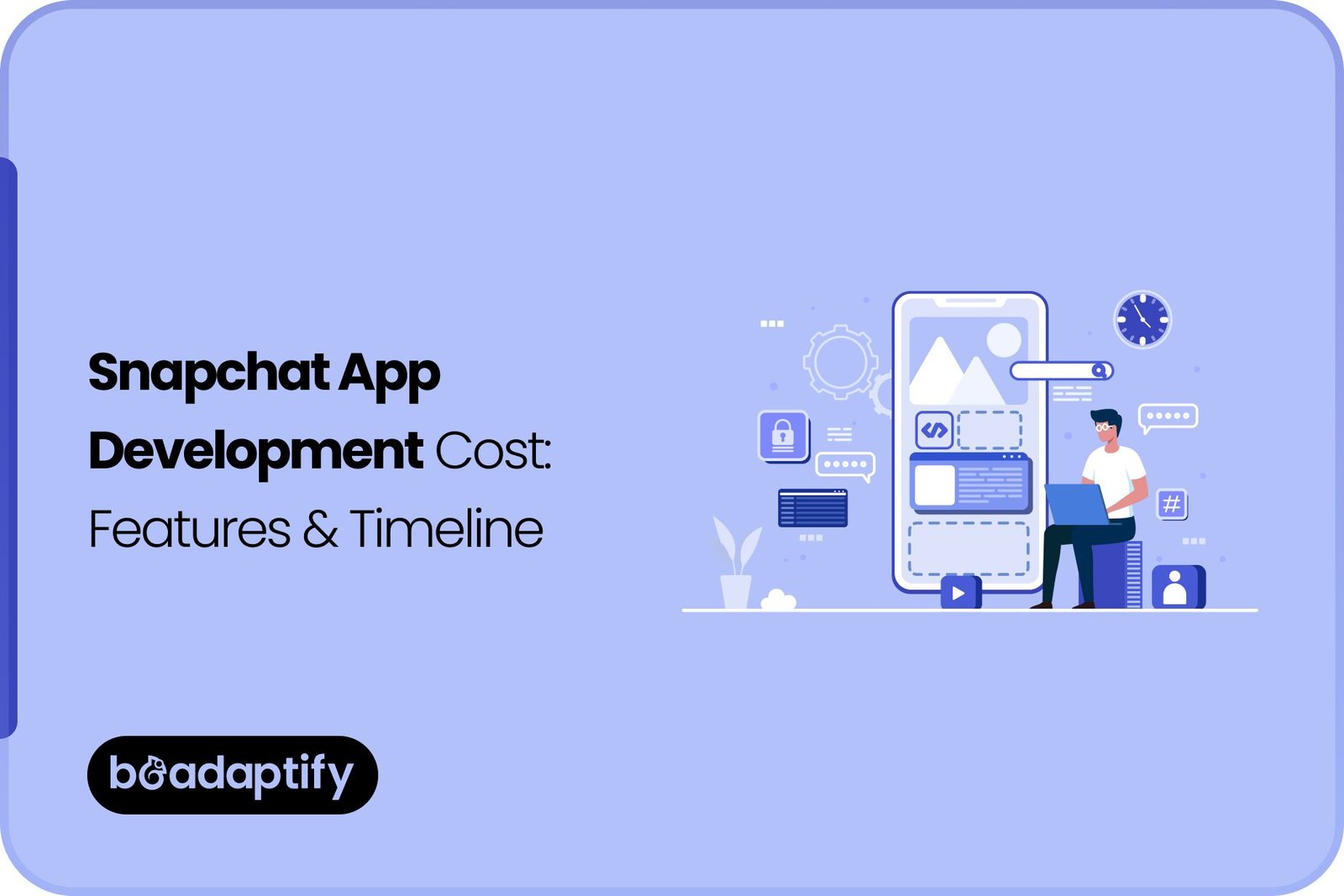
Social media applications have evolved significantly, and visual-first platforms have become a major part of how users communicate, create content, and build communities. Snapchat has played an important role in this transformation by combining instant messaging, disappearing content, augmented reality, camera effects, stories, and personalized experiences within a single mobile application.
As demand for social networking applications continues to grow in 2026, businesses and startups are increasingly exploring the possibility of developing apps inspired by Snapchat’s core functionality. However, a Snapchat-like application is considerably more complex than a standard social networking app. Real-time communication, multimedia processing, augmented reality, content moderation, cloud storage, notifications, privacy controls, and scalable infrastructure must all be implemented carefully.
One of the first questions usually asked during planning is: How much does it cost to develop an app like Snapchat?
The answer depends on the features, platforms, technology stack, design complexity, development team, integrations, security requirements, and scalability requirements involved.
A basic Snapchat-inspired MVP can be developed at a significantly lower cost than a full-scale social media platform containing advanced augmented reality, AI-powered recommendations, real-time communication, video processing, creator tools, and large-scale infrastructure.
This guide provides a detailed overview of Snapchat app development costs, essential features, technology choices, development stages, timelines, monetization strategies, challenges, and best practices.
How Much Does It Cost to Develop an App Like Snapchat in 2026?
The cost of developing a Snapchat-like application can vary considerably depending on the scope of the project. A general estimate can be categorized as follows:
| App Type | Estimated Development Cost |
|---|---|
| Basic Social Media MVP | $40,000–$80,000 |
| Medium-Complexity Snapchat-Like App | $80,000–$160,000 |
| Advanced Social Media Platform | $160,000–$300,000+ |
| Enterprise-Scale Platform with AI & AR | $300,000–$500,000+ |
These figures are indicative and should not be considered fixed quotations. A final estimate is usually determined after requirements have been analyzed.
The following factors can have a major impact on cost:
- Number of platforms
- UI/UX complexity
- Real-time messaging
- Video processing
- AR filters
- AI capabilities
- Backend architecture
- Cloud infrastructure
- Content moderation
- Third-party integrations
- Security requirements
- Development team location
- Testing requirements
- Post-launch maintenance
A startup may initially benefit from an MVP approach in which only essential functionality is developed. Once product-market fit has been validated, advanced features can be introduced.
Why Build a Snapchat-Like App in 2026?
The social media market continues to be influenced by short-form visual content, private communication, creator communities, augmented reality, and personalized feeds. A Snapchat-inspired platform can be positioned around a specific audience or niche instead of attempting to compete directly with established social networks.
For example, a new application could focus on:
- Private visual communication
- College communities
- Local social networking
- Creator communities
- Fashion
- Sports
- Travel
- Events
- Entertainment
- Professional networking
A focused market strategy can help reduce initial development complexity while creating a clear value proposition.
What Makes Snapchat-Like App Development Complex?
A standard mobile application may primarily consist of static screens, APIs, and database operations. A Snapchat-like application requires significantly more. Multiple systems must operate simultaneously, including:
- Camera processing
- Video recording
- Image processing
- Real-time messaging
- Multimedia uploads
- Cloud storage
- Push notifications
- User authentication
- Content feeds
- Stories
- Privacy controls
- Social graphs
- Search
- Moderation
- Analytics
If augmented reality is included, additional computer vision and graphics technologies may also be required. Scalability becomes particularly important because multimedia applications can generate enormous amounts of data.
Core Features of a Snapchat-Like App
A successful application should be developed around a carefully selected set of core features.
1. User Registration and Authentication
Users should be able to create accounts quickly. Common options include:
- Email registration
- Phone number registration
- Social login
- Username creation
- Password authentication
- Multi-factor authentication
Account verification should be implemented to reduce fake accounts and unauthorized access. Secure authentication should be supported throughout the application.
2. User Profiles
A profile should allow users to manage their identity and social presence. Typical profile features include:
- Profile picture
- Username
- Display name
- Bio
- Friends
- Followers
- Following
- Activity information
- Privacy settings
Users should be allowed to control what information is publicly visible.
3. Camera and Content Creation
The camera is one of the most important components of a Snapchat-like platform. Users should be able to:
- Take photos
- Record videos
- Upload media
- Add text
- Add stickers
- Apply filters
- Add music
- Draw on images
- Crop content
The camera experience should be fast and responsive. Media processing should be optimized so that users are not required to wait unnecessarily before sharing content.
4. Photo and Video Filters
Filters can be used to differentiate a social media application. Basic filters may include:
- Color adjustments
- Brightness
- Contrast
- Blur
- Vintage effects
- Artistic effects
Advanced filters can be enhanced through machine learning and computer vision.
5. Augmented Reality Filters
AR functionality can significantly increase development costs. AR filters may allow digital objects to be placed over the user’s face or surrounding environment.
Examples include:
- Face masks
- Animated effects
- 3D objects
- Facial transformations
- Virtual accessories
- Background effects
AR functionality can be developed using technologies such as:
- ARKit
- ARCore
- Unity
- Unreal Engine
- Computer vision frameworks
The complexity of the AR experience directly influences development time and cost.
6. One-to-One Messaging
Real-time messaging should allow users to communicate privately. Features may include:
- Text messages
- Images
- Videos
- Voice messages
- Emojis
- Stickers
- GIFs
- Shared posts
Real-time communication requires a reliable backend infrastructure capable of handling large numbers of concurrent connections.
7. Group Chat
Group conversations can be introduced for users who want to communicate with multiple friends simultaneously. Important capabilities may include:
- Group creation
- Member management
- Group notifications
- Multimedia sharing
- Message reactions
- Group administration
Moderation tools should also be provided.
8. Disappearing Messages
Temporary content can be introduced as one of the key differentiating features. Messages or media may be configured to disappear after:
- Being viewed
- A specific duration
- A defined expiration period
However, privacy expectations should be clearly communicated to users. The application’s behavior should be accurately represented through privacy policies and user-facing notices.
9. Stories
Stories allow users to share temporary photo or video content. A story system may include:
- Story creation
- Story editing
- Story publishing
- Viewer lists
- Story reactions
- Replies
- Story expiration
- Privacy settings
Stories can also become an important monetization channel when advertising or creator features are introduced.
10. Personalized Content Feed
A content feed should be designed to help users discover relevant posts. Initially, content can be sorted using straightforward signals such as:
- Recency
- Engagement
- Friend relationships
- User preferences
As the application grows, machine learning can be introduced for more personalized recommendations.
11. Push Notifications
Notifications can be used to keep users informed about:
- New messages
- Friend requests
- Story interactions
- Comments
- Reactions
- Mentions
- New followers
Notification settings should be customizable so users can control communication frequency.
12. Search
A search system can allow users to discover:
- People
- Usernames
- Stories
- Communities
- Content
- Topics
Search indexing should be optimized for speed and scalability.
13. Friend and Follower Management
Social relationships form the foundation of a social media platform. Users may be allowed to:
- Add friends
- Follow accounts
- Remove connections
- Block users
- Restrict interactions
- Report accounts
Privacy settings should determine who can contact or interact with each user.
14. Content Moderation
Content moderation is essential for social platforms. Users should be provided with tools for:
- Reporting content
- Reporting accounts
- Blocking users
- Restricting interactions
Automated moderation can also be introduced using machine learning. Human review systems may be required for complex cases.
15. Analytics Dashboard
An administrative dashboard should provide insights into:
- Active users
- Daily sessions
- Content creation
- Engagement
- Retention
- Reports
- Subscription revenue
- Advertising performance
Analytics can be used to identify product improvements and user behavior patterns.
Advanced Features That Can Be Added Later
After an MVP has been validated, advanced features can be introduced.
AI-Powered Recommendations
Machine learning can be used to personalize content feeds. Recommendations can be generated using:
- Viewing behavior
- Likes
- Shares
- Searches
- Social connections
- Content preferences
AI Content Creation
AI can assist users with:
- Captions
- Creative effects
- Background generation
- Image enhancement
- Video editing
AI functionality should be introduced with appropriate privacy controls.
Voice and Video Calling
Real-time voice and video calling can extend the application’s communication capabilities. However, additional infrastructure and performance optimization will be required.
Creator Monetization
Creators can be provided with tools for:
- Subscriptions
- Sponsored content
- Paid communities
- Digital products
- Virtual gifts
Creator monetization can provide additional revenue opportunities for the platform.
Technology Stack for Snapchat-Like App Development
Technology selection should be based on expected scale and functionality.
Frontend Development
Native development can be performed using:
- Swift for iOS
- Kotlin for Android
Cross-platform applications can be developed using:
- Flutter
- React Native
For camera-heavy applications, native technologies may sometimes provide advantages in terms of platform-specific performance and hardware access.
Backend Development
Backend services may be developed using:
- Node.js
- Python
- Java
- .NET
- Go
The backend should be capable of managing:
- Authentication
- User profiles
- Messaging
- Content
- Notifications
- Stories
- Social relationships
- Payments
- Analytics
Database Technologies
Depending on requirements, databases may include:
- PostgreSQL
- MySQL
- MongoDB
- Redis
A combination of database technologies may be used when different types of data require different storage approaches.
Cloud Infrastructure
Cloud platforms can provide the scalability required for social media applications.
Popular infrastructure providers include:
- AWS
- Microsoft Azure
- Google Cloud
Cloud infrastructure can be used for:
- Application hosting
- Media storage
- Content delivery
- Databases
- Backups
- Monitoring
- Auto-scaling
Real-Time Communication Technology
Messaging requires low-latency communication. Technologies such as:
- WebSockets
- Socket.IO
- Firebase
- WebRTC
can be considered depending on the communication requirements. WebRTC can be particularly useful for real-time voice and video communication.
AR Technology
For augmented reality functionality, different technologies may be selected based on the target platform.
Apple ARKit
ARKit can be used to create AR experiences for iOS devices.
Google ARCore
ARCore can be used to implement augmented reality experiences on supported Android devices.
Unity
Unity can be used for more sophisticated interactive 3D experiences. The appropriate choice should be based on the complexity of the planned AR functionality.
Development Process for a Snapchat-Like App
A structured process should be followed to reduce development risks.
Step 1: Market Research
The target audience, competitors, market gaps, and monetization opportunities should be analyzed.
Step 2: Requirement Planning
The features, user roles, workflows, integrations, and technical requirements should be documented.
Step 3: UI/UX Design
User flows and interfaces should be created before development begins. For a visual social media application, the camera, content creation, messaging, and feed experiences should receive particular attention. Professional design & development services can be used to create a consistent visual system across the entire application.
Step 4: MVP Development
Core functionality should be developed first.
The MVP can include:
- Registration
- Profiles
- Camera
- Photo/video sharing
- Messaging
- Stories
- Notifications
- Basic feed
Step 5: Backend Development
APIs, databases, authentication, storage, messaging infrastructure, and administrative systems should be developed.
Step 6: Integration
Third-party services can be integrated for:
- Payments
- Analytics
- Authentication
- Cloud storage
- Notifications
- AR
Step 7: Testing
The application should be tested for:
- Functionality
- Performance
- Security
- Usability
- Device compatibility
- Network conditions
Step 8: Deployment
The application can be released through the relevant app stores after testing and compliance requirements have been completed.
Step 9: Post-Launch Optimization
User behavior should be analyzed after launch. Features can then be improved according to real-world usage.
Snapchat-Like App Development Timeline
Development time depends on complexity. A general timeline may look like this:
| Development Phase | Estimated Duration |
|---|---|
| Research & Discovery | 2–4 Weeks |
| UI/UX Design | 4–7 Weeks |
| Backend Development | 8–14 Weeks |
| Mobile App Development | 10–18 Weeks |
| Messaging & Real-Time Features | 4–8 Weeks |
| AR Development | 6–12+ Weeks |
| Testing & QA | 4–8 Weeks |
| Deployment | 1–2 Weeks |
A basic MVP may require approximately 4–6 months.
A sophisticated Snapchat-like platform with AR, AI, video calling, advanced recommendations, and creator monetization may require 9–15 months or longer.
Factors That Influence Snapchat App Development Cost
Number of Platforms
Development for both iOS and Android generally requires additional resources compared with launching on a single platform.
Feature Complexity
Messaging is relatively complex, while advanced AR and AI systems require substantially more development effort.
UI/UX Design
Custom animations, camera interfaces, gestures, and interactive elements increase design and development requirements.
Cloud Infrastructure
Multimedia applications consume significant storage and bandwidth. As the user base grows, infrastructure costs can increase substantially.
Security
Social platforms must protect user accounts, private conversations, multimedia content, and personal information.
Testing
A social media app needs to be tested across many devices, operating system versions, screen sizes, and network conditions.
How to Reduce Snapchat App Development Costs
A controlled MVP strategy can reduce initial investment.
Start With Essential Features
The first release should focus on features that directly support the core value proposition.
Choose Cross-Platform Development When Appropriate
Flutter or React Native can reduce duplicated development work where platform-specific functionality is not critical.
Use Managed Cloud Services
Cloud services can reduce the infrastructure management burden during the early stages.
Introduce AI and AR Later
Advanced technologies can be added after user demand has been validated.
Build a Scalable Architecture
Short-term savings should not be achieved by creating an architecture that requires expensive redevelopment later. An experienced mobile app development company can help prioritize features according to budget and business objectives.
Monetization Strategies for a Snapchat-Like App
Several monetization models can be implemented.
Advertising
Sponsored stories, native advertisements, and promoted content can be introduced once sufficient user engagement has been established.
Premium Subscriptions
Premium users can be offered additional:
- Filters
- Storage
- Customization
- Exclusive content
- Advanced features
Creator Monetization
Creators can be given tools for generating revenue through subscriptions, digital gifts, or premium content.
In-App Purchases
Virtual goods and digital features can be sold within the application. A hybrid monetization strategy can be introduced as the platform matures.
Challenges in Developing a Snapchat-Like Application
Scalability
A large number of concurrent users can create significant infrastructure demands. Architecture should therefore be designed to scale horizontally.
Multimedia Storage
Photos and videos consume substantially more storage than text data. Efficient compression, CDN delivery, and lifecycle policies should be implemented.
Real-Time Communication
Messages must be delivered quickly and reliably. Failures should be handled gracefully.
Content Moderation
User-generated content can introduce safety and compliance challenges. Automated systems and human review processes may need to work together.
Privacy
Users expect private content to remain protected. Privacy controls, secure storage, encryption, and transparent policies should be implemented.
App Store Compliance
Applications must comply with platform-specific requirements involving privacy, subscriptions, user-generated content, payments, and security.
Best Practices for Snapchat App Development
The following practices should be incorporated into the development strategy:
- Start with a focused MVP.
- Prioritize camera and messaging performance.
- Design for scalability from the beginning.
- Use secure authentication and authorization.
- Optimize multimedia storage and delivery.
- Implement content moderation tools.
- Provide clear privacy controls.
- Test across multiple devices and networks.
- Monitor application performance after launch.
- Introduce advanced AI and AR features progressively.
Professional mobile app development services can be used to manage product strategy, UI/UX, development, testing, deployment, and ongoing maintenance.
Why Choose Beadaptify for Snapchat-Like App Development?
Developing a social media platform requires expertise across mobile engineering, backend architecture, real-time communication, multimedia processing, cloud infrastructure, UI/UX, and scalable product development.
At Beadaptify, customized solutions can be developed around the specific goals and audience of each social platform. As an experienced mobile app development company, Beadaptify provides end-to-end mobile application development services, from product discovery and interface design to development, testing, deployment, and post-launch support.
Through comprehensive design & development services, a consistent and engaging experience can be created across every part of the application. Whether a lightweight social networking MVP or a large-scale multimedia platform is being planned, the architecture can be designed to support future expansion.
Final Thoughts
Developing an application inspired by Snapchat requires much more than creating a camera and messaging interface. Real-time communication, multimedia processing, stories, social networking, privacy, content moderation, cloud infrastructure, and scalable architecture must all work together seamlessly.
In 2026, the estimated development cost can range from approximately $40,000 for a basic social media MVP to more than $500,000 for an enterprise-scale platform with advanced AI, AR, and communication features.
The most effective approach is to begin with a clearly defined audience and core value proposition. Essential features should be launched first, user feedback should be collected, and advanced capabilities should then be introduced according to demand. With the right product strategy, technology stack, development team, and scalability plan, a Snapchat-inspired application can be transformed into a powerful social platform capable of supporting millions of interactions.
FAQs About Snapchat App Development
How much does it cost to develop an app like Snapchat?
A basic Snapchat-like MVP may cost approximately $40,000–$80,000, while an advanced application with AR, AI, real-time communication, and sophisticated backend infrastructure may cost $300,000–$500,000 or more.
How long does it take to build a Snapchat-like app?
A basic MVP may require around 4–6 months. A highly advanced platform can require 9–15 months or longer, depending on features and integrations.
What are the most important features of a Snapchat-like app?
Core features typically include user registration, profiles, camera functionality, photo and video sharing, messaging, stories, notifications, feeds, privacy settings, and content moderation.
How much does AR increase development costs?
AR can substantially increase development costs because computer vision, 3D assets, device compatibility, testing, and specialized development expertise may be required.
Can a Snapchat-like app be developed for both iOS and Android?
Yes. Native development can be used for both platforms, or cross-platform technologies such as Flutter or React Native can be considered to reduce development effort.
Can AI be integrated into a social media application?
Yes. AI can be used for recommendations, content discovery, moderation, image enhancement, captions, and personalization.
How can a Snapchat-like application generate revenue?
Revenue can be generated through advertising, premium subscriptions, in-app purchases, creator monetization, sponsored content, and virtual goods.